Are There Wild Kangaroos In Sydney, Or Do You Need A Tour?
A plain answer to whether wild kangaroos live in Sydney itself, what the official park pages say, and when a day tour becomes the practical way to see them.
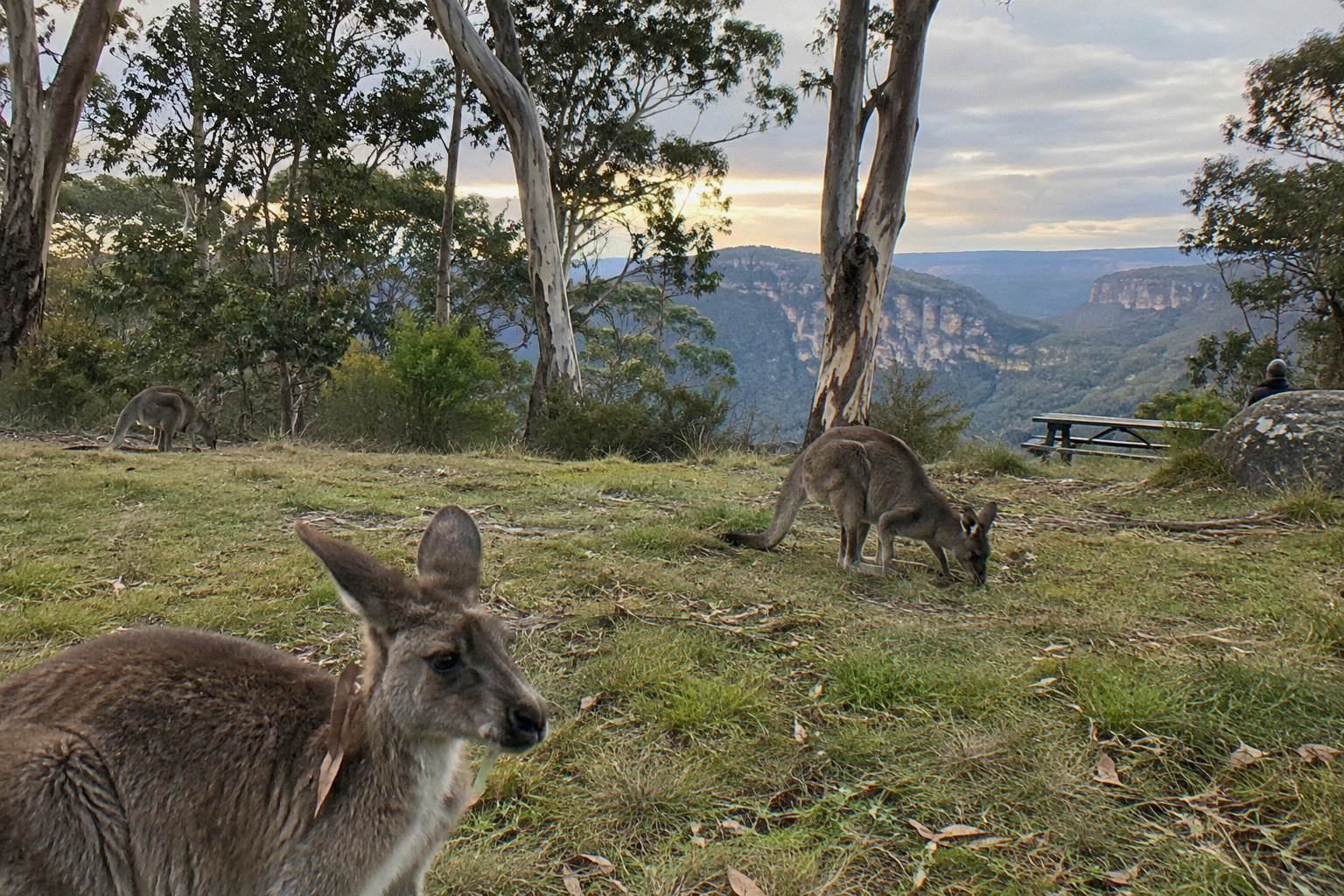
Not in the city itself, in any reliable way. No official park page names a wild kangaroo viewing spot inside Sydney, and the nearest place the National Parks and Wildlife Service actually describes as a kangaroo destination, Murramarang National Park near Batemans Bay is another spot the National Parks and Wildlife Service names for kangaroo sightings. For most visitors, a tour or a wildlife park is the practical answer.
That answer surprises people, and it is worth unpacking why. Kangaroos are Australia's most recognisable animal, they outnumber the human population of the country by a wide margin, and visitors reasonably assume they will see one hopping down George Street within an hour of landing. They will not. Sydney is a big suburban city, and eastern grey kangaroos, the species you would be looking for, prefer open grassland at the edge of forest, not dense coastal suburbs patrolled by dogs and cars.
The picture has three layers. First, wild kangaroos do live in the regions around Sydney, in the Southern Highlands, the Kangaroo Valley area, the South Coast and parts of the Blue Mountains hinterland, and several day tours from the city include stops where their booking pages describe wild kangaroos. Second, no official NSW source names a dependable wild kangaroo viewing site inside the Sydney metropolitan area, so anyone promising one is guessing. Third, wildlife parks such as Featherdale offer a close-up alternative, which is a different experience and is covered further down.
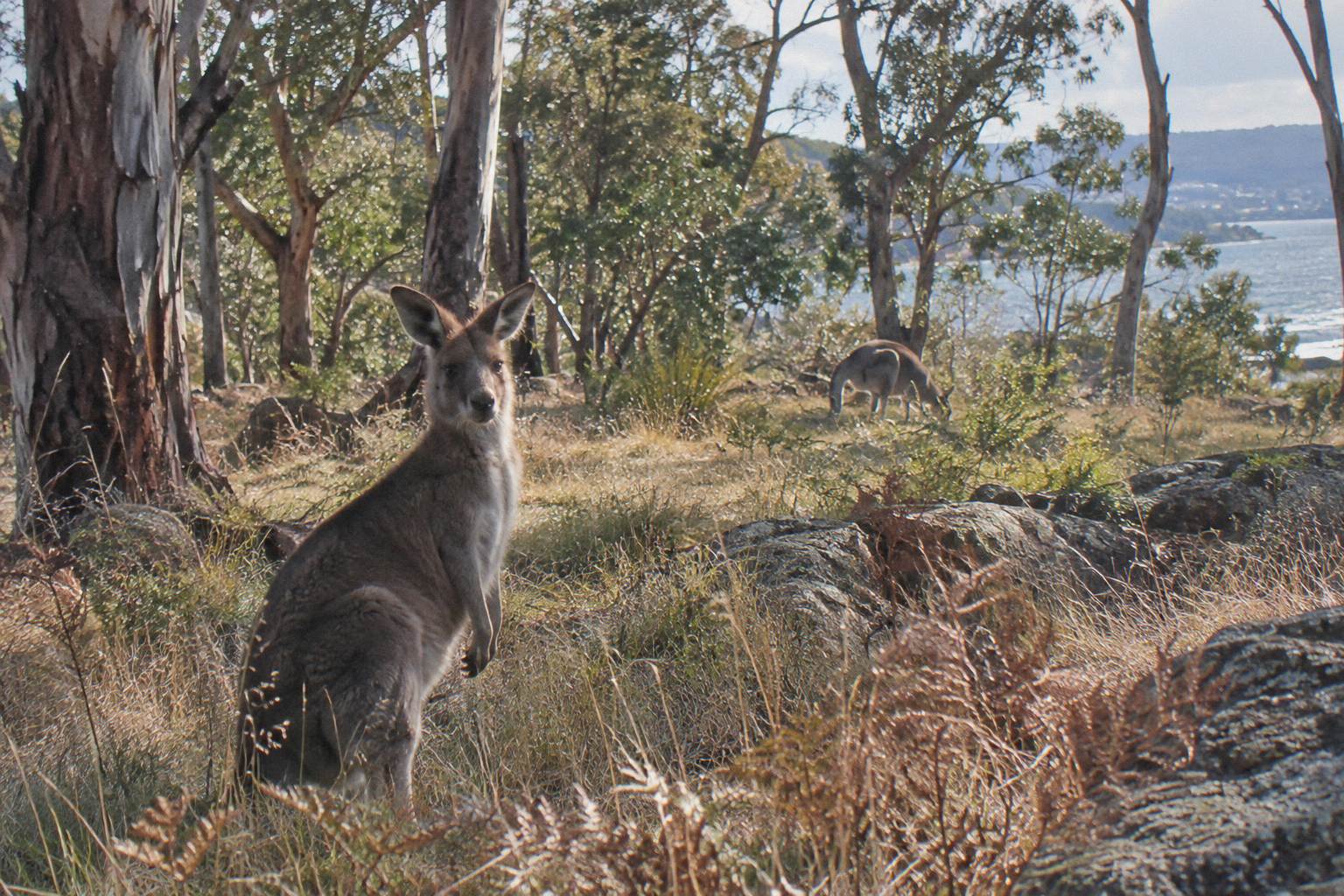
If your heart is set on wild animals in wild country, a day tour is genuinely the practical route, because the operators know the clearings and the time of day. A fuller rundown of the options lives in the kangaroo day tours from Sydney guide, and the question of where to actually see wild kangaroos near Sydney gets its own treatment on Sydney Wildlife Tours as well.
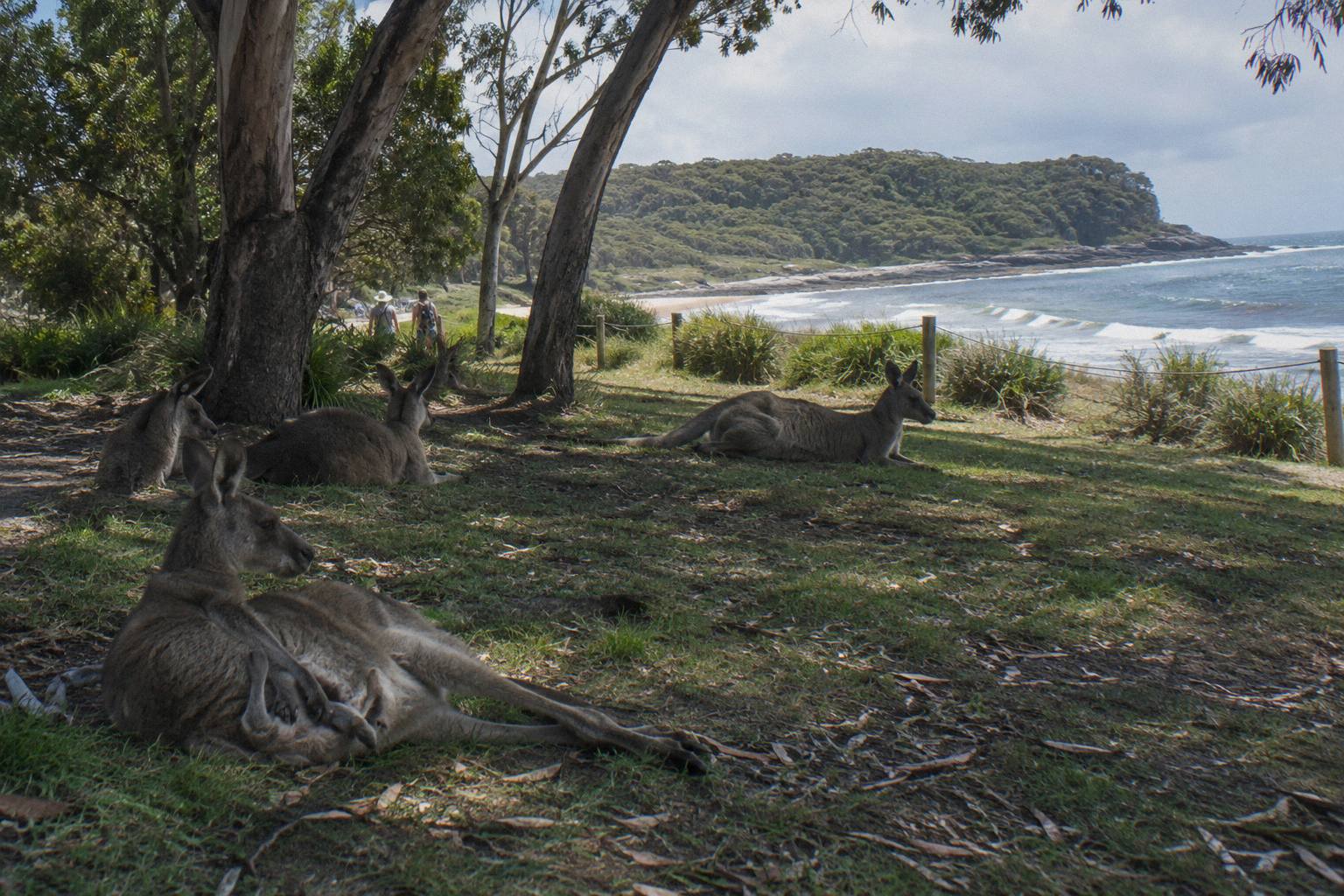
Three of the most useful options cover quite different ground. The Wild Wombats And Kangaroo Experience heads south through Macquarie Pass and Budderoo National Park, with the operator describing it as an all-inclusive day built around wild wombats and kangaroos. The Blue Mountains Wild Kangaroos And Sunset Day Tour, Late Start, rated 4.9 from 205 reviews, trades the early start for a sunset finish. The Jervis Bay Dolphins, Kangaroos And Beach Day pairs a dolphin cruise with Booderee National Park, where the booking page lists wild kangaroo encounters.
Where Do Kangaroaroos Actually Live Around Sydney?
In the surrounding regions, not the suburbs. The National Parks and Wildlife Service describes Murramarang National Park, near Batemans Bay on the South Coast, as a place where you will spot eastern grey kangaroos and abundant birdlife, but no wildlife tour from Sydney covers it. Closer to the city, the official park pages mention wallabies rather than kangaroos, on guided walks in Ku-ring-gai Chase National Park.
That distinction between kangaroos and wallabies matters more than most visitors expect. Wallabies are smaller, shyer and live in forest, which suits the sandstone country around Sydney. Eastern greys are animals of open paddocks and grassy woodland edges, which is why the reliable wild populations sit in farming and coastal regions to the south and west. A wallaby glimpsed on a bush track is a genuine reward, but it is not the big grey kangaroo most people picture.
The Blue Mountains is the case in point. The official Blue Mountains National Park page is World Heritage-listed, home of the Three Sisters, and remarkably quiet on the wildlife front: the only animal it names is a rock wallaby in a photograph caption, along with a note about wildlife spotting at remote four-wheel-drive sites at night. Kangaroos, koalas and wombats go unmentioned. That does not mean no kangaroo ever crosses the Jamison Valley edge, it means the park service does not promote the Blue Mountains as a kangaroo destination, and it is not promoted as one here either.
What the official record supports is a belt of kangaroo country to Sydney's south. Murramarang, with its eastern greys on the coast near Batemans Bay, is the one NPWS page that flatly promises kangaroos, and it is also the one that is out of reach for a day tour. The practical middle ground is what the tour booking pages describe: the Wild Wombats And Kangaroo Experience lists stops at Budderoo and Morton National Parks and calls its day all-inclusive with wild wombats and kangaroos, while the Jervis Bay Dolphins, Kangaroos And Beach Day includes entry to Booderee National Park, on its booking page's own words, for wild kangaroo encounters. Those are operator descriptions of what the itinerary visits, never a guarantee of what you will see.
So the geometry of the question becomes clear. The city has none that anyone official will vouch for, the near mountains have wallabies at best, the far south coast has the real thing but sits outside a day trip, and the sweet spot is the Southern Highlands, Kangaroo Valley and Jervis Bay country, two to three hours out, which is exactly where the day tours go. For more on that corridor, the Kangaroo Valley wildlife day trip planning guide walks through it stop by stop.
Can You See Kangaroos Without Leaving Sydney?
Yes, but they will be park animals, not wild ones. Featherdale Sydney Wildlife Park in Doonside lets visitors feed kangaroos, wallabies and pademelons every day during opening hours, alongside a quokka meet, a wombat named Winnie and little penguin hand-feeding. It is a close-up in a park setting, which wild kangaroo country can never promise.
Featherdale sits at 217 Kildare Road, Doonside, in Sydney's west, and opens 8AM to 5PM daily, with shorter hours on Christmas Day. Two tours build a Featherdale visit into a bigger Blue Mountains day, the Blue Mountains Wildlife And Bushwalk Small Group, rated 4.6 from 853 reviews, and the Featherdale-based Blue Mountains options described in the Blue Mountains wildlife day trip guide. Going independently is also possible: a ticket-only visit is a purchase you arrange yourself directly with the park, and no ticket price is printed here because it is not verified.
Is the park experience a cheat? Not really, it is just a different product. A wild kangaroo day is a gamble softened by a guide's local knowledge, with luck, distance and weather all in play. A park feeding session is certain, close and unhurried, and for families with small children it is often the better first encounter, which is why the wildlife tours with kids comparison treats the two formats separately. Photographers get something from the park too, since a kangaroo at arm's length beats a grey dot in a far paddock.
The framing is this: if the question is whether kangaroos exist within reach of a Sydney hotel without a long drive, the answer is yes, at Featherdale and at Symbio Wildlife Park on the Jervis Bay koalas-and-kangaroos day. If the question is whether wild kangaroos exist within that radius, the official record says no, and anyone who tells you otherwise is selling something.
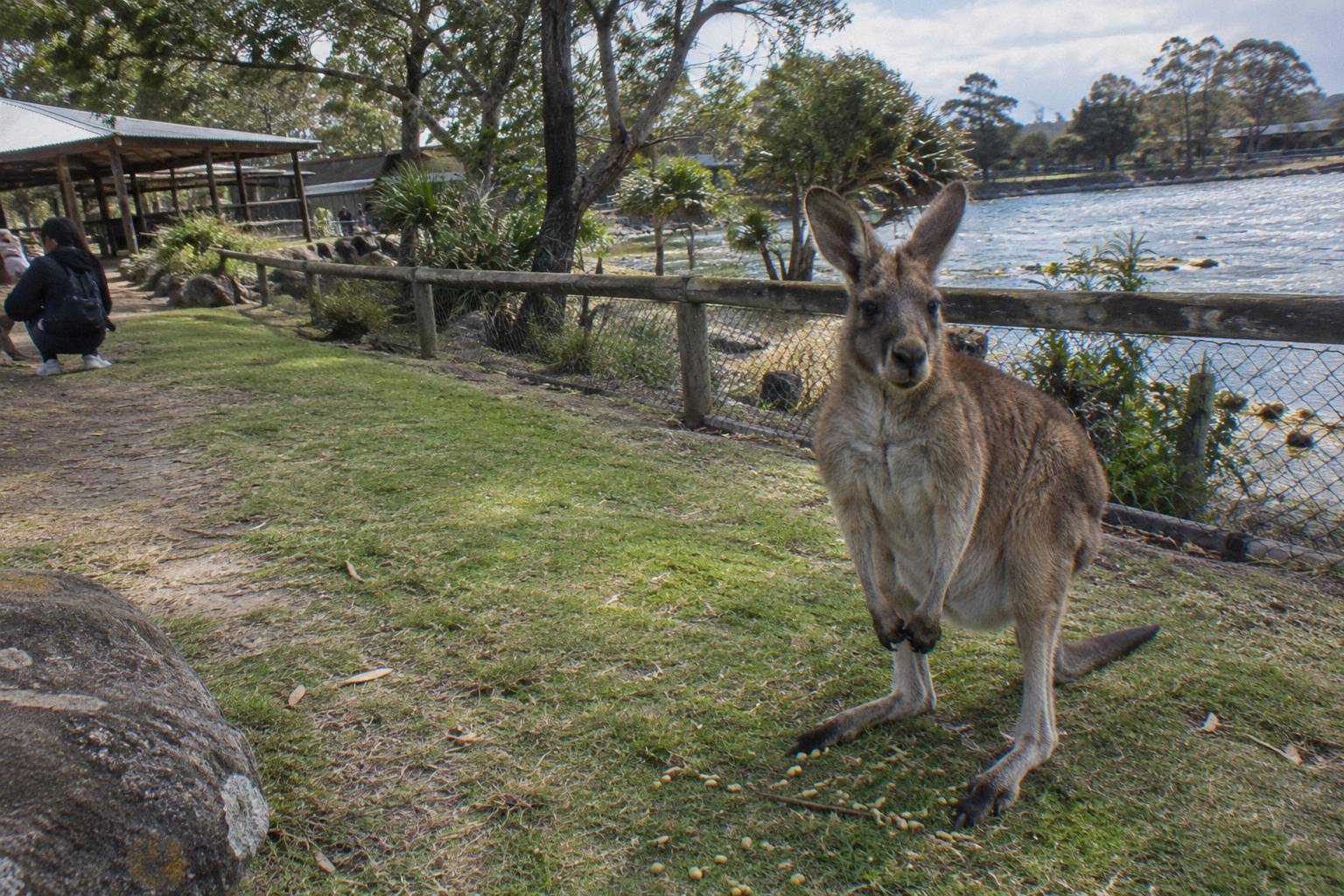
One tour shows how the park encounter works in practice. The Jervis Bay With Beaches, Koalas And Kangaroos day, rated 4.6 from 78 reviews, includes Symbio Wildlife Park entry with hand-feeding kangaroos and a private koala encounter run by a park ranger, then carries on to Huskisson, Hyams Beach and the Kiama Blowhole. It is a good illustration of the hybrid day: captive animals in the morning, beaches and coastline in the afternoon.
What Do The Day Tours Actually Promise?
Stops in kangaroo habitat, not sightings. Every relevant booking page describes where the day goes, such as Booderee National Park or the Budderoo and Morton parks, and some operators call their tour all-inclusive with wild kangaroos, but no tour guarantees an animal, and a guarantee phrase is never repeated as a claim here. Wildlife is wild.
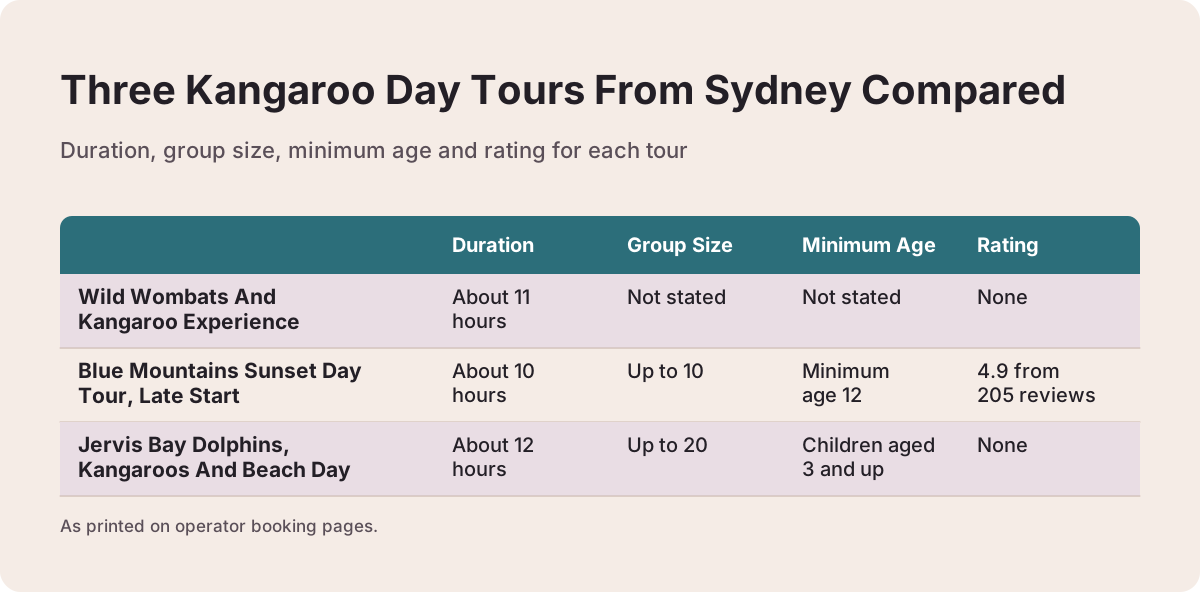
Reading a booking page carefully tells you a lot. The Wild Wombats And Kangaroo Experience, about 11 hours long, lists its itinerary stop by stop, Macquarie Pass National Park, an optional Budderoo stop, an optional Morton National Park stop, and includes national park fees, a guide, lunch on early departures, dinner at a historical pub and snacks along the way. The operator calls it an all-inclusive tour with wild wombats and kangaroos, two national parks, waterfalls, viewpoints and stargazing. Notice what is and is not in that sentence: destinations and inclusions, not a sighting promise.
The Blue Mountains Wild Kangaroos And Sunset Day Tour, Late Start, from FeelGood! Nature Tours, works differently. It is a small group of up to 10, minimum age 12, a bushwalking day with uneven ground and stairs, with a harder and an easier option at several points, a pie lunch from Mountain High Pies and a twilight cheese and wine spread at a sunset lookout. Its 4.9 from 205 reviews reflects the day as a whole, the walking, the food, the light, not a kangaroo count. Notably, its booking page puts feeding animals on the not-allowed list, which is consistent with the rules in the national parks it visits.
The Jervis Bay Dolphins, Kangaroos And Beach Day, about 12 hours and up to 20 guests, runs a 1.5-hour dolphin cruise through Jervis Bay Marine Park, then Booderee National Park, where its booking page lists wild kangaroo encounters, plus the White Sands Trail walk and about 1.5 hours at Hyams Beach. Again, the cruise and the park entry are promises; dolphins and kangaroos are probabilities. The booking page itself describes the itinerary as strategically timed for wildlife viewing and photography, which is the most any operator can do.
Here is how the three wild-country days compare on what is verifiable:
| What the booking page says | Wild Wombats And Kangaroo | Blue Mountains Sunset, Late Start | Jervis Bay Dolphins And Kangaroos |
|---|---|---|---|
| Duration | About 11 hours | About 10 hours | About 12 hours |
| Group size | Not stated | Up to 10 | Up to 20 |
| Kangaroo angle | Operator calls it all-inclusive with wild wombats and kangaroos | Wild kangaroos in the Blue Mountains on a bushwalking day | Booderee National Park entry for wild kangaroo encounters |
| Main inclusions | Park fees, guide, lunch before 12 PM departures, pub dinner, snacks | Pie lunch, twilight cheese and wine spread | Dolphin cruise, Booderee entry, guided walk, photo help |
| Not included | Lunch on 12 PM and later departures | Bottled water, drinks beyond the twilight spread | Lunch |
| Rating printed | None | 4.9 from 205 reviews | None |
A pattern worth noticing: the tours that mention wild kangaroos most directly are the ones that travel furthest from the city. That is not a coincidence, it is the geography from the first section showing up in the itineraries. If a reader wants a deeper look at how the formats stack up, the wildlife day trips from Sydney compared guide does it across koalas and wombats too.
Is It Ever Okay To Feed A Kangaroo?
Not a wild one. The National Parks and Wildlife Service is blunt: never feed wildlife in a national park without the permission of the park manager, because feeding native animals can harm them, promoting scavenging behaviour and making them sick, demanding and aggressive. Park-supplied feeding at wildlife parks is a separate, controlled thing, and that is the only kind recommended here.
The rule surprises visitors who grew up on the image of hand-feeding a grey by the roadside. The official NPWS wildlife encounters guidance explains the harm plainly: human food is wrong for them, and handouts train animals to approach people, which ends badly for the animal first. One tour, the Blue Mountains sunset day, lists feeding animals on its not-allowed list for exactly this reason, and a good guide will say the same out loud on the day.
The park context is different because the food, the animals and the routine are all managed. Featherdale's own encounters page invites visitors to feed kangaroos, wallabies and pademelons every day during opening hours, with food the park supplies, and the Koala And Kangaroo Encounters With BBQ day, rated 5.0 from 42 reviews, includes a kangaroo encounter with kangaroo food provided as part of the experience. In both cases the feeding is part of a designed encounter, not an improvisation in a paddock.
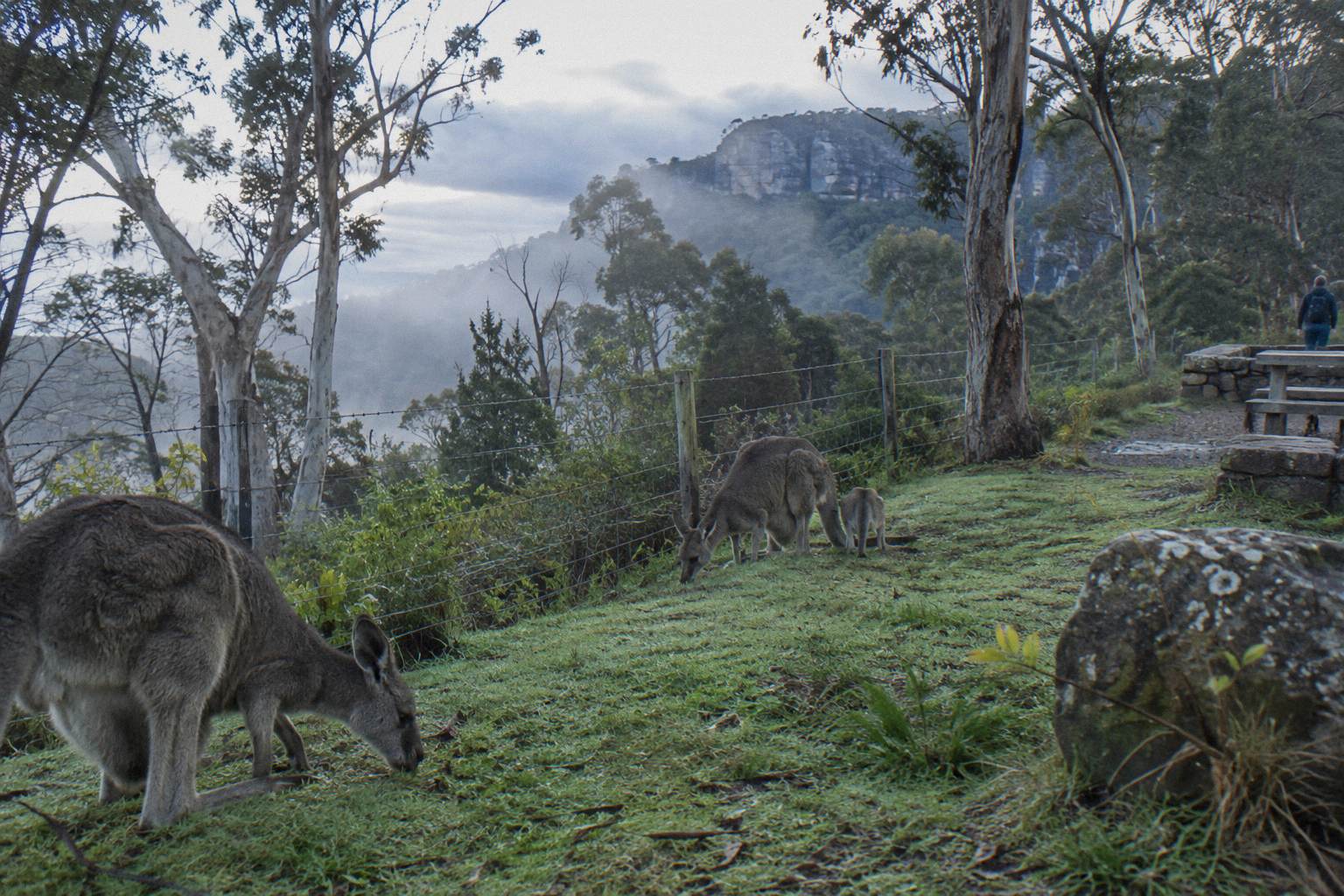
The distinction also shapes which tour you pick. If close contact is the point, choose a day built around a park, and know that the koala on such days is met and photographed beside a keeper, never held, since holding koalas is not permitted in New South Wales. If wild country is the point, accept that you will be watching from a respectful distance, camera up, hands in pockets, and that this is what a real wild day looks like.
Which Kind Of Day Should You Book?
Let the animal decide the format. If it must be a wild kangaroo, book the long southern days, the wombats-and-kangaroos experience or the Jervis Bay day, and go expecting habitat rather than a promise. If it must be a close-up, book a park day like the BBQ encounters tour or the Symbio-based Jervis Bay koalas day, where the animals are certain.
Budget shapes the choice less than you might think, because no price is printed anywhere; every live price shows on the booking page once you pick a date, and what moves it is duration, inclusions, group size, pickup and park entries, not mystery. A 12-hour day with a dolphin cruise and national park entries will simply cost more than a shorter park visit, and an all-inclusive day with two meals costs more than one where lunch is your own.
Time and party matter more. The late-start Blue Mountains day excludes under-12s entirely and asks for medium-plus fitness on uneven ground. The Jervis Bay dolphins day welcomes families with children aged 3 and up. The BBQ encounters day has a minimum age of 4 and only about 800 metres of easy walking. Match the day to the slowest and youngest person in your group, and the choice usually makes itself.
| You want... | Best fit | Why |
|---|---|---|
| Wild kangaroos in habitat, longest shot at them | Wild Wombats And Kangaroo Experience | Two southern national parks, pub dinner, all-inclusive framing |
| Wild country plus a relaxed start | Blue Mountains Wild Kangaroos And Sunset, Late Start | Up to 10 guests, sunset finish, pie lunch and twilight spread |
| Kangaroos plus beaches and dolphins | Jervis Bay Dolphins, Kangaroos And Beach Day | Dolphin cruise, Booderee entry, Hyams Beach time |
| Close-up, youngest travellers | Koala And Kangaroo Encounters With BBQ | Park-based, age 4 and up, all-you-can-eat BBQ lunch |
| Both in one day | Jervis Bay With Beaches, Koalas And Kangaroos | Symbio park feeding in the morning, wild coast after |
Cancellation is generous across the tours, which makes deciding easier: the wombats day, both Blue Mountains leaders, the koala BBQ day and both Jervis Bay days offer free cancellation up to 24 hours before. Check the specific listing before relying on it, and if weather or a quiet animal season is worrying you, that window is your friend. For what to pack, a what to bring on a full-day wildlife tour checklist covers the day-bag question in detail.
The realistic summary: wild kangaroos near Sydney are a half-day's drive away, in the south and the far west, and the tours that reach them focus on habitat rather than promises. If your trip has one day for Australian animals and you want certainty as well as scenery, the park-plus-coast hybrids are the safest blend. If you have two days, do one of each, and you will have seen the animal both ways, which is more than most visitors manage.
Common Questions About Kangaroos Near Sydney
Are There Wild Kangaroos In Sydney, Or Do You Need A Tour?
Not reliably in the city itself. No official NSW source names a wild kangaroo viewing spot inside Sydney, and the nearest park service-endorsed kangaroo spot is Murramarang National Park. For most visitors, a day tour into the Southern Highlands, Kangaroo Valley or Jervis Bay regions, or a wildlife park visit, is the practical way to see them.
Can You See Kangaroos In The Blue Mountains?
Not as a promoted destination. The official Blue Mountains National Park page names no kangaroo at all, only a rock wallaby in a photo caption and a note about night-time wildlife spotting at remote sites. Blue Mountains tours pair the scenery with a Featherdale Wildlife Park visit, where kangaroo encounters are part of the stop.
Is It Legal To Feed Kangaroos In NSW?
Not in a national park. NPWS guidance says never feed wildlife without the park manager's permission, because it harms the animals and promotes aggressive, demanding behaviour. Feeding at wildlife parks such as Featherdale, with park-supplied food, is separate and permitted.
Do Any Tours Guarantee A Kangaroo Sighting?
No tour guarantees a wild sighting, and operator guarantee phrases are not repeated as claims. Booking pages describe the stops and habitat, such as Booderee National Park or Budderoo, and wild animal encounters remain nature-dependent.
What Is The Closest Place To See Kangaroos Near Sydney?
In terms of official endorsements, Murramarang National Park near Batemans Bay is the NPWS-named eastern grey kangaroo spot on the South Coast. Closer practical options are the wildlife parks in Sydney's west and south, or the day tours heading to Kangaroo Valley and Jervis Bay country.
Can Children Join A Kangaroo Tour From Sydney?
It depends on the day. The Jervis Bay dolphins-and-kangaroos day takes families with children aged 3 and up, the koala-and-kangaroo BBQ day has a minimum age of 4, and the Blue Mountains late-start sunset tour is not suited to under-12s. Check each listing for the current rules before booking.