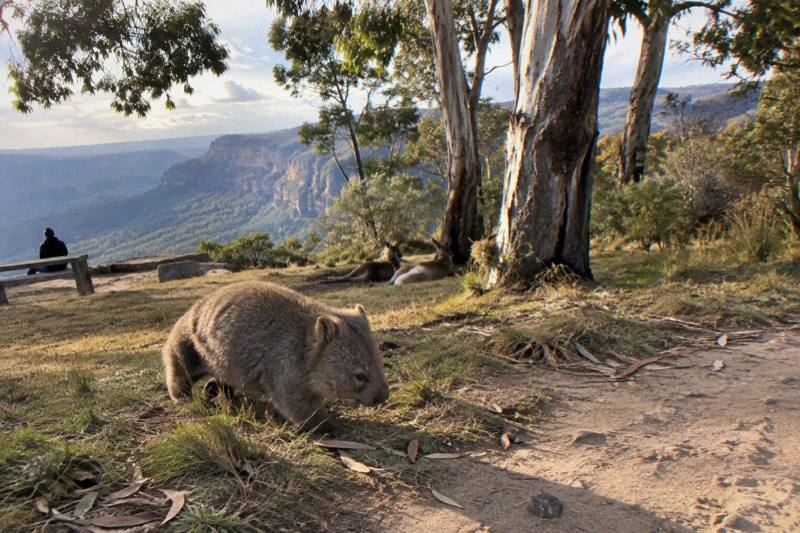
Can You See Wombats On A Wildlife Day Tour From Sydney?
Yes, wombats appear on Sydney wildlife day tours in two ways: wild wombats at south-coast national park stops, and park wombats at Featherdale Wildlife Park. Here is what each option actually delivers.
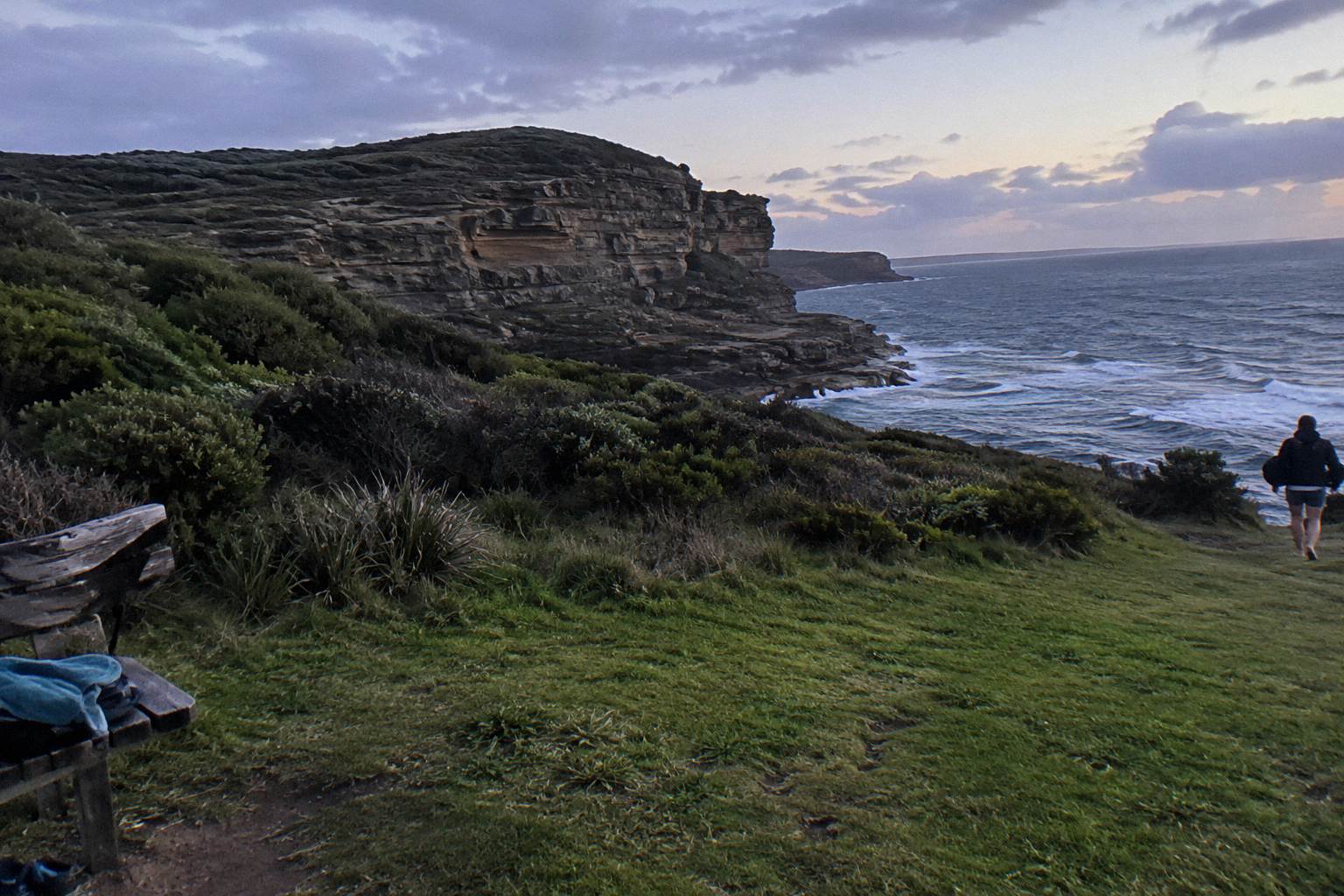
Yes, in two ways: a small number of Sydney day tours reach south-coast national park country where their booking pages describe wild wombats, most clearly the Wild Wombats And Kangaroo Experience, an all-inclusive day of about 11 hours, while the reliable alternative is Featherdale Wildlife Park, home to resident wombats and a scheduled stop on two Blue Mountains tours. No tour can promise a wild sighting, and NSW rules mean you will never hold a wombat.
That is the one-paragraph answer, and it matters because wombats are the animal most often over-promised in Australian travel marketing. Koalas sleep in trees and kangaroos gather in open country, so a good guide in the right place finds them often enough. Wombats are nocturnal, burrow-dwelling grazers that spend most daylight hours underground. A tour that lists "wombats" on its inclusions is telling you where it looks, not what you will see, and the best booking pages are careful with their wording for exactly that reason.
There are three framings to keep separate when comparing tours. A wild-wombat stop is a chance, timed for when the animals are most likely to be feeding. A park wombat is a certainty of seeing the animal, at the cost of it being in care rather than in the bush. And a "wombat tour" name on a listing is a marketing label that still needs its itinerary read line by line.
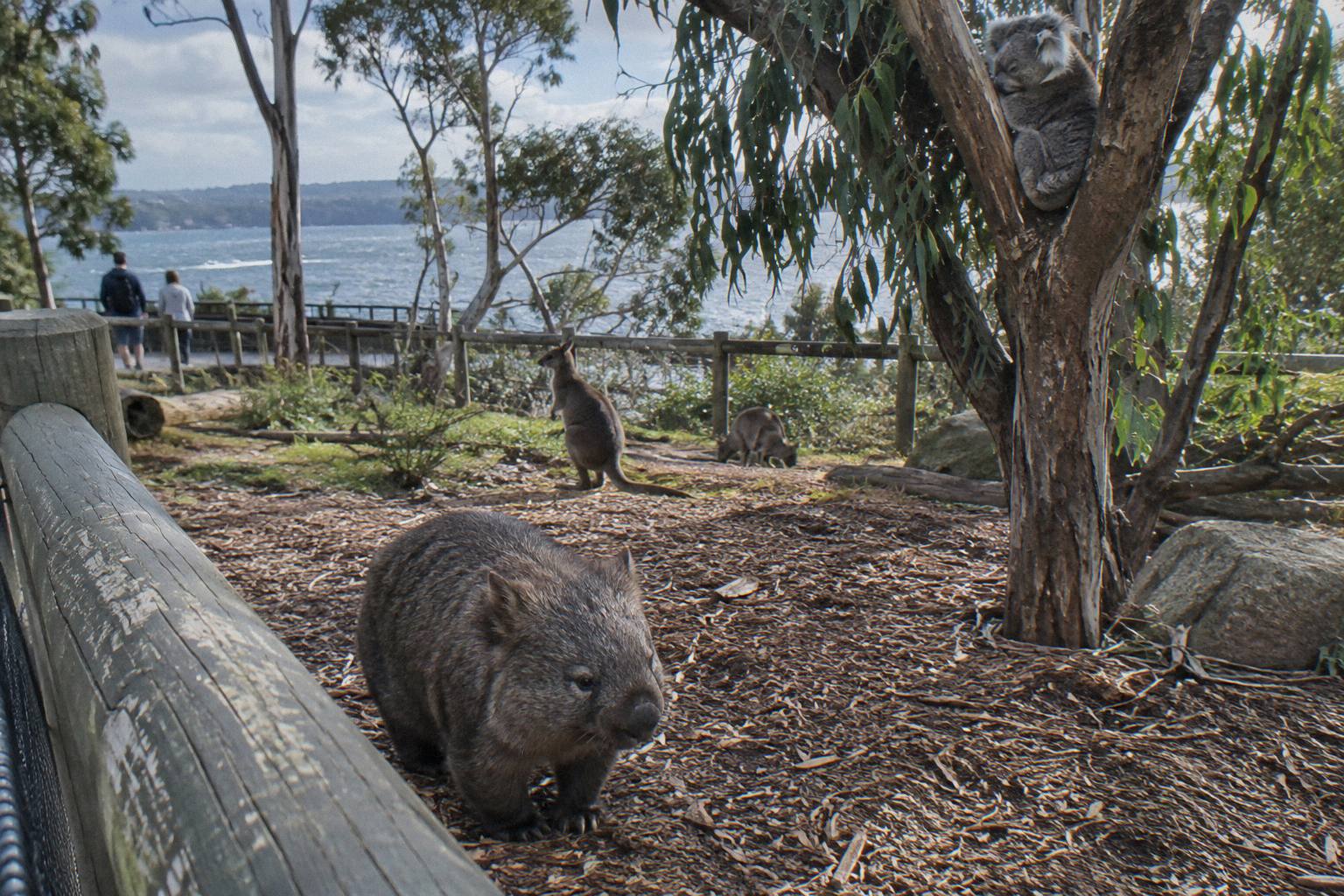
The good news is that the Sydney options cover both framings well. The south-coast day is a genuine attempt at wild wombats in the Illawarra and Southern Highlands country where they live, built around an early start, two national parks and a late dinner return. The Blue Mountains alternatives trade the wild gamble for Featherdale Wildlife Park, where a wombat named Winnie is part of the daily animal line-up and kangaroo feeding runs through opening hours. Many travellers do one of each across a longer stay.
One limitation should be stated up front, once, because it shapes everything below: no NPWS page for any park within a Sydney day tour's reach makes a specific promise about wombats. National park pages in the region name rock wallabies in the Blue Mountains and eastern grey kangaroos well south at Murramarang National Park, near Batemans Bay on the south coast. Everything about wild wombats on a Sydney day tour therefore comes from what the tour booking pages themselves say, and it is attributed that way throughout, never as a guarantee.
If you already know you want the wild attempt, start with the three days below: the dedicated wombat-and-kangaroo experience, the closely related Wombat And Kangaroo Wildlife Tour, and the Blue Mountains bushwalk day with its Featherdale stop, which is the certainty play.
What The Wombat Tours From Sydney Actually Include
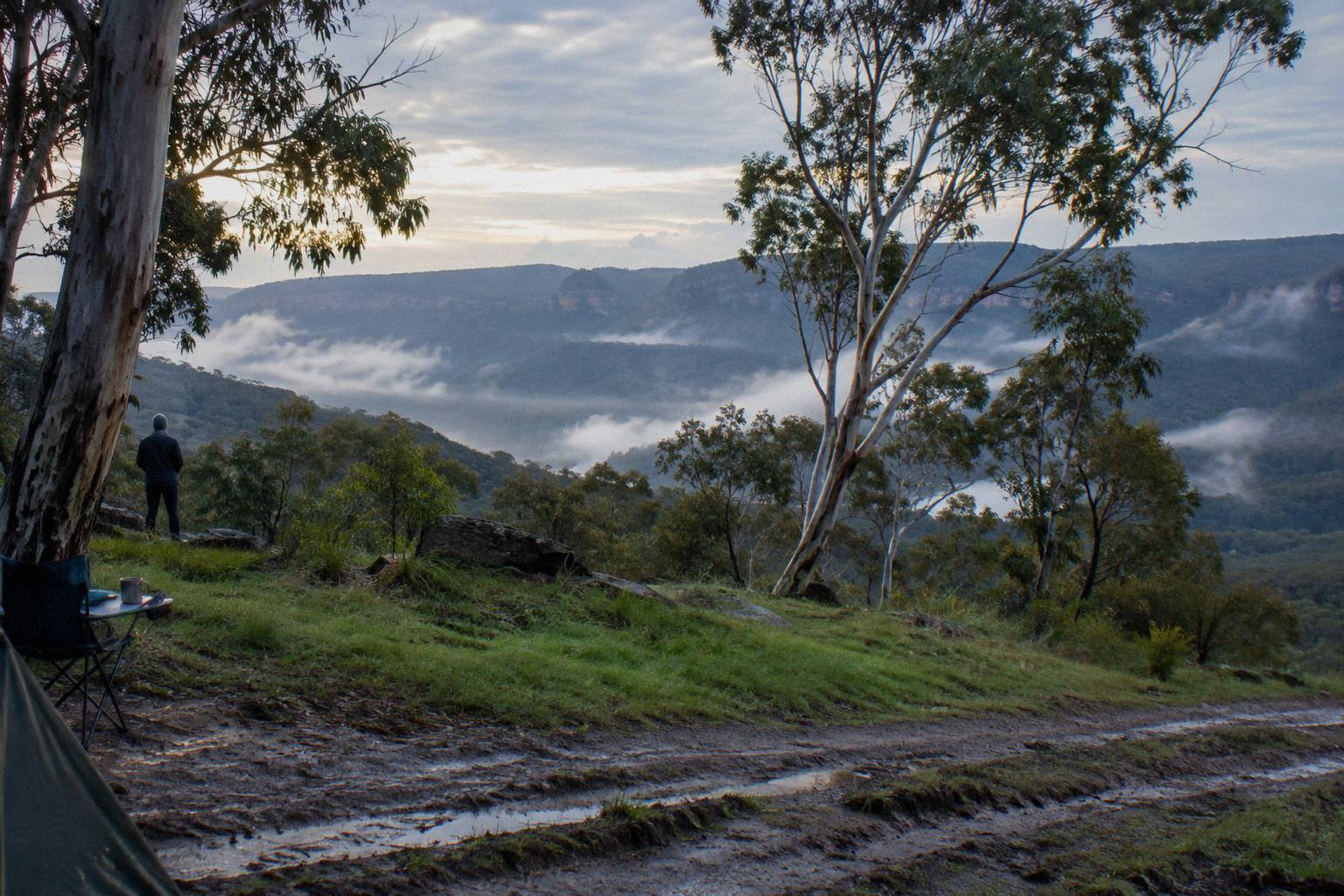
Two Sydney day tours name wombats directly, and they are different products. The Wild Wombats And Kangaroo Experience is an about-11-hour all-inclusive day with national park fees, snacks, and dinner at a historical pub, built around stops in Macquarie Pass and Budderoo national parks. The Wombat And Kangaroo Wildlife Tour is an about-10-hour day built on waterfalls: Carrington Falls, Fitzroy Falls and Kangaroo Valley, with a picnic lunch and all fees included.
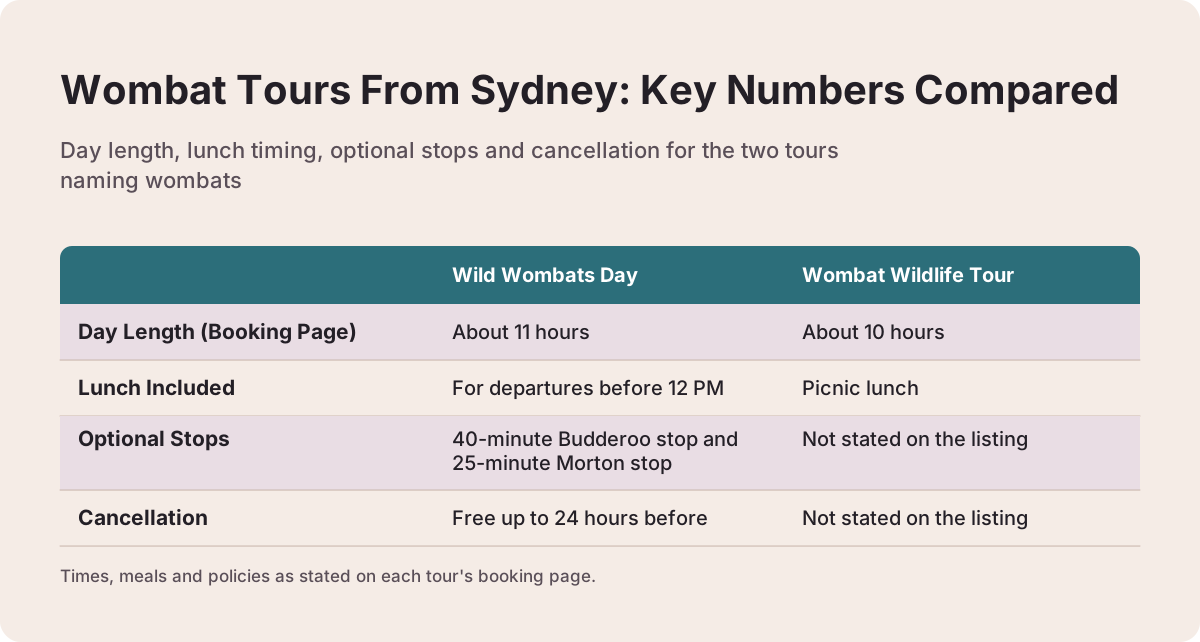
Reading the two listings side by side is the fastest way to understand what you are buying. The Wild Wombats day, run by Perfect Day Sydney, is pitched as all-inclusive: round-trip transport from Sydney on a 2025 model bus, a guide, national park fees, lunch for departures before 12 PM, dinner at a restaurant in a historical pub, and chips, snack bars, fruit and soft drinks along the way. Its itinerary runs from two Sydney pickup options, St James Station on Elizabeth Street and a second point at Thomas Sutcliff Mort, through a viewpoint stop, an hour in Macquarie Pass National Park, a Robertson pie shop lunch stop, an optional 40-minute stop the listing labels Budderoo National Park, and an optional 25-minute stop in Morton National Park before the long return.
The operator describes that route as wild wombat and kangaroo country, with waterfalls, viewpoints and stargazing, and that wording deserves its exact reading: it tells you the terrain and the intent, not an outcome. Two itinerary stops are marked optional, which in practice means the guide adjusts the day to conditions, light and animal activity. Lunch only applies to departures before midday, so a late departure runs on snacks until dinner. Exact pickup times are confirmed by message the day before and are always later than the time shown at booking, a quirk worth planning around. Cancellation is free up to 24 hours before.
| What the listing says | Wild Wombats And Kangaroo Experience | Wombat And Kangaroo Wildlife Tour |
|---|---|---|
| Day length (booking page) | About 11 hours | About 10 hours |
| Meeting point | Two Sydney pickup options, times confirmed the day before | Central Station, Kiss and Ride Bay |
| Country covered | Macquarie Pass, Budderoo and Morton national parks, Robertson | Wollongong, Carrington Falls, Fitzroy Falls, Hampden Bridge, Kangaroo Valley |
| Food included | Lunch before-noon departures, dinner at a historical pub, snacks | Picnic lunch, bottled water, tea and instant coffee |
| Wombat claim | Operator calls it wild wombats and kangaroos (never a promise) | Wombat country at waterfall and valley stops, not stated as a sighting |
| Fees | National park fees included | All fees and taxes included |
| Cancellation | Free up to 24 hours before | Not stated on the listing |
The Wombat And Kangaroo Wildlife Tour, a separate product on a second booking page with no operator named, is quieter in its claims and greener in its scenery. Its stops are Wollongong, Carrington Falls, Fitzroy Falls, the historic Hampden Bridge and a long Kangaroo Valley stretch, with a picnic lunch, bottled water, tea and coffee, an air-conditioned vehicle, a guide and all fees included. It meets at Central Station. Its wombat connection is the same Southern Highlands and Illawarra escarpment country wombats actually inhabit, and its listing does not print a rating or review count. Price for either day is shown on the booking page when you pick a date, and duration, inclusions and park fees are what drive it.
Neither day should be bought as a zoo on wheels. Both are full days in waterfall and forest country where wombats, kangaroos and wallabies live, and both give a guide the time and flexibility to look for them properly. If you want a fuller comparison of the whole category, the wombat day tours near Sydney guide breaks down every option, and the question of what to bring on a full day wildlife tour matters more on these two than on almost any other trip, given the 10-to-11-hour spans.
Is a full wombat day with everything included the right call for your dates?
Where Wild Wombats Appear On Tour Itineraries
Wild wombats turn up on Sydney day tours at three kinds of stops: the Illawarra escarpment and Macquarie Pass, the south coast run through Budderoo and Morton national parks, and the Kangaroo Valley and Fitzroy Falls country on the waterfall day. No official NPWS page for any park within a day tour's reach names wombats, so every sighting claim rests on the tour operator's own listing.
It helps to know a little about the animal to see why the map is so small. Wombats graze on native grasses at night and shelter by day in deep burrows, and the times they are most visible to a passing day tour are dawn and dusk, when they emerge to feed. A day tour leaving Sydney can reach wombat country for late afternoon and evening, which is precisely why the Wild Wombats day stretches to about 11 hours and ends with dinner at a historical pub: the schedule is built so the group is still in the right country when the light drops. Stargazing on the return is not a gimmick tacked on, it is the natural end of a day timed around nocturnal animals.
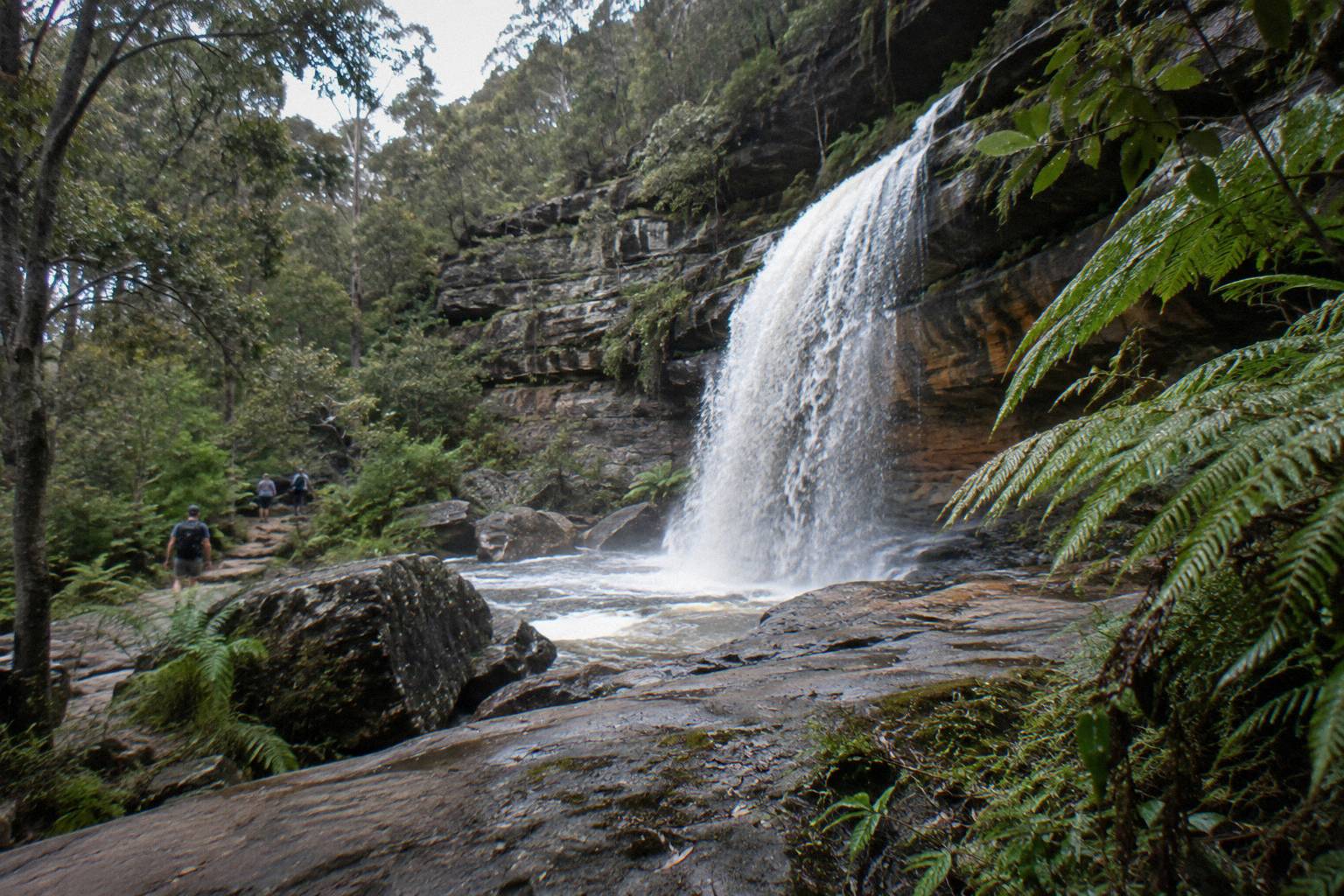
The same logic explains the optional stops. The 40-minute Budderoo stop and the 25-minute Morton stop are marked optional on the listing because a guide who has word of wombat or kangaroo activity will linger, and one facing rain or a quiet paddock will move on. Macquarie Pass, the first national park hour of the day, is rainforest and escarpment where the grassy margins at dawn and dusk are the productive edges. On the waterfall day, Fitzroy Falls and Kangaroo Valley give the same mix of open grass and forest edge, with 90 minutes in the valley itself, which is the longest single wildlife-possible window on that itinerary.
The Wombat And Kangaroo Wildlife Tour stops in country its own listing does not oversell, which is worth respecting.
What you should not do is treat place names as wombat guarantees, because the official record will not support it. NPWS describes Murramarang National Park, near Batemans Bay, as a place where you will spot eastern grey kangaroos and abundant birdlife. Even that endorsement, though, is about kangaroos, not wombats. The Blue Mountains National Park page captions a rock wallaby and mentions wildlife spotting at remote four-wheel-drive sites at night, naming no wombat, koala or kangaroo. Ku-ring-gai Chase guided walks mention wallabies. That is the full official account, and one line bears repeating: the wild-wombat case rests on the tour listings, not on a park promise.
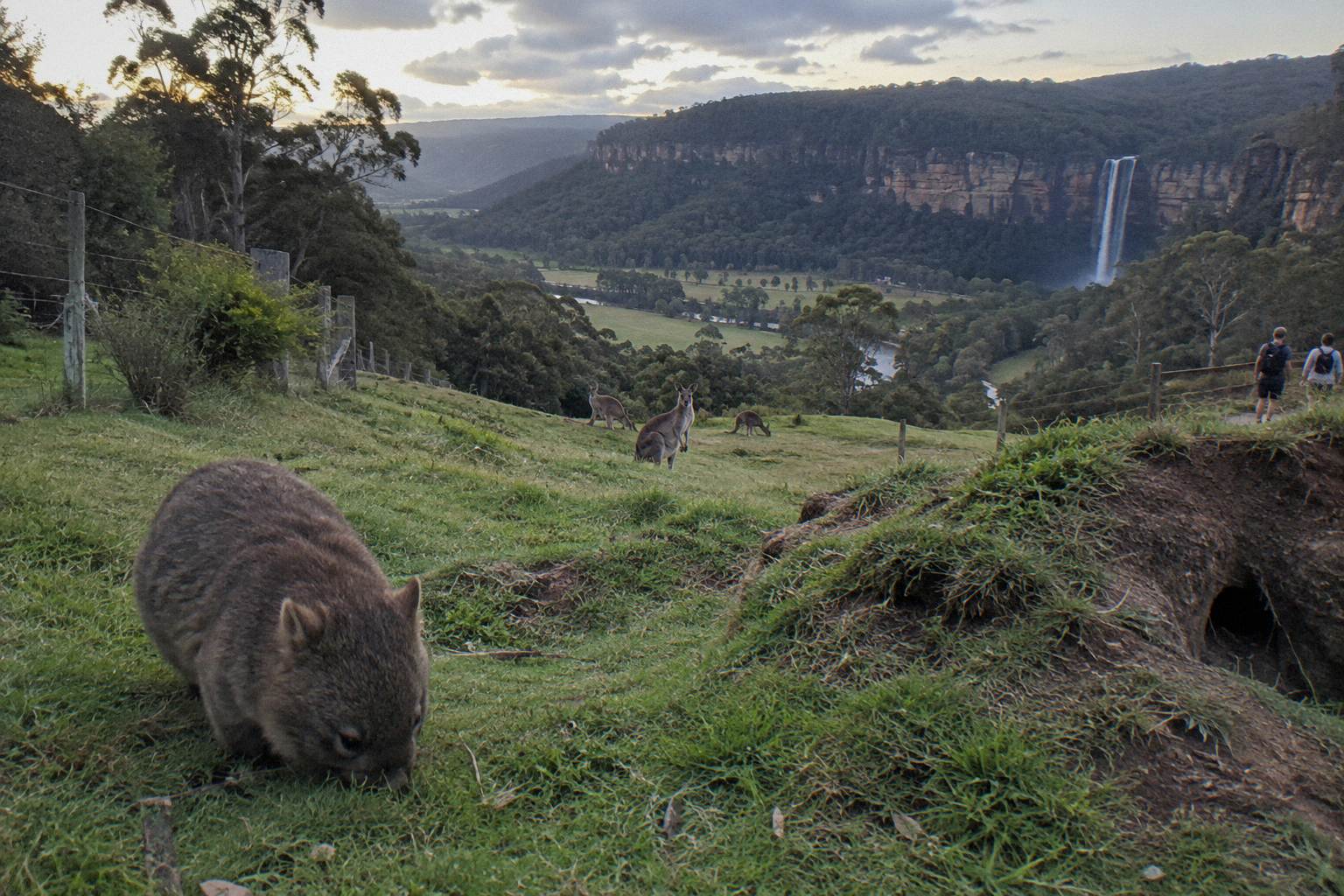
Feeding rules follow the same logic. NPWS is explicit that you should never feed wildlife in a national park without permission, because feeding native animals promotes scavenging and can make them sick, demanding and aggressive. Good wombat tours operate on looking, not luring, and the Blue Mountains sunset day lists feeding animals among its not-allowed activities. If a wild animal approaches because a guide has food, what you are watching is not wild behaviour, and in a national park it may not be legal behaviour either.
Featherdale's Wombat And The Certainty Play
Featherdale Sydney Wildlife Park at Doonside is the captive-animal way to see a wombat on a Sydney day tour, and two tours include it: Blue Mountains Wildlife And Bushwalk Small Group, rated 4.6 from 853 reviews, and the Scenic World and Featherdale small-group days. Featherdale's own pages list a wombat named Winnie among its animals, alongside daily kangaroo, wallaby and pademelon feeding through opening hours, 8 AM to 5 PM daily.
For many travellers this is the right answer, and it deserves to be argued on the facts rather than dismissed as the soft option. A park wombat is a wombat: a thick-set, burrow-built marsupial you can stand beside, photograph properly and actually study, rather than glimpse as a grey shape at dusk. Featherdale, at 217 Kildare Road, Doonside, is open 8 AM to 5 PM daily except Christmas Day, when it opens 8 AM to 2 PM, and its animal encounters page lists feeding kangaroos, wallabies and pademelons every day during opening hours, with a quokka meet, a wombat named Winnie and little penguin hand-feeding on the home page. It is a serious wildlife park, not a roadside photo stop.
The strongest version is Blue Mountains Wildlife And Bushwalk Small Group, operated by Activity Tours Australia, an about-11-hour day rated 4.6 from 853 reviews with a minimum age of 5. The booking page includes a 75-minute Featherdale Wildlife Park visit to meet kangaroos, koalas and native Australian wombats, a guided bushwalk to a Wentworth Falls lookout, a Three Sisters photo stop at a clear viewpoint, and crowd-free lookouts across the Jamison Valley, in a small group of up to 23. Pickup is included from four hotel-area points around the city. Bushwalks run 10 to 45 minutes on uneven ground with steps, at medium fitness, lunch is at your own expense with guide-recommended favourites, the day runs in all weather, and cancellation is free up to 24 hours before. The full index of guides sits on Sydney Wildlife Tours.
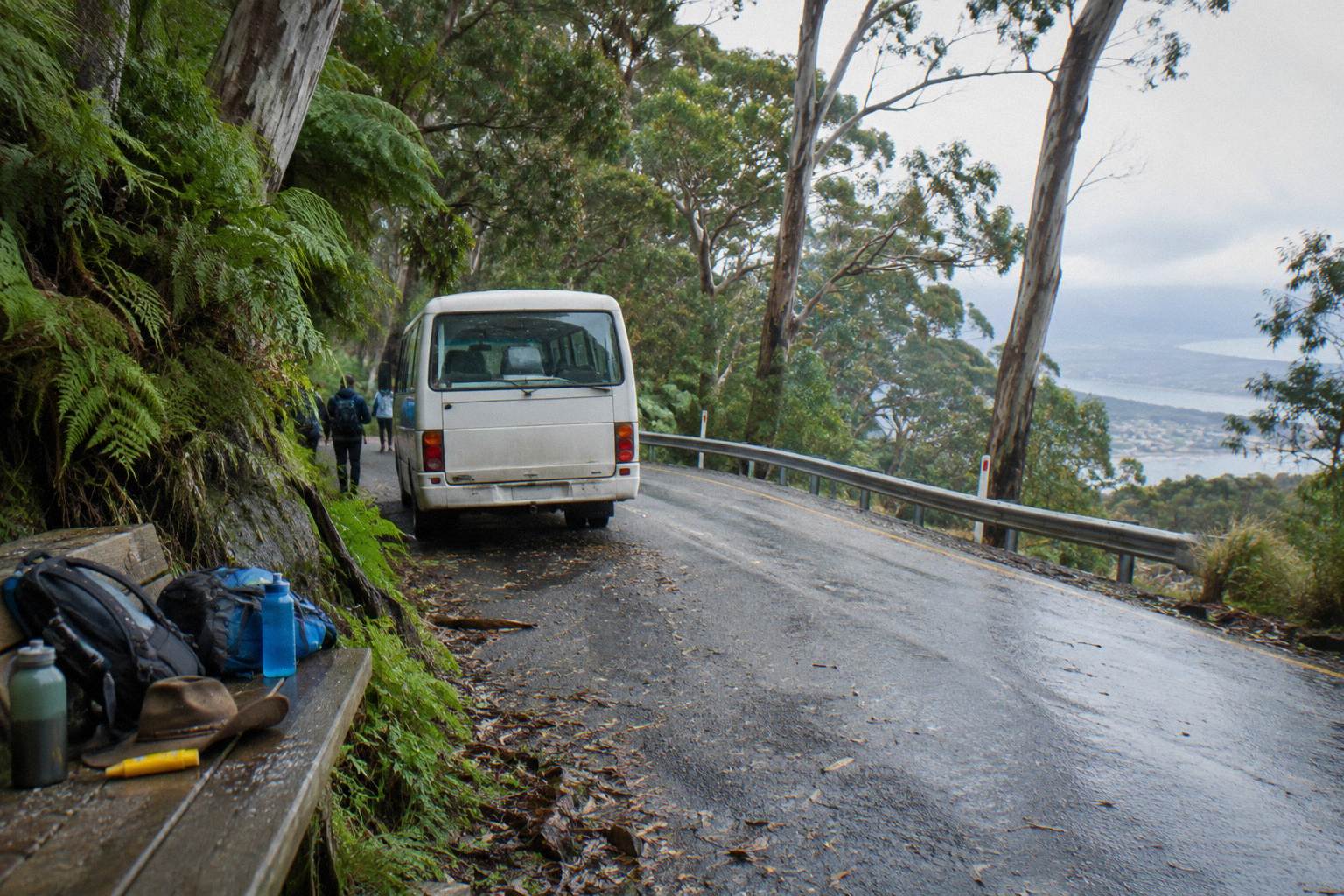
That combination is why the day works for families split between wildlife certainty and mountain scenery: the morning delivers animals, the afternoon delivers World Heritage bush. Two further small-group Blue Mountains days also pair Featherdale with Scenic World, one listing Featherdale entry plus a complete Scenic World pass with railway, skyway, cableway and walkway, starting 7:30 AM from a Haymarket meeting point, the other a deluxe Mercedes-Benz Sprinter small group with Wi-Fi and national park fees included. Both leave lunch at your own expense. If you would rather not take a tour at all, note that a self-drive or ticket-only Featherdale visit is a separate purchase you arrange yourself directly with the park.
| Wild attempt (Wild Wombats day) | Park certainty (Blue Mountains Wildlife And Bushwalk) |
|---|---|
| Wild wombats possible, never promised | Featherdale wombat and others seen at a scheduled 75-minute stop |
| About 11 hours, south coast and Southern Highlands | About 11 hours, Featherdale plus Blue Mountains National Park |
| All-inclusive: fees, snacks, dinner at a historical pub | Lunch at own expense, park entry and transport included |
| Small-group feel on a coach, Perfect Day Sydney | Small group of up to 23, Activity Tours Australia |
| Rating not printed, pool too small to characterise | 4.6 from 853 reviews |
| Free cancellation up to 24 hours before | Free cancellation up to 24 hours before, minimum age 5 |
Blue Mountains Wildlife And Bushwalk Small Group is the certainty play with the deepest review pool.
The trade-off is real and worth naming. On the wild day, a wombat that appears is doing what wombats do, in the place it lives, and that is a genuinely different experience from standing at an enclosure railing. On the Featherdale day, the wombat is in front of you for as long as you like, and the koalas and kangaroos are too. Neither is the better choice in the abstract; it depends whether your trip has one wildlife day in it or three.
Wild Wombat Or Park Wombat: Choosing For Your Trip
Choose the wild-wombat day if this is your main or only wildlife day out of Sydney and you want the real attempt, accepting that any sighting is a bonus rather than a deliverable. Choose a Featherdale-inclusive Blue Mountains day if you are travelling with young children, on a tight schedule, or simply cannot accept an 11-hour gamble. Travellers with two free days often do the south-coast run first and the Blue Mountains day second.
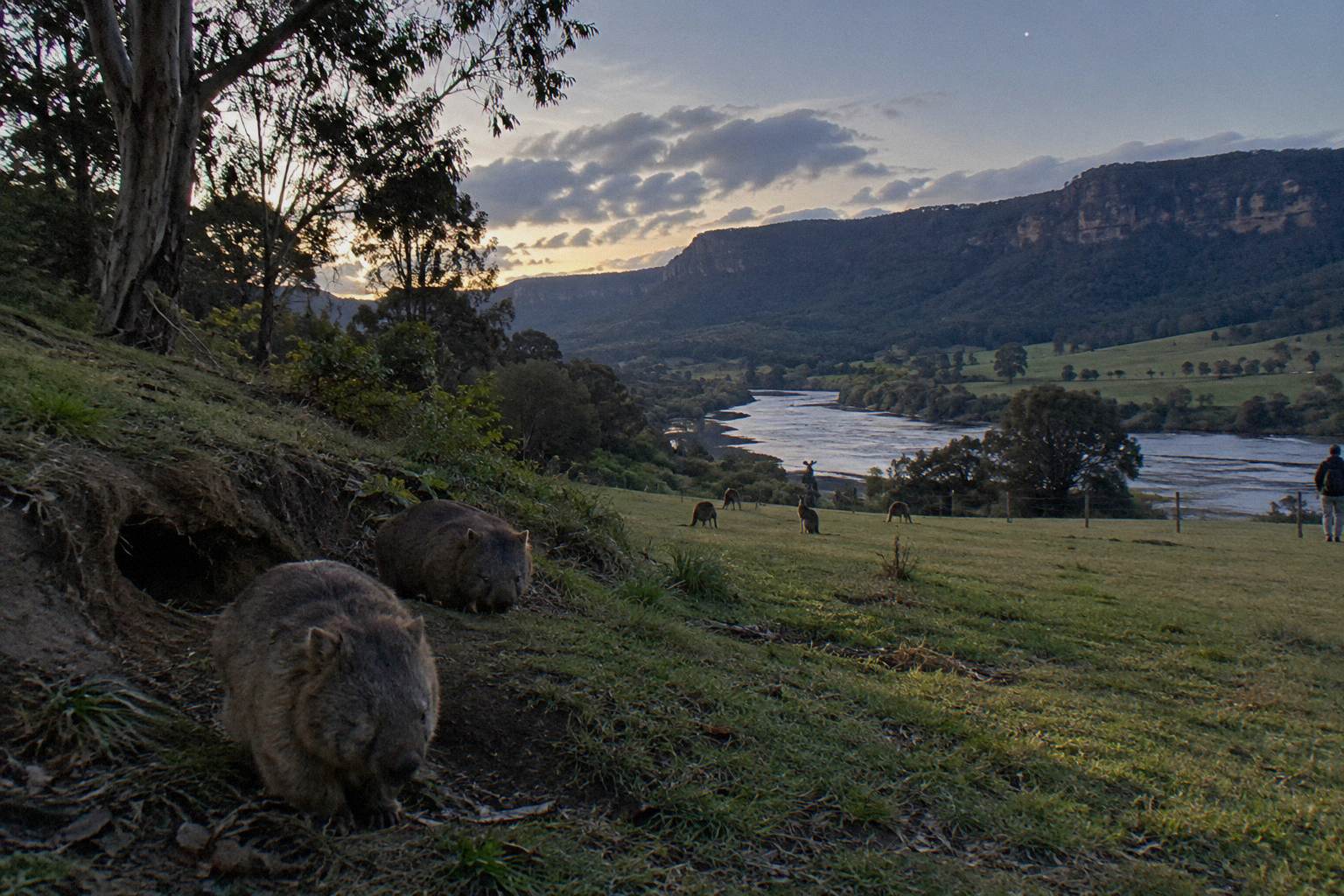
Age and stamina decide more of these choices than people expect. The wild day's listing does not state a minimum age, but an about-11-hour span with a late dinner return is a long day for small children, and its two optional stops mean the schedule flexes rather than waits. The Blue Mountains bushwalk day sets minimum age 5, keeps its walks to 10 to 45 minutes, and splits the day so the animal hour comes early and the walking comes after lunch. The Koala And Kangaroo Encounters With BBQ day, rated 5.0 from 42 reviews, takes children from age 4, covers about 800 metres of easy walking in about 7 hours, and pairs a close-up koala meeting with a kangaroo feeding and an all-you-can-eat BBQ lunch, though wombats are not its headline; it suits a family that wants animals without either a mountain or an 11-hour day.
Budget thinking should focus on what drives the price rather than the number, which every listing here shows only when you pick a date. All-inclusive days with national park fees, two meals and included snacks cost more per head than days where lunch is at your own expense, and small-group transport costs more than a 23-seat van or a full coach. The wild day bundles everything, including dinner at a historical pub; the Featherdale days leave lunch open, which lowers the headline and hands you the choice. Pickup matters too: the wild day and the bushwalk day both include pickup, while the waterfall wombat day and several Jervis Bay days meet at Central Station, which saves money but costs you a pre-dawn start at a city meeting point.
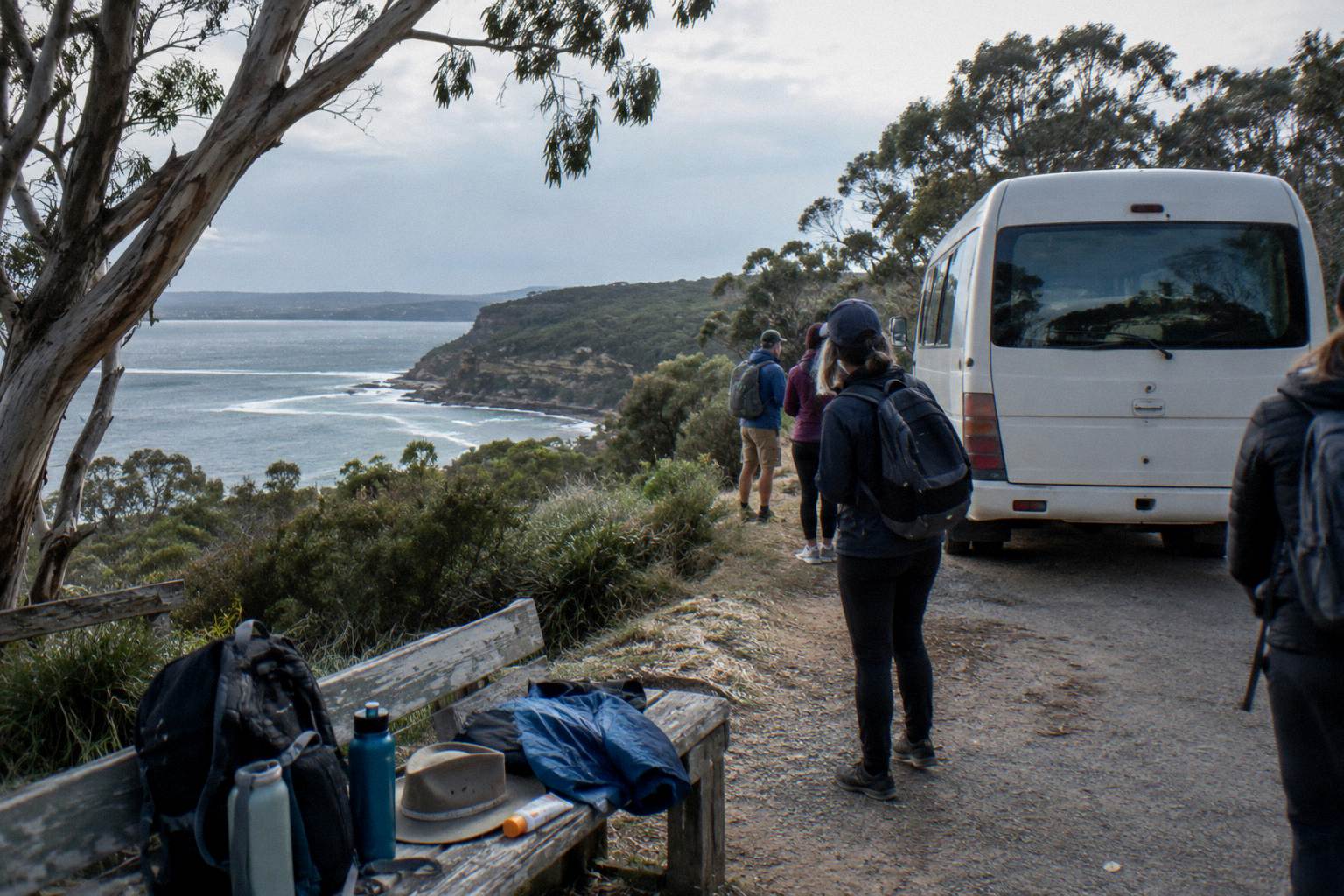
A useful cross-check is honesty of wording, and the wild or sanctuary animals on a wildlife tour piece covers it in depth. A listing that says wild wombats and kangaroos, waterfalls, viewpoints and stargazing is describing a route and an intention. A listing that promises sightings, or a sighting rate with a percentage attached, is selling certainty no operator owns. The Sydney wombat listings stay on the right side of that line, which is why they can be recommended at all. The same test applies to kangaroos, and if macropods are your real priority, the where to see wild kangaroos near Sydney guide maps the wild options in full.
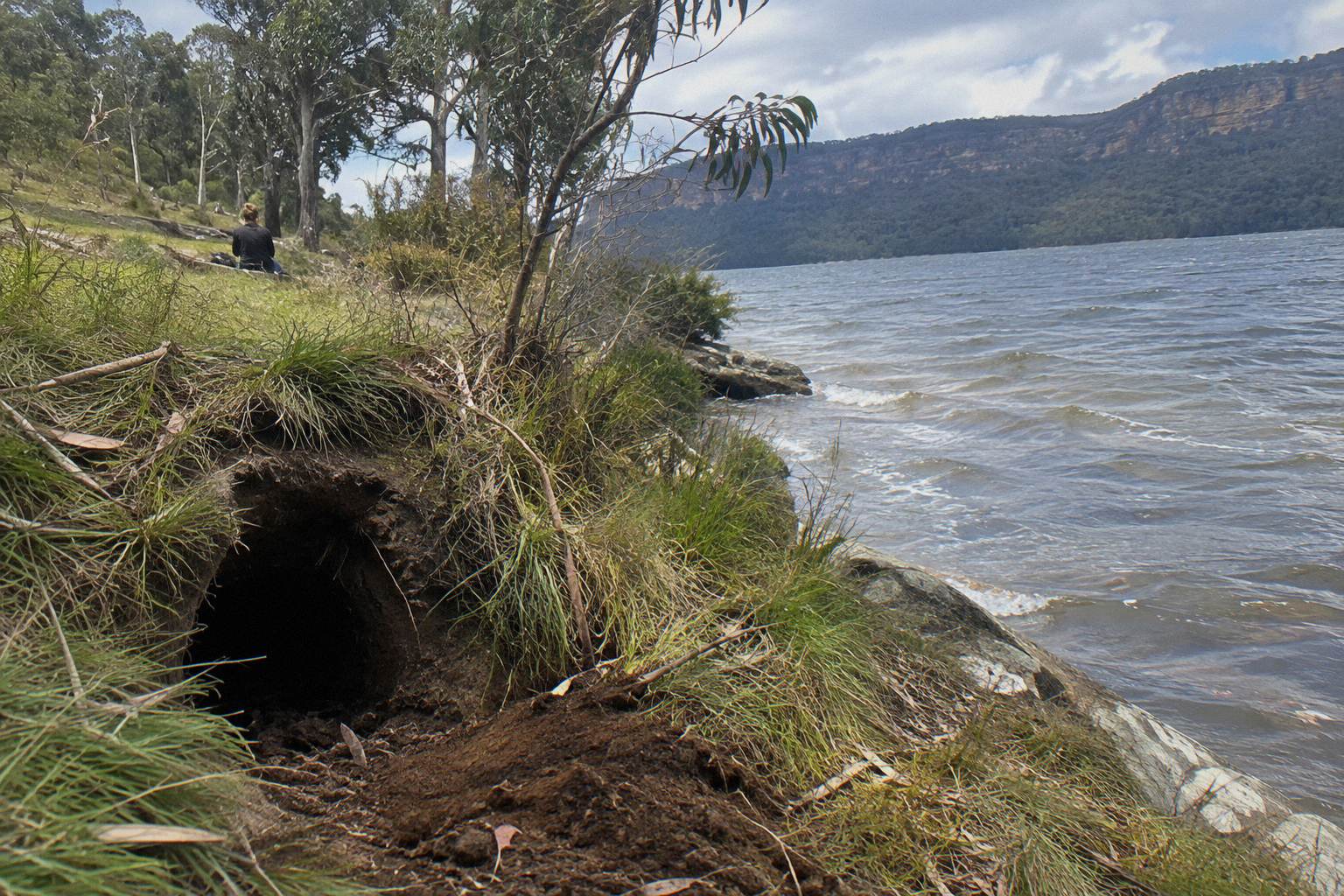
Reading A Wombat Listing Without Getting Burned
A trustworthy wombat tour listing names its stops with times, attributes its wildlife claims to the operator's own wording, and never prints a sighting guarantee or a sighting percentage. Red flags are the opposite: guaranteed wombats, exact animal counts, and itineraries with no stop durations at all. The Sydney listings all pass, but the same test protects you anywhere in Australia.
Start with the itinerary block and look for minutes against stops. The Wild Wombats day lists a viewpoint at 20 minutes, Macquarie Pass at an hour, the pie shop at 30 minutes, Budderoo at 40 minutes and Morton at 25 minutes, with drive times between them; you can reconstruct the whole day from it, including the fact that two stops are optional. The waterfall day does the same for Wollongong, Carrington Falls, Fitzroy Falls, Hampden Bridge and Kangaroo Valley. When a listing gives you that much structure, you can judge whether the wildlife windows sit at the right hours, and you can hold the operator to the shape of the day even if the animals stay underground.
The wildlife sentence works as a claim about habitat. The operator calls the Wild Wombats day an all-inclusive tour with wild wombats and kangaroos, two national parks, waterfalls, viewpoints and stargazing: every element after the animals is verifiable, and the animals are stated as the tour's purpose, which is the most any operator can do. Compare that with the marine world, where NSW law itself sets the ceiling on promises: the official approach rules keep vessels at least 100 metres from a whale and 50 metres from a dolphin, further still with calves, and no cruise may promise what a migration decides. Land tours have no equivalent statutory cushion, so the discipline has to come from the listing's own language, and from readers who notice when it drifts.
| Signal on a listing | Plain version | Warning version |
|---|---|---|
| Wildlife wording | Operator describes the tour's purpose and habitat | Guaranteed sightings, or a sighting percentage |
| Itinerary | Named stops with durations, drive times shown | Vague route, no times, optional-everything |
| Reviews | Rating printed with its review count | Bare rating, or "most popular" with no pool |
| Price | Shown when you pick a date, inclusions itemised | Hidden until checkout, inclusions vague |
| Animals in care | Says park, sanctuary or in-care plainly | Calls sanctuary animals "wild" |
Rating discipline matters as much as wording. A rating appears only with its count, because a 5.0 from three reviews is a fact about three people, not a verdict. Here only three figures qualify at all: the Blue Mountains bushwalk day at 4.6 from 853 reviews, and, for context on nearby options, the koala and BBQ day at 5.0 from 42 reviews and the Jervis Bay beaches, koalas and kangaroos day at 4.6 from 78 reviews. The two dedicated wombat tours have no rating or review count, which means the accurate treatment of them is silence on the subject. If a review elsewhere calls a tour highly rated, check the pool size before you let it steer a booking.
Finally, check the flexibility terms, because wildlife days are weather-exposed and plans move. Free cancellation up to 24 hours before applies to the Wild Wombats day, the Blue Mountains bushwalk day and most of the Sydney tours, while the second-booking-page waterfall day does not state a cancellation term, so assume nothing and confirm on the listing before you rely on it. Pickup-time confirmation habits matter too: on the wild day, exact times are confirmed the day before and always run later than the time shown at booking, so keep the evening before clear for that message.
What The Day Itself Feels Like
Expect a very early city pickup, a long scenic drive south or west, and one or two substantial wildlife stops timed for the edges of the day, with a return after dark on the wild wombat run. Featherdale-based itineraries front-load the animals and spend the afternoon in the mountains; either way you cover a lot of New South Wales in 10 to 12 hours, so plan around sleep, food and footwear.
On the wild day the rhythm is set by the light. The bus leaves from St James or the second pickup point, crosses the coastal plain and climbs through Macquarie Pass rainforest, and the group's first real stretch of country comes mid-morning. Lunch at the Robertson pie shop covers the midday hours when wombats are least visible, and the afternoon moves through the optional Budderoo and Morton stops as the shadows lengthen, which is exactly when the grassy forest edges get interesting. Dinner at a restaurant in a historical pub breaks the return drive, and stargazing is on the menu because the bus is in genuinely dark-sky country by then. Wear layers: escarpment weather can move from warm sun to cold fog inside an hour, and closed shoes beat sneakers on wet grass.
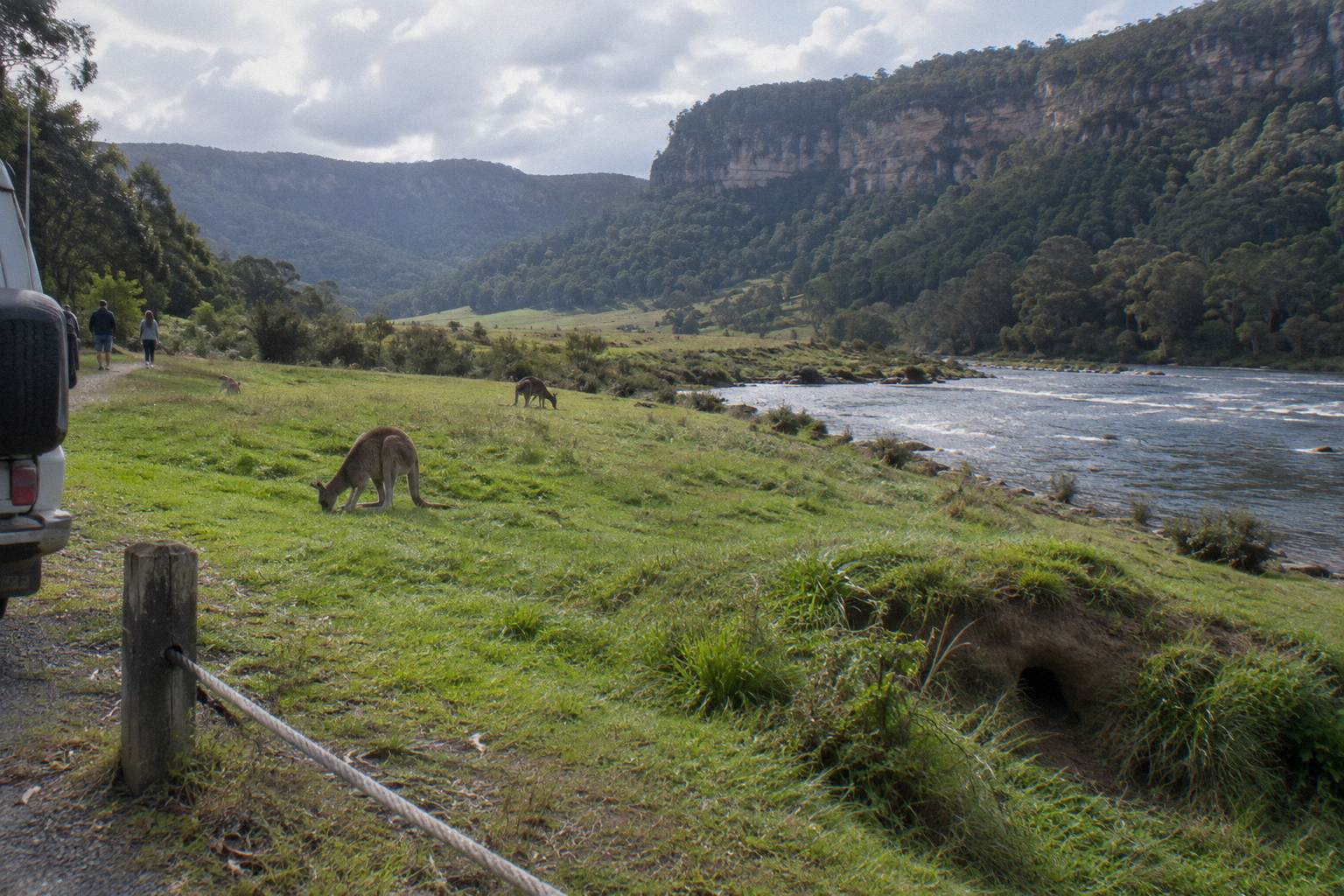
The Featherdale versions run the day in the opposite order. The bushwalk day collects from four hotel-area points around the city, drives about 75 minutes to Doonside, and puts the group into Featherdale for 75 minutes while everyone is fresh, which is when the kangaroo and wallaby feeding is at its busiest. From there it is up to the Blue Mountains for a lookout stop, a lunch hour in a mountain village at your own expense, the guided walk to a Wentworth Falls lookout, and the Three Sisters photo stop before the drive back. Children from age 5 are welcome, the walks top out at 45 minutes on uneven ground, and the day runs in all weather, so pack rain gear in the cooler months.
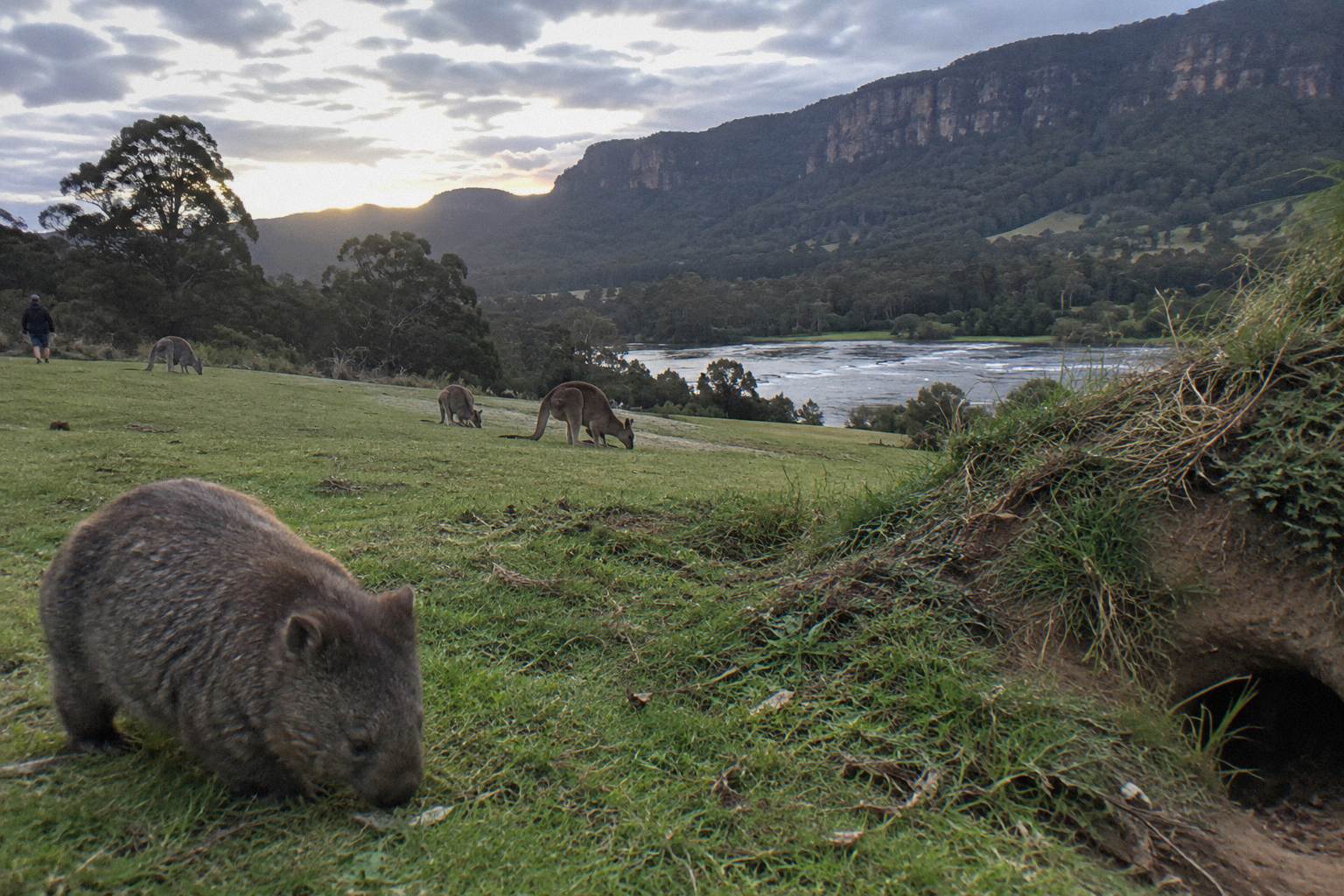
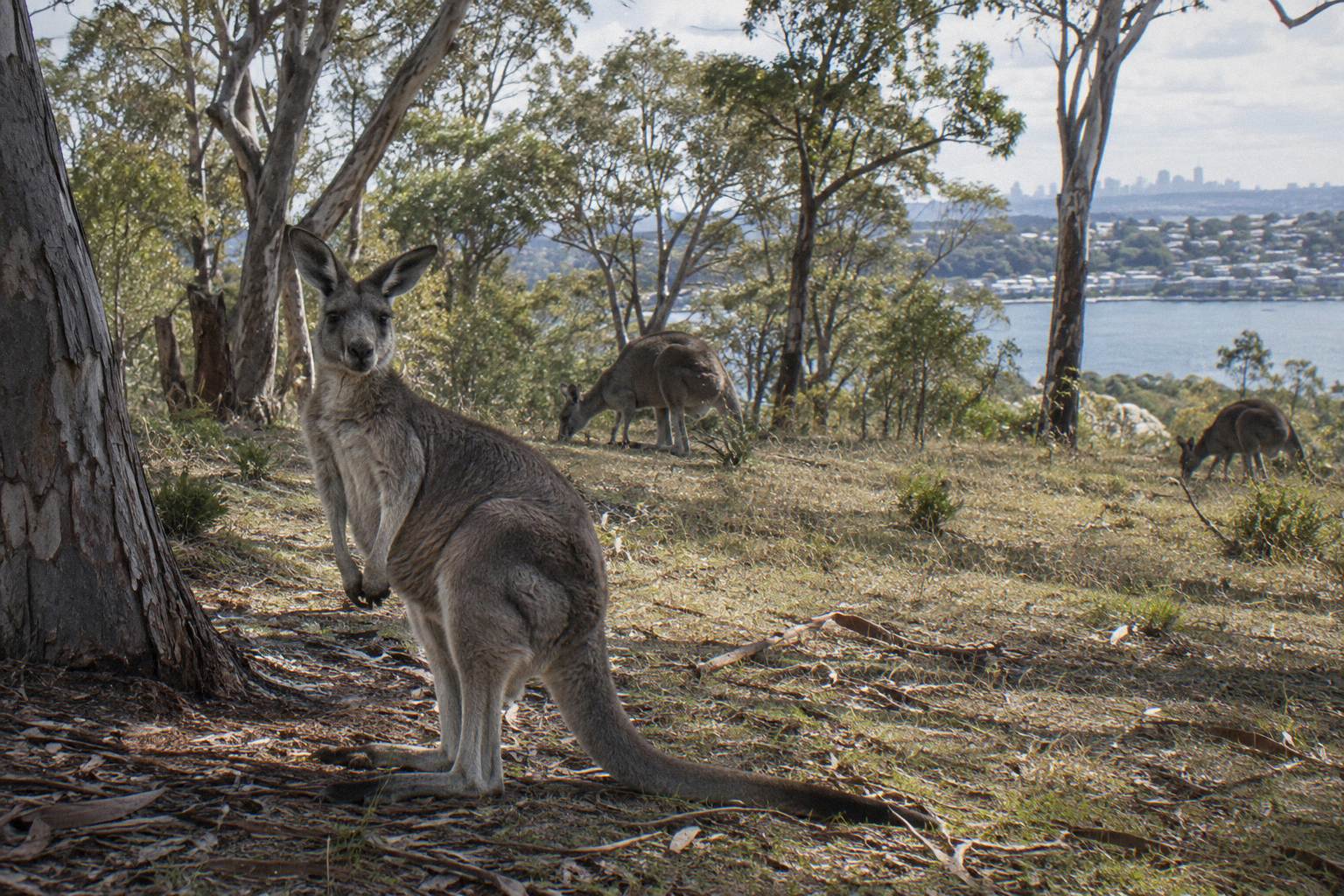
Photography expectations should be set before you leave. A wild wombat at dusk is a low-light subject, so the photos that come home from the south-coast run are often landscape shots with a grey dot, while Featherdale delivers portrait-grade wombat frames all day. Koala rules are fixed everywhere in NSW: you cannot hold or cuddle a koala, encounters are run by trained professionals, and Featherdale's own encounters page offers a pat-and-photo experience as the legal maximum. The same realism applies to kangaroos on the wild stops: they are wild animals choosing to be in a paddock, and the guide's job is to get you close enough to watch without changing what they do.
Common Questions About Wombats On Sydney Day Tours
Can You See Wombats On A Wildlife Day Tour From Sydney?
Yes. The Wild Wombats And Kangaroo Experience, about 11 hours, stops in Macquarie Pass, Budderoo and Morton national park country where the operator describes wild wombats and kangaroos, and Featherdale Wildlife Park near Sydney keeps resident wombats, included on Blue Mountains Wildlife And Bushwalk Small Group, rated 4.6 from 853 reviews. No tour promises a wild sighting.
Are Wild Wombats Guaranteed On Any Tour?
No. Wombats are nocturnal and no operator can guarantee one above ground during a day tour. The careful listings describe the country and the tour's purpose, and mark some stops optional so the guide can chase activity. Seeing a wombat is only dependable at a wildlife park such as Featherdale.
Can You Hold Or Pat A Wombat In NSW?
Wild wombats are never touched on a tour, and interactions with animals in care are run under keeper supervision at the park's discretion. Featherdale's own pages describe meet-and-pat style encounters under staff guidance. Never trust a listing that offers holding or cuddling of a wombat or koala.
Which Sydney Tour Is Best For Wombat Lovers With Kids?
Blue Mountains Wildlife And Bushwalk Small Group, rated 4.6 from 853 reviews, takes children from age 5 and includes 75 minutes at Featherdale with wombats, koalas and kangaroo feeding, plus short bushwalks of 10 to 45 minutes. The wild day's about-11-hour span with a late dinner suits older children and adults better.
Where Does The Wild Wombat Tour Actually Go?
The Wild Wombats And Kangaroo Experience runs from two Sydney pickup points through a viewpoint, Macquarie Pass National Park, a Robertson pie shop lunch stop, optional stops in Budderoo and Morton national parks, and dinner at a restaurant in a historical pub, returning after dark with stargazing on the operator's description of the day.
Do Wombat Tours Run In Bad Weather?
The Blue Mountains Wildlife And Bushwalk Small Group listing says the day runs in all weather, and the wild day keeps moving in rain, though optional stops may flex. Bring layers, closed shoes and rain gear in cooler months, and check the listing's cancellation terms when you book, since free cancellation up to 24 hours before applies to both headline tours.