Small Boat Or Large Boat For Whale Watching In Sydney?
A plain-English comparison of speed-boat and cruise-ship whale watching from Sydney: what the rules allow, what each format feels like, and which suits your trip.
Neither boat size wins you a closer look, because NSW law caps every vessel at the same distance from a whale. The real differences are pace, comfort, shelter and the style of the ride: a speed boat is a fast, open, adventurous run out to the whales, while a larger cruise vessel offers commentary, an indoor lounge and steady viewing decks. The right choice depends on who is travelling and how they handle open water.
Every Sydney winter, the same question lands in search bars across the city: small boat or large boat for whale watching in Sydney? It is a genuinely good question, and it deserves a better answer than the marketing copy usually gives. Operators of fast boats sell thrill and intimacy. Operators of large cruise vessels sell comfort and commentary. Both are describing the same animals, in the same water, under the same approach rules, in the same May to November season that the NSW National Parks and Wildlife Service describes plainly: you can see whales during their annual migration from May to November every year.
The purpose of this comparison is to separate what actually differs between the formats from what does not. The biggest claimed difference, proximity to the whales, is not a difference at all under NSW approach-distance rules. What genuinely differs is the experience of getting there and back, and that is a personal choice about comfort, budget and travel style rather than a technical one about whale biology.
If you already know you want the fast format, Check availability on the speed-boat whale watching listing, or read more about the city's cruise options in the Sydney whale watching cruises guide.
What Whale Watching Formats Operate From Sydney?
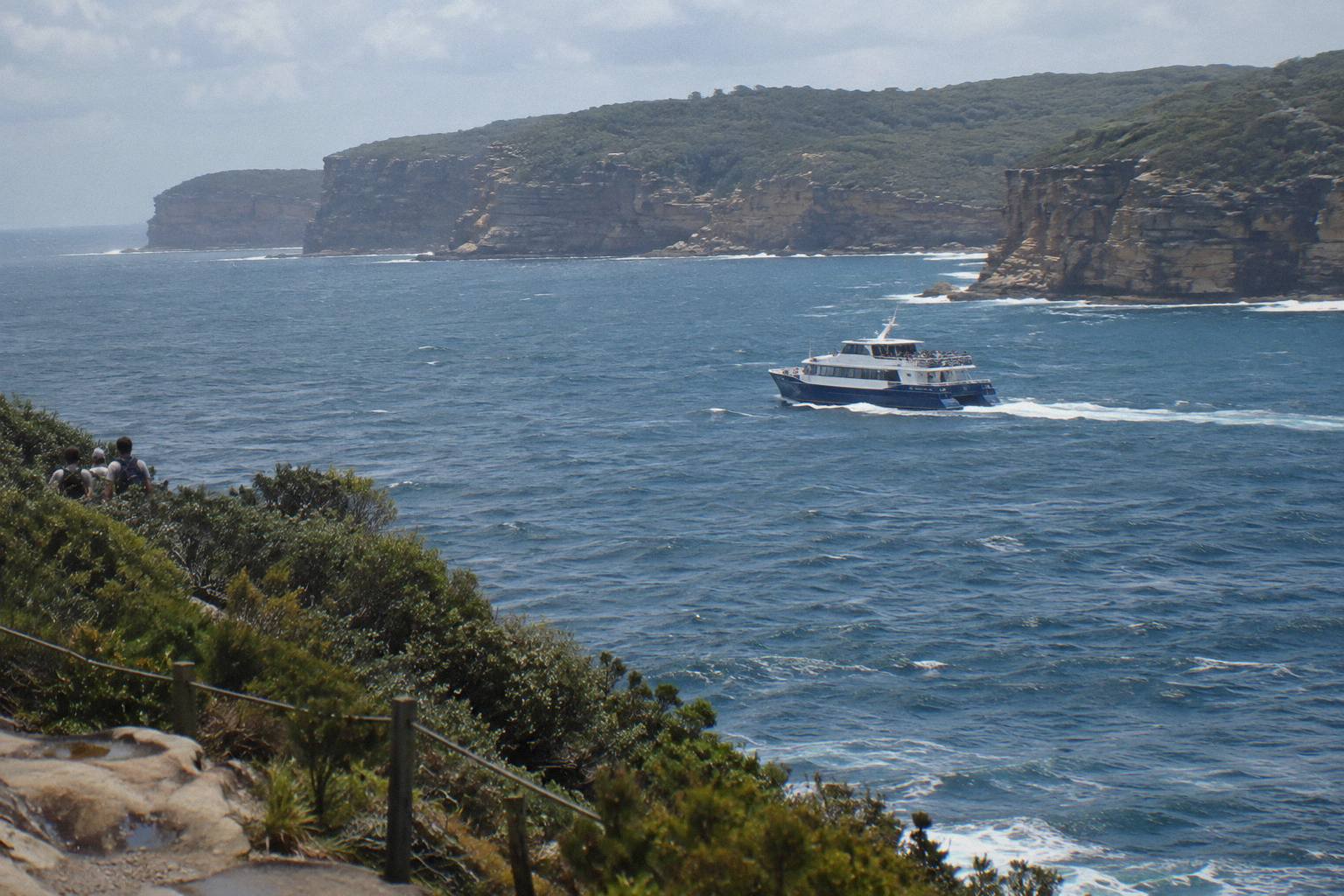
Sydney whale watching splits into two formats: a conventional cruise vessel, such as the Captain Cook 2.5 Hour Whale Watching Cruise rated 4.3 from 364 reviews, which leaves Circular Quay Wharf 6 with commentary and indoor and outdoor areas, and a speed-boat format run on its own separate booking page. Both operate within the same May to November whale season.
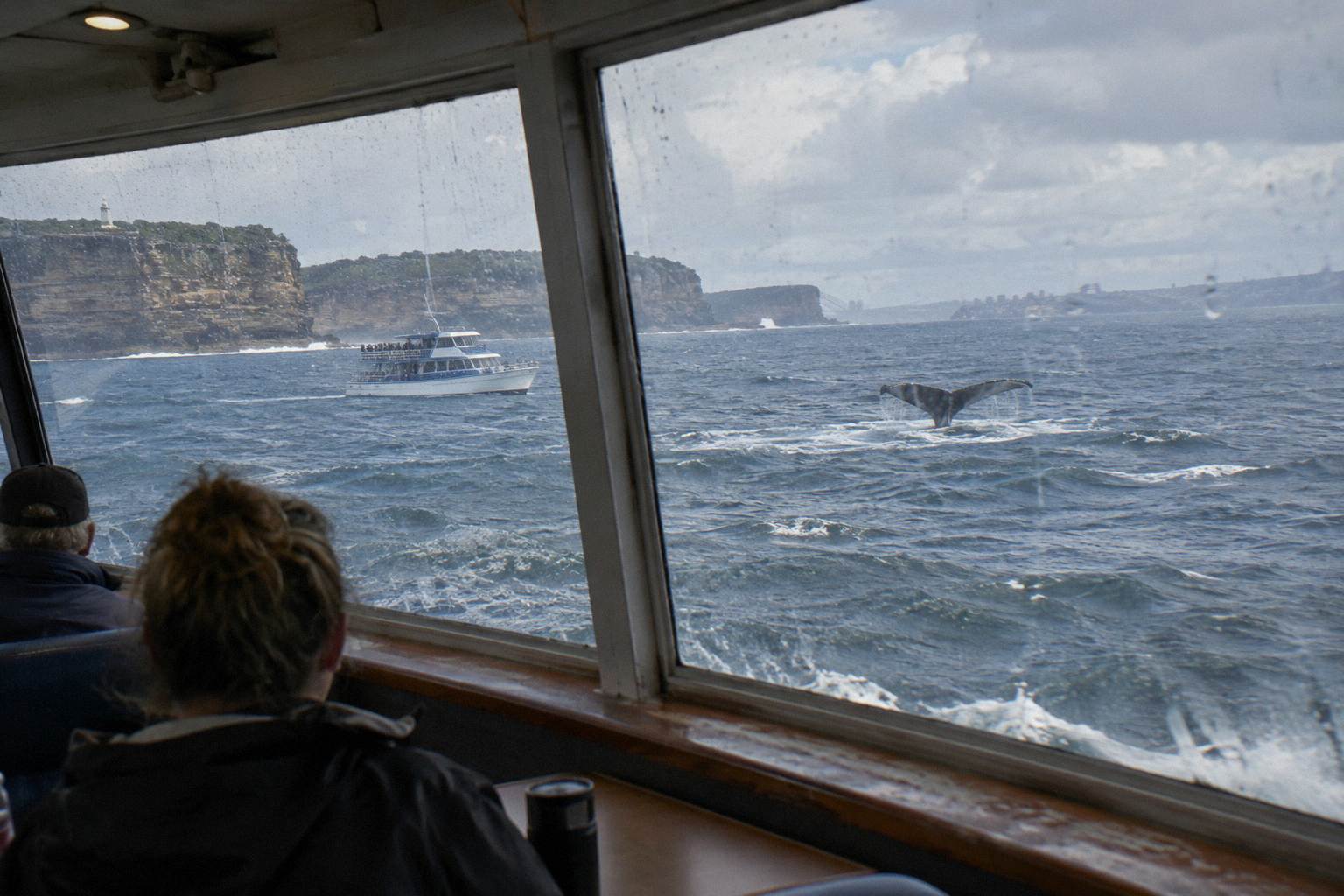
The cruise side of the ledger is well documented. The Captain Cook Cruises product is a 2.5-hour whale watching cruise from Sydney Harbour, with expert commentary throughout, an indoor all-weather lounge and outdoor viewing areas, and the chance to spot whales, dolphins, seals, albatross and other marine life. Hotel pickup is not included; you make your own way to Circular Quay Wharf 6, and food and drinks are not included either. The listing is candid about the realities of the ocean: sightings are nature-dependent and vary from cruise to cruise, the cruise operates subject to weather, and it is an open-water cruise where sea motion may affect some guests. Infants aged 0 to 3 are not recommended, and child fares exist for ages 4 to 15.
The speed-boat side is sparser on detail. The Ocean Extreme product is a speed-boat whale watching format sold on its own booking page, and the published facts for it are limited to exactly that: the format and the season. No operator-stated duration or capacity appears in the published facts, so the sensible move is to read the listing itself for the specifics before deciding. What the format implies, and what its own marketing category confirms, is a faster, smaller, more exposed ride: less shelter, fewer on-board amenities, more of an expedition feel.
Neither listing states vessel size, passenger numbers, stability or closeness of sightings, so ask the operator before you book. Those details are not published; ask the operator when you book.
Beyond the harbour itself, whale and dolphin watching also happens further afield. The Port Stephens Dolphins, Koalas And Sandboarding Day Trip pairs a 90-minute Dolphin Discovery eco cruise from Nelson Bay with a Koala Sanctuary visit and Stockton Beach 4WD and sandboarding, about 12 hours all told with CBD hotel and Central Station pickups. It is a different animal and a different waterway, but for families weighing boat-based wildlife experiences it belongs on the same shortlist, and the Port Stephens dolphin cruises guide covers it in depth.
That is the menu: a conventional harbour cruise with commentary and a lounge, a fast open speed boat, and, if a full day appeals, a dolphin cruise folded into a Port Stephens itinerary. Everything that follows is about choosing between them.
Does A Smaller Boat Get You Closer To Whales?
No. NSW approach rules apply to every vessel on the water, so a speed boat and a cruise ship hold the same minimum distance from a whale: at least 100 metres, and 300 metres when a calf is present. A smaller boat cannot legally close that gap, and no licensed operator is entitled to a closer approach than any other.
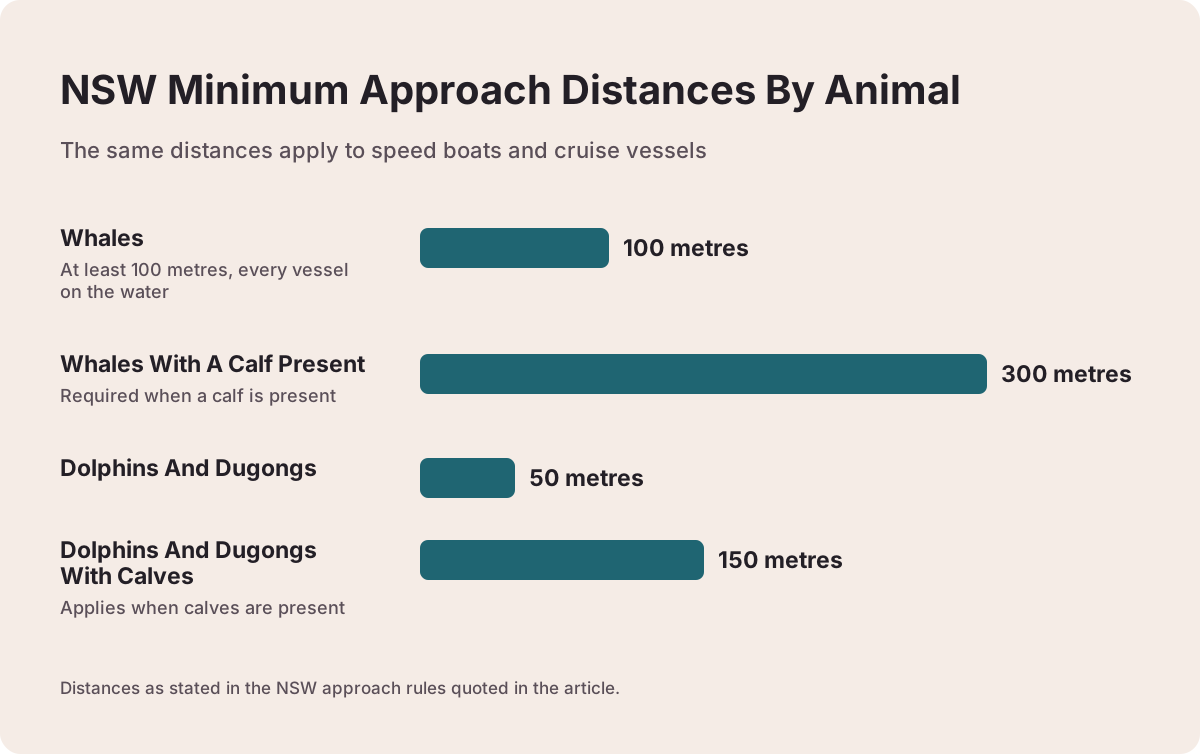
This is the single most useful fact in the whole small-versus-large debate, and it comes straight from the official NSW rules rather than from any operator's brochure. Vessels keep at least 100 metres from a whale, and 300 metres when a calf is present; dolphins and dugongs get 50 metres, and 150 metres with calves; within 300 metres of whales, boats travel at a constant slow speed with minimal wash; and jet skis keep 300 metres from a whale, dolphin or dugong. These are the rules licensed operators work to, and you can read them in full on the NSW Environment approach distances page and the NSW Government marine mammal watching page. Extra protections apply to southern right whales, which are given an even wider berth.
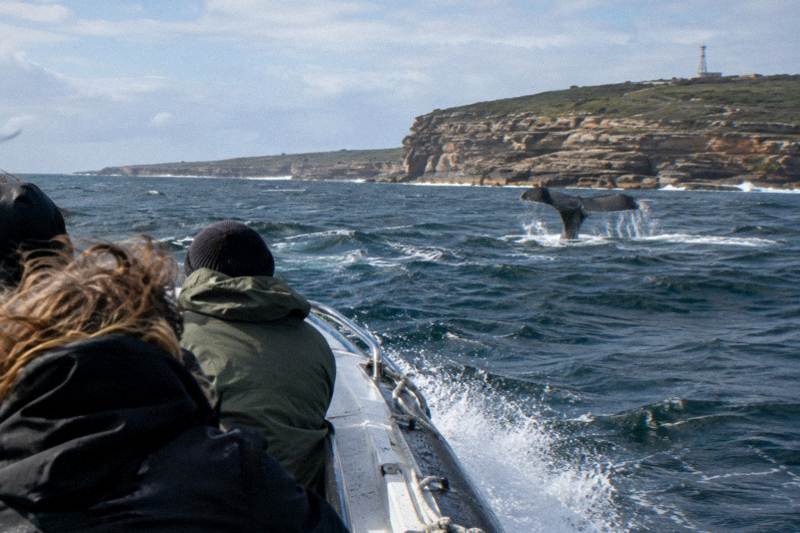
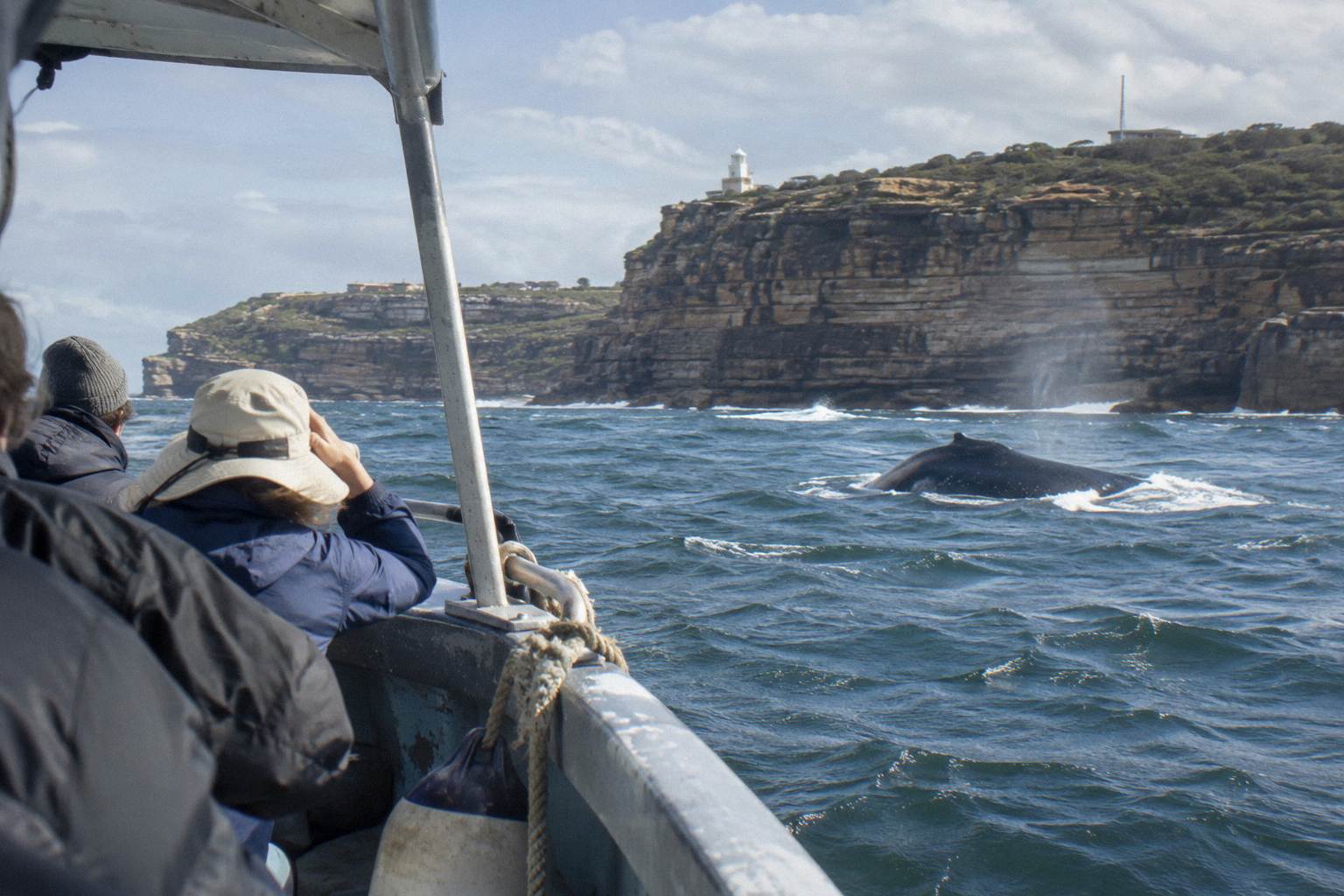
So the framing is this: format changes the ride, not the rules. A humpback at 100 metres is a humpback at 100 metres whether you are leaning on a cruise rail or gripping a handrail on a rigid inflatable. What can differ, within the rules, is the character of the viewing: a smaller vessel sits lower in the water, so a whale beside you at the legal distance feels physically nearer and more immersive; a larger vessel gives more deck space, more angles and a higher vantage. Both are describing the same 100 metres.
What no page can promise is a sighting at all. The Captain Cook listing says it in so many words: sightings are nature-dependent and vary from cruise to cruise. Whales are wild animals migrating along a coastline, not performers on a schedule. Humpback and southern right whales head north for warmer waters throughout June and into July, and return south from around September to November, with a mid-year peak in between, and that migration pattern is what every Sydney operator, fast or large, is working around.
Can You Hold A Koala In NSW?
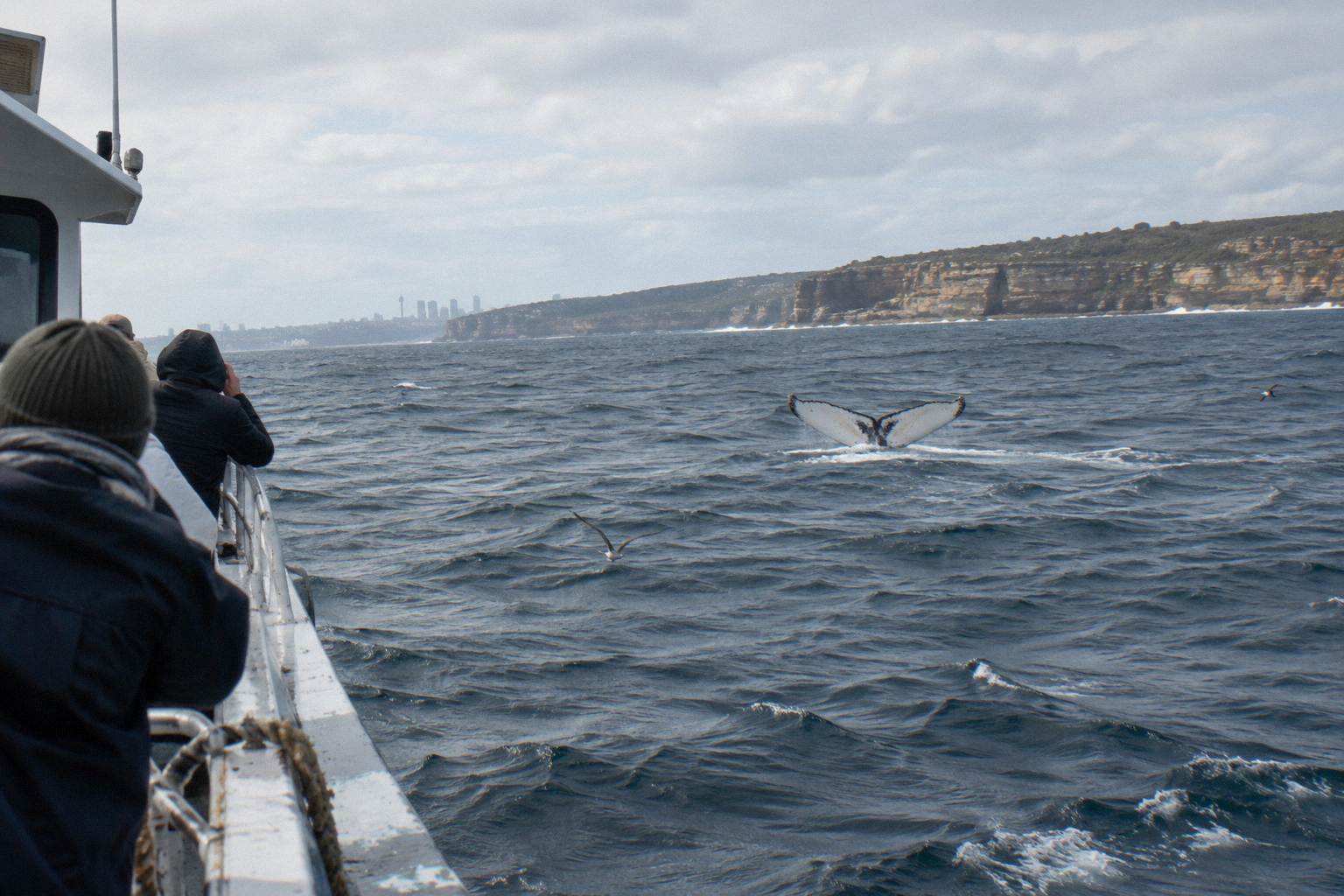
The whale season framing matters for the speed-versus-size question in one more way: both formats are seasonal products inside the same May to November window, and no cruise runs outside it. Booking in the shoulder weeks means fewer boats on the water and the same rules either way.
The cruise format's strengths are easiest to see in the details of the 2.5-hour product: the indoor all-weather lounge is a genuine feature on a cold July morning, commentary turns a silhouette into a story, and a 4.3 rating from 364 reviews gives a reasonably large sample of how the experience has landed with past guests.
The speed-boat format's strengths are the mirror image: pace, exposure to the elements, and a lower, closer-to-the-water seat. Neither strength is a proximity claim. If a booking page or advertisement implies a fast boat gets you nearer to the whales than the rules allow, treat that as a marketing flourish and re-read the approach distances above.
How Do Sea Conditions And Comfort Differ Between Formats?
The stated facts are limited to the cruise side: the Captain Cook page warns it is an open-water cruise where sea motion may affect some guests, with an indoor lounge and outdoor viewing areas, and it runs subject to weather. Nothing is stated about the speed boat's ride beyond its format; seasickness specifics are not published for either, so ask the operator.
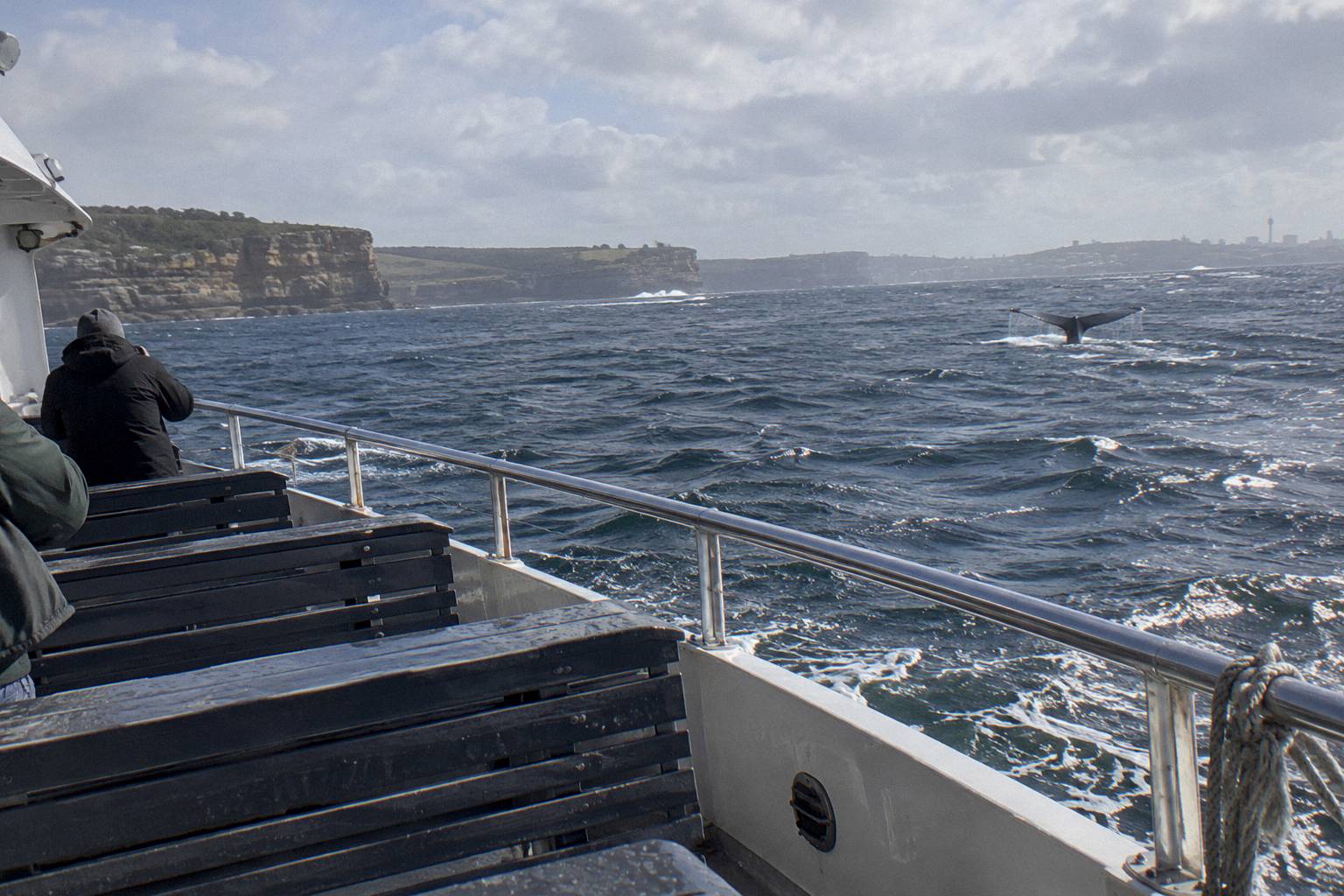
Comfort is where the two formats genuinely diverge, so it is worth being precise about what the record actually says. The cruise listing gives the fullest picture. The vessel has an indoor all-weather lounge as well as outdoor viewing areas, which means a retreat from wind and spray exists on board. The same listing is upfront that the cruise operates subject to weather and operational requirements, that sea motion may affect some guests, and that infants aged 0 to 3 are not recommended. That combination, shelter plus a frank motion warning, is the comfort profile of a larger vessel: not immunity from the ocean, but somewhere to sit while it moves. The rest of the planning pages sit on Sydney Wildlife Tours.
For the speed-boat side, the research holds no statements on ride quality, stability, sea sickness rates or swell handling, and no specifics can be stated. The format itself tells you the broad strokes: an open, fast boat offers less shelter and more motion by design, and many travellers book it precisely for that reason. But any specific claim about how it handles chop, or whether guests get wet, or what to take for motion sickness, would be invention. The post on whether whale watching makes you seasick covers the general question, and its what to wear on a whale watching cruise guide handles the practical clothing side.
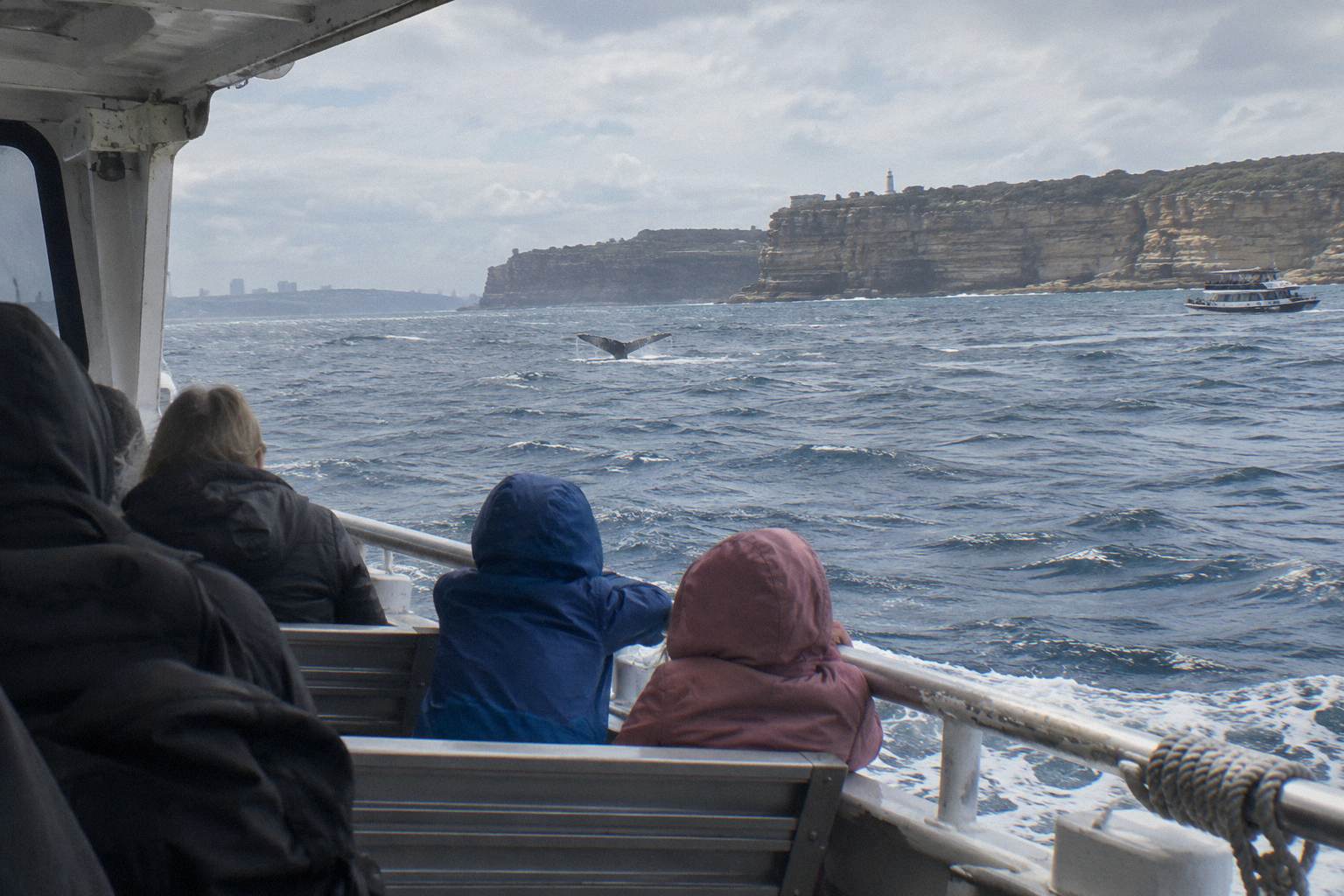
A useful way to hold the comfort question is to separate the two things people mean by it. One is shelter: does the boat have somewhere enclosed to sit? The cruise answers yes; the speed-boat format, by its nature, offers little, and the listing will confirm what cover exists. The other is motion: how much does the boat move? Larger vessels generally move differently rather than less, and the cruise's own motion warning applies regardless of size. Nobody can promise a calm ride on open water in whale season, and no swell figure for either product is published here.
| Comfort factor | Cruise vessel (stated) | Speed-boat format (stated) |
|---|---|---|
| Shelter | Indoor all-weather lounge plus outdoor viewing areas | Format implies open ride; ask the operator |
| Motion warning | Open-water cruise; sea motion may affect some guests | Not stated; ask the operator |
| Weather policy | Operates subject to weather and operational requirements | Not stated on the booking page |
| Age guidance | Infants 0 to 3 not recommended; child fares ages 4 to 15 | Not stated; ask the operator |
| Commentary | Expert commentary throughout the cruise | Not listed on the booking page |
The pattern in that table is deliberate: the cruise side is well documented because its booking page is detailed, while the speed-boat side requires a direct question to the operator. That asymmetry is itself a decision input. Travellers who like knowing exactly what they are boarding tend to the cruise; travellers happy to trade certainty for pace ask the speed-boat desk their two questions and go.
Which Format Suits Which Traveller?
Families with young children, first-time whale watchers and anyone unsure about open water are best matched to the cruise format's lounge, commentary and 2.5-hour length. Adventurous travellers, photographers after a low vantage and repeat whale watchers who want a fast, immersive run tend to the speed boat. Groups wanting a full day can look at Port Stephens instead.
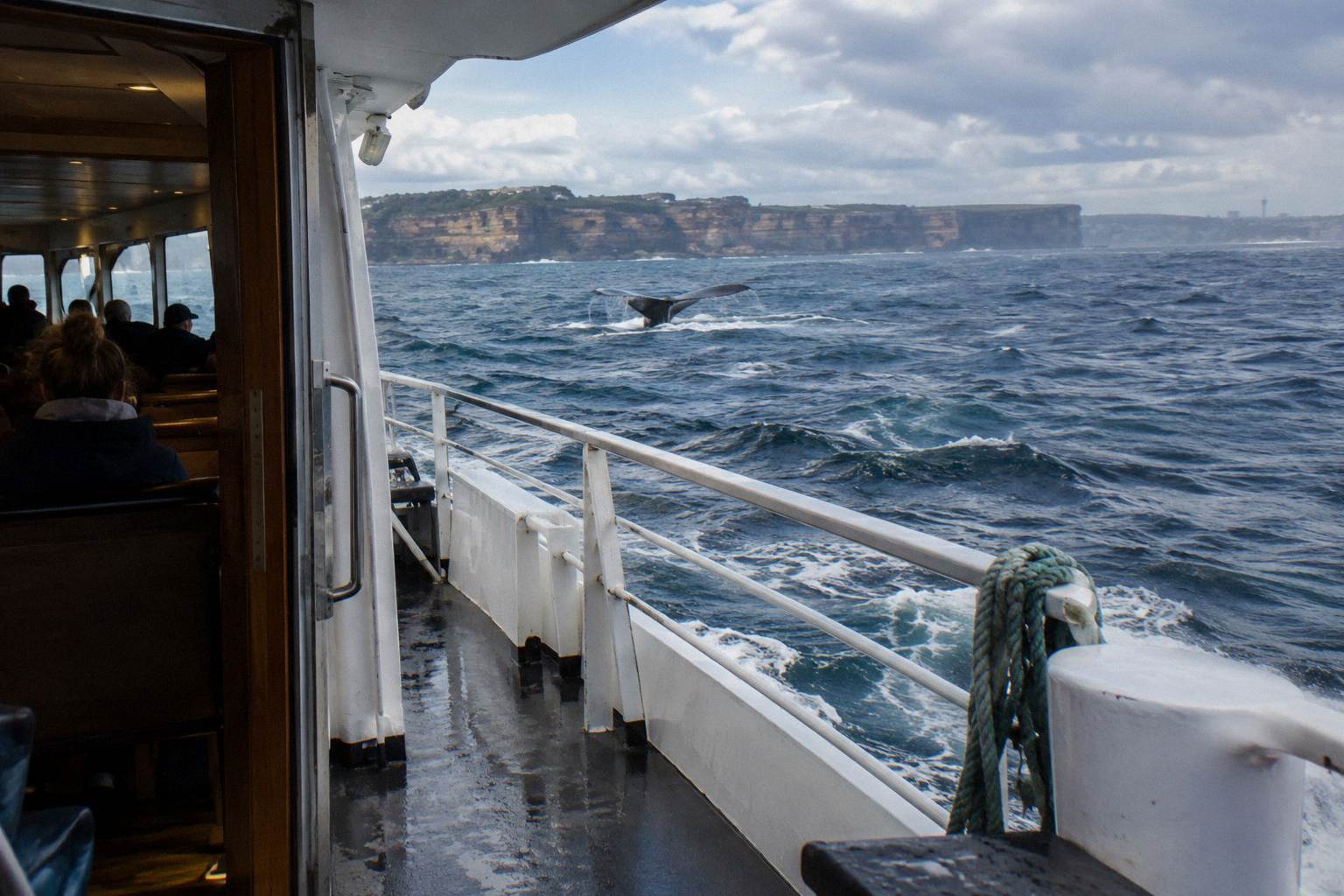
Decision logic works better than a verdict here, because the two formats are genuinely aimed at different people. Start with your group. The cruise carries child fares for ages 4 to 15 and a minimum-age signal only for infants under 4, which points it at families. The speed-boat facts state no age policy at all, so families must ask before assuming children can board. Then start with your morning. A 2.5-hour cruise from Circular Quay Wharf 6 slots between breakfast and lunch in the city; a speed-boat run may be shorter or longer, unstated here, but the format itself is built around a short, intense window on the water rather than a half-day outing.
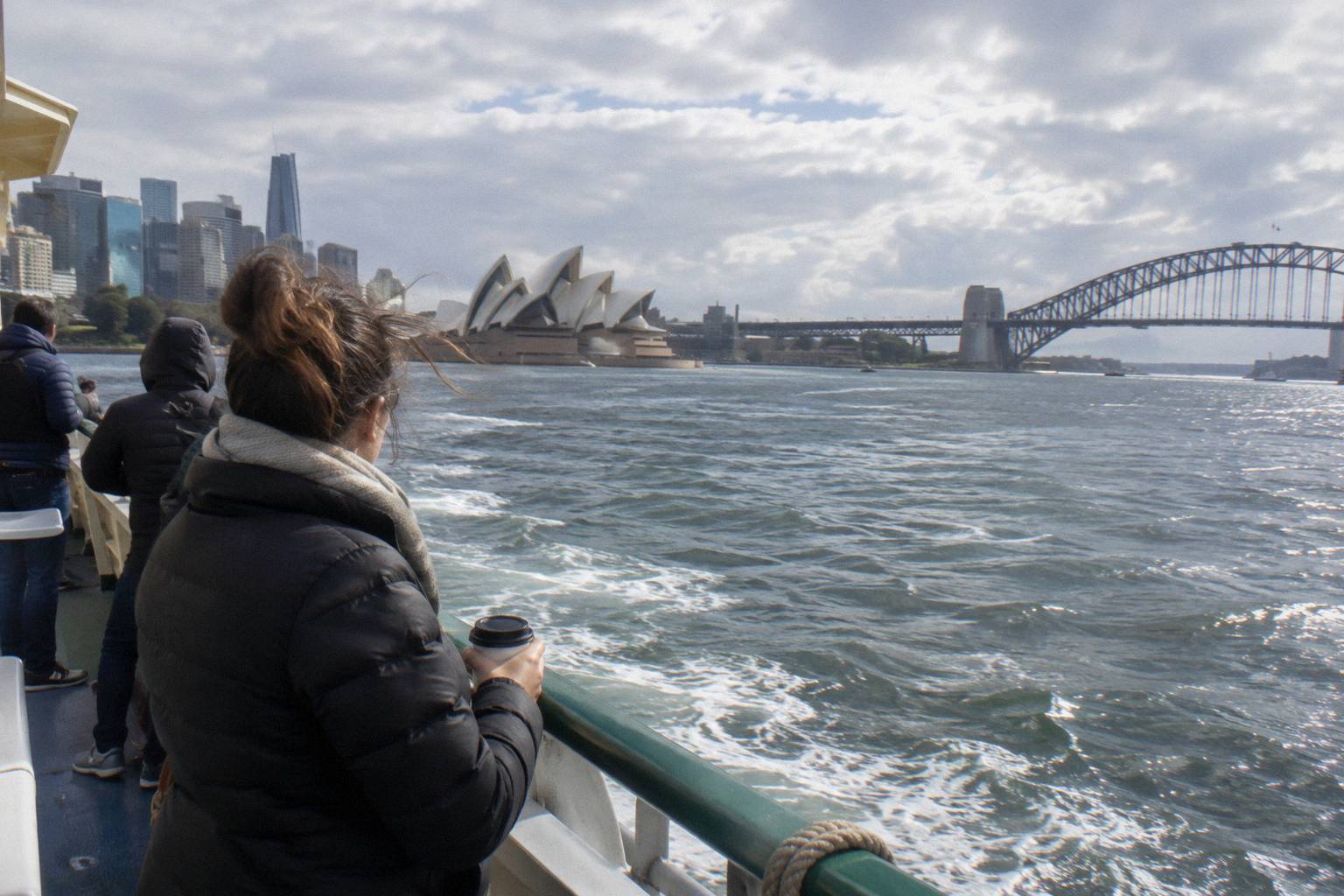
Photography is often the tiebreaker. A larger vessel's higher deck gives a steadier, downward angle over the water and room to move along the rail when a whale surfaces on the far side. A small, low boat puts the camera closer to the waterline, which many wildlife photographers prefer, at the cost of more spray and motion in the frame. Neither is better; they are different pictures of the same animal at the same legal distance.
| If you are... | Lean toward | Why |
|---|---|---|
| A family with kids 4 and up | Cruise vessel | Child fares, indoor lounge, commentary, 2.5-hour length |
| Prone to motion sickness | Cruise vessel, then ask the operator | All-weather lounge to retreat into; frank motion warning on the listing |
| An adventurous solo or couple | Speed-boat format | Fast, open, immersive run; ask about duration and capacity |
| A photographer | Either, by style | High steady deck versus low waterline vantage |
| A group wanting a full day out | Port Stephens day trip | 90-minute dolphin cruise plus koala sanctuary and sandboarding, about 12 hours |
The Port Stephens row deserves its own paragraph because it answers a slightly different question. Its dolphin cruise is a 90-minute eco experience from Nelson Bay rather than a Sydney whale trip, but the full day wraps in a Koala Sanctuary visit, where the sanctuary cares for koalas that cannot return to the wild, and Stockton Beach 4WD with sandboarding. Boom netting from the cruise is optional and weather permitting, so pack swimwear and a towel if that appeals. Lunch is not included, but snacks and water are, and pickups run from CBD hotels and Central Station.
For the harbour formats, money is the last filter. The price for either product is shown on the booking page when you pick a date. What drives the difference is predictable from the inclusions: the cruise bundles commentary and a lounge into a set 2.5-hour product, while the speed boat sells pace and a smaller craft. Compare the two listings on the same date and the value question answers itself for your budget.
What Should You Ask The Booking Desk Before Choosing?
Ask five questions of whichever format you are considering: what the vessel's capacity and size are, how long the trip runs, what happens if weather cancels, what the minimum age and mobility requirements are, and what shelter or seating exists. These details are not published in the listed facts, so the operator's answers are the only source.
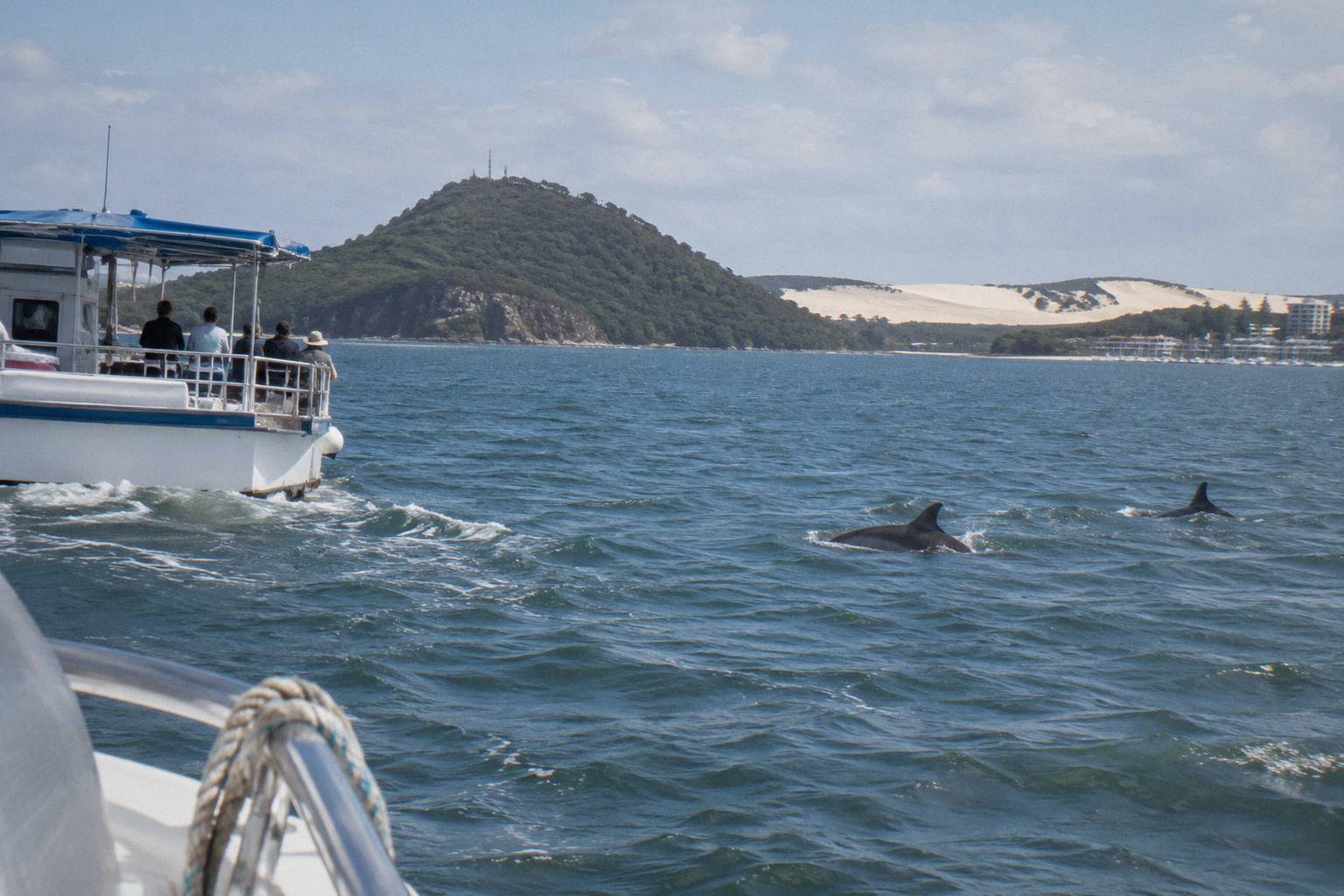
The gap between the two formats' published detail is wide, and the practical fix is a short, direct set of questions. None of these are awkward to ask; every whale watching desk answers them daily, and the answers do more to settle the small-versus-large question than any article can.
| Question | Why it matters |
|---|---|
| How many passengers does the boat carry? | Crowd levels at the rail affect viewing more than boat length does. |
| What is the trip duration and rough route? | Speed boats and cruises use time differently; a short fast run suits some days better. |
| What is the weather and cancellation policy? | Both formats run subject to weather; know your options before you pay. |
| Is there a minimum age or mobility requirement? | Stated for the cruise (infants 0 to 3 not recommended); unstated for the speed boat. |
| What shelter and seating is on board? | Decides the cold-morning experience more than any other factor. |
Two habits make those answers work harder. First, ask them against the same date for both formats, because season timing changes everything: a late-June trip sits in the mid-year peak of the northward migration, while an October booking watches the southward return, and operators may run different schedules across the season. Second, take the free-cancellation terms seriously. The Captain Cook cruise offers free cancellation up to 24 hours before, which is worth having when the weather is the deciding variable, and the speed-boat listing will state its own terms.
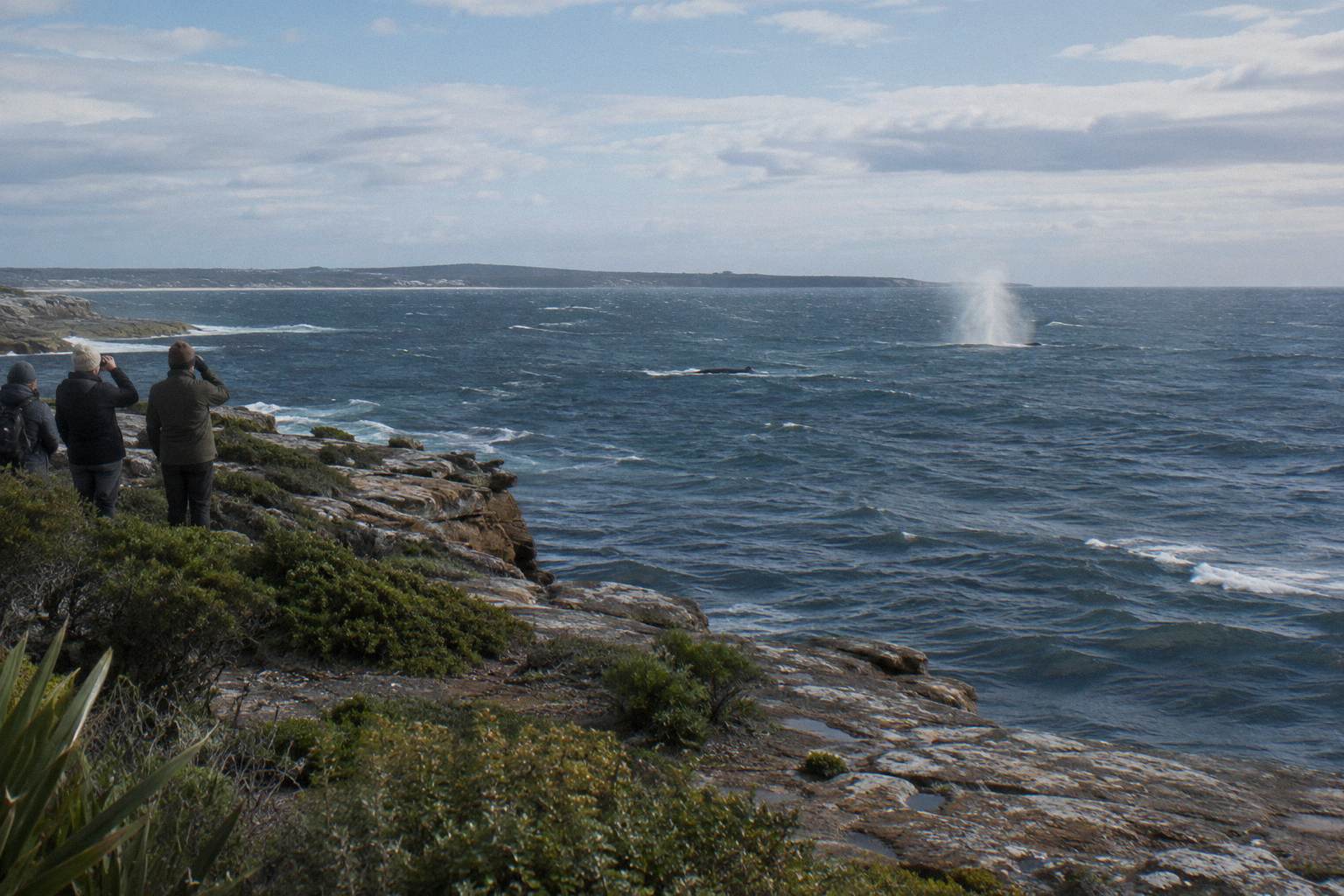
One more question is worth asking yourself rather than the desk: do you need a boat at all this trip? NPWS names land lookouts around Sydney that cost nothing to stand on, including Cape Solander in Kamay Botany Bay National Park, Fairfax Walk, North Head, South Head, Hornby Lighthouse and Arabanoo lookout at Dobroyd Head in Sydney Harbour National Park, The Coast track, Governor Game lookout and the Curra Moors loop in Royal National Park, and Barrenjoey Lighthouse in Ku-ring-gai Chase National Park, as the Wild About Whales top spots page sets out. A lookout day and a boat day are not substitutes, the boat puts you at water level among the blows, but a headland walk is a fine way to scout the migration before committing to either format.
Common Questions About Whale Watching Boat Sizes
Small Boat Or Large Boat For Whale Watching In Sydney?
Choose on comfort and pace, not proximity: NSW rules cap every vessel at the same distance from a whale, at least 100 metres and 300 metres with a calf. The cruise format gives commentary, an indoor lounge and child fares; the speed-boat format gives a fast, open, immersive ride. Ask the operator about capacity and duration, then pick by traveller type.
Does A Smaller Boat Get Closer To The Whales?
No. The approach rules apply to all vessels equally: at least 100 metres from a whale, 300 metres when a calf is present, and dolphins and dugongs at 50 metres, or 150 with calves. A small boat sits lower in the water so the same legal distance feels nearer, but it cannot legally close the gap.
Which Format Is Better If You Get Seasick?
The published facts are limited: the cruise listing warns it is an open-water cruise where sea motion may affect some guests, but it has an indoor all-weather lounge to retreat into. No seasickness comparison between formats is published; ask each operator directly before booking.
When Is Whale Watching Season In Sydney?
May to November every year. Humpback and southern right whales head north for warmer waters throughout June and into July and return south from around September to November, with a mid-year peak. Every cruise runs inside that window.
Can Kids Go On A Whale Watching Boat In Sydney?
On the cruise, yes: child fares exist for ages 4 to 15 and infants aged 0 to 3 are not recommended. The speed-boat format publishes no age policy in the listed facts, so families should ask the operator before booking.
Is A Whale Sighting Guaranteed?
No operator or article can guarantee one. The cruise's own listing says sightings are nature-dependent and vary from cruise to cruise. Whales are wild animals on migration; the season and the rules are predictable, the animals are not.