Does Whale Watching In Sydney Make You Seasick?
A close look at what Sydney whale watching cruise listings actually say about sea motion, boat types, NSW approach rules and season, plus a decision guide for travellers worried about seasickness.
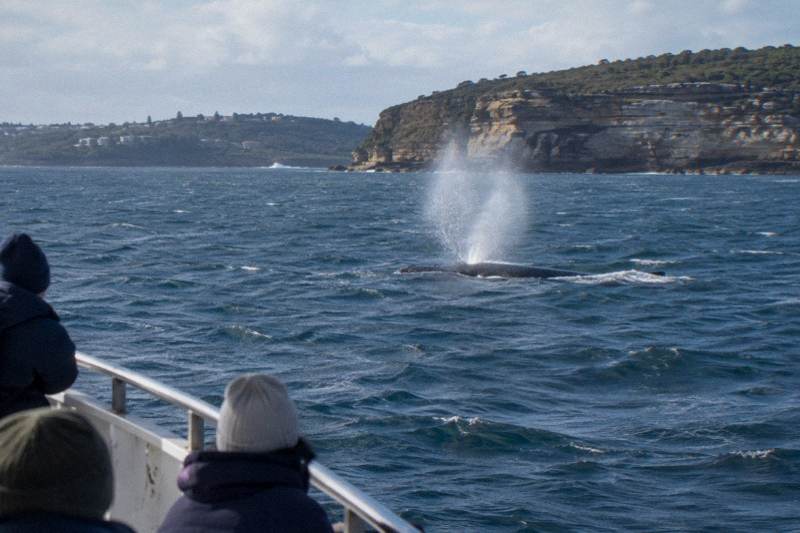
Yes, it can, and the cruise listings are upfront about it. The booking page for the Captain Cook 2.5 Hour Whale Watching Cruise states plainly that it is an open-water cruise and that sea motion may affect some guests. Whether it affects you depends on your own tolerance, the boat, and the conditions on the day, and no listing promises calm water or a motion-free deck. That honesty is your starting point.
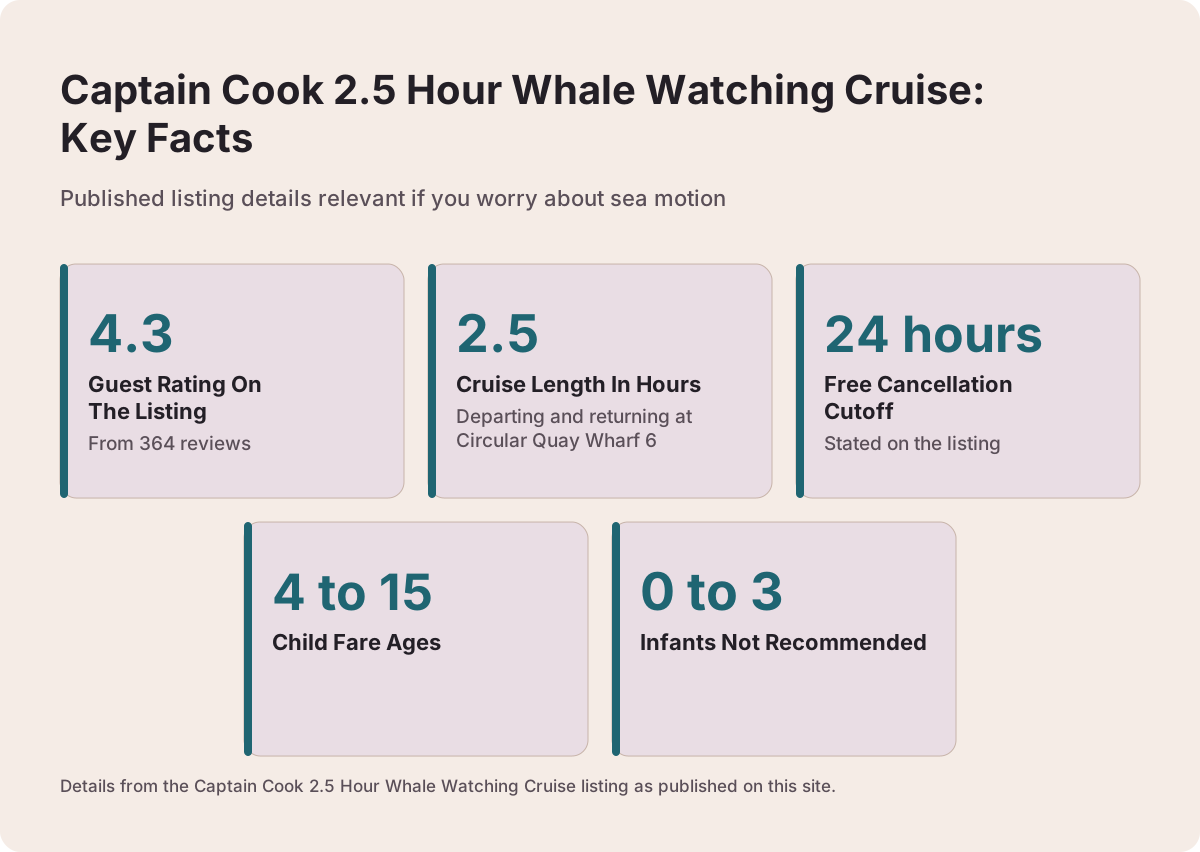
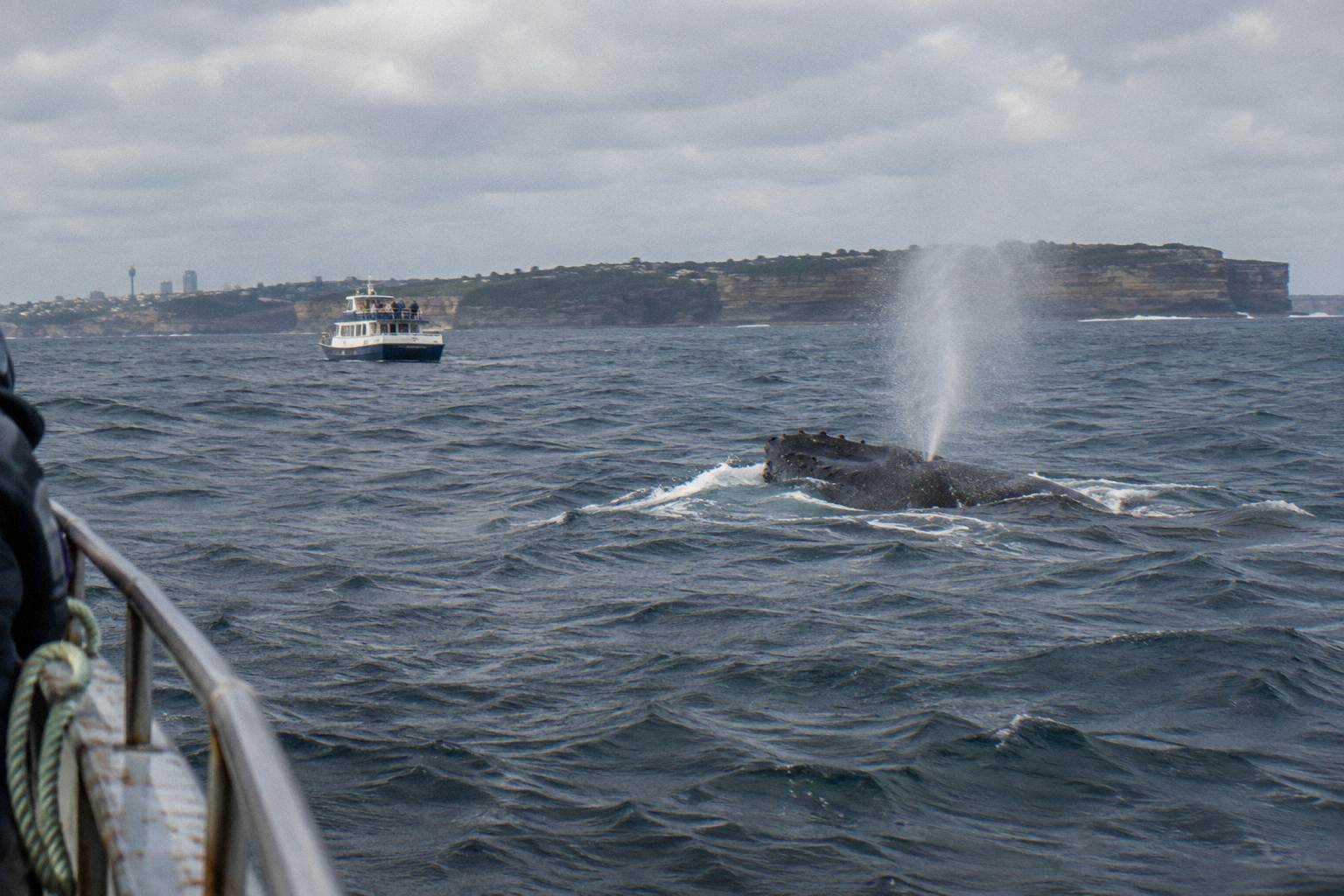
Sea motion is not a dirty secret in Sydney whale watching. The Captain Cook 2.5 Hour Whale Watching Cruise carries a 4.3 rating from 364 reviews, and its own booking page warns that sea motion may affect some guests, that the cruise operates subject to weather, and that it heads into open water rather than hugging the sheltered harbour shoreline. None of that is a reason to stay ashore. It is a reason to read carefully, pick the right format for your stomach, and know what to ask before you pay.
The question matters because whale watching in Sydney is a genuinely appealing, genuinely accessible activity. Whales pass this coast every year from May to November, according to the NSW National Parks and Wildlife Service's Wild About Whales program, and you can watch them from everything from a large harbour cruiser to a rigid speed boat to a clifftop walking track. The choice of format is where a nervous stomach gets won or lost.
What the Captain Cook booking page says about sea motion, how a speed-boat format differs, what the rules say about how close boats may go, and when the whales pass. Then a decision guide by traveller type and a short list of questions worth asking the booking desk. Where something is simply not published, that is said so once and moves on, because invented reassurance helps nobody on a rolling deck.
If you are already leaning toward a cruise, these are the three whale and dolphin options covered:
- Small-Group Bushwalk And Wildlife
- Captain Cook 2.5-Hour Whale Cruise
- Sunset Wild Kangaroos, Late Start
- Beaches, Koalas And Kangaroos
- BBQ Lunch With Koalas And Kangaroos
- All-Inclusive Wombat And Kangaroo Day
- Wombats And Kangaroos Wildlife Day
- Speed Boat Whale Watching
- Dolphins And Kangaroos Beach Day
- Dolphin Cruise With Donuts
- Dolphins, Koalas And Sandboarding
- Scenic World Plus Featherdale
- Featherdale And Mountains Day
What The Captain Cook Cruise Listing Says About Sea Motion
The listing names three things that matter: it is an open-water cruise, sea motion may affect some guests, and the cruise operates subject to weather and operational requirements. It also lists an indoor all-weather lounge and outdoor viewing areas, which means the boat gives you somewhere enclosed to sit. It does not promise calm conditions, and it does not promise sightings, which it says are nature-dependent and vary from cruise to cruise.
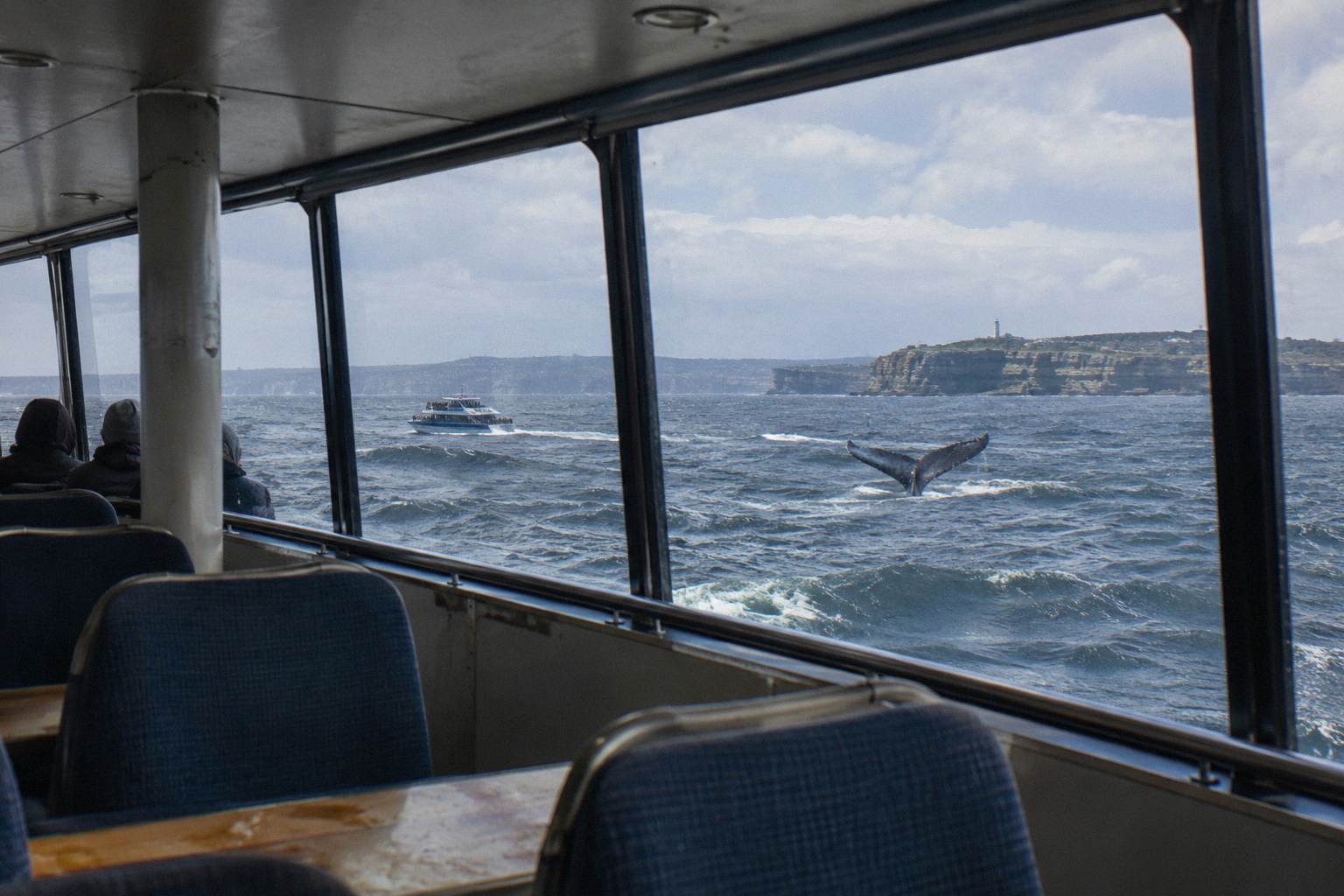
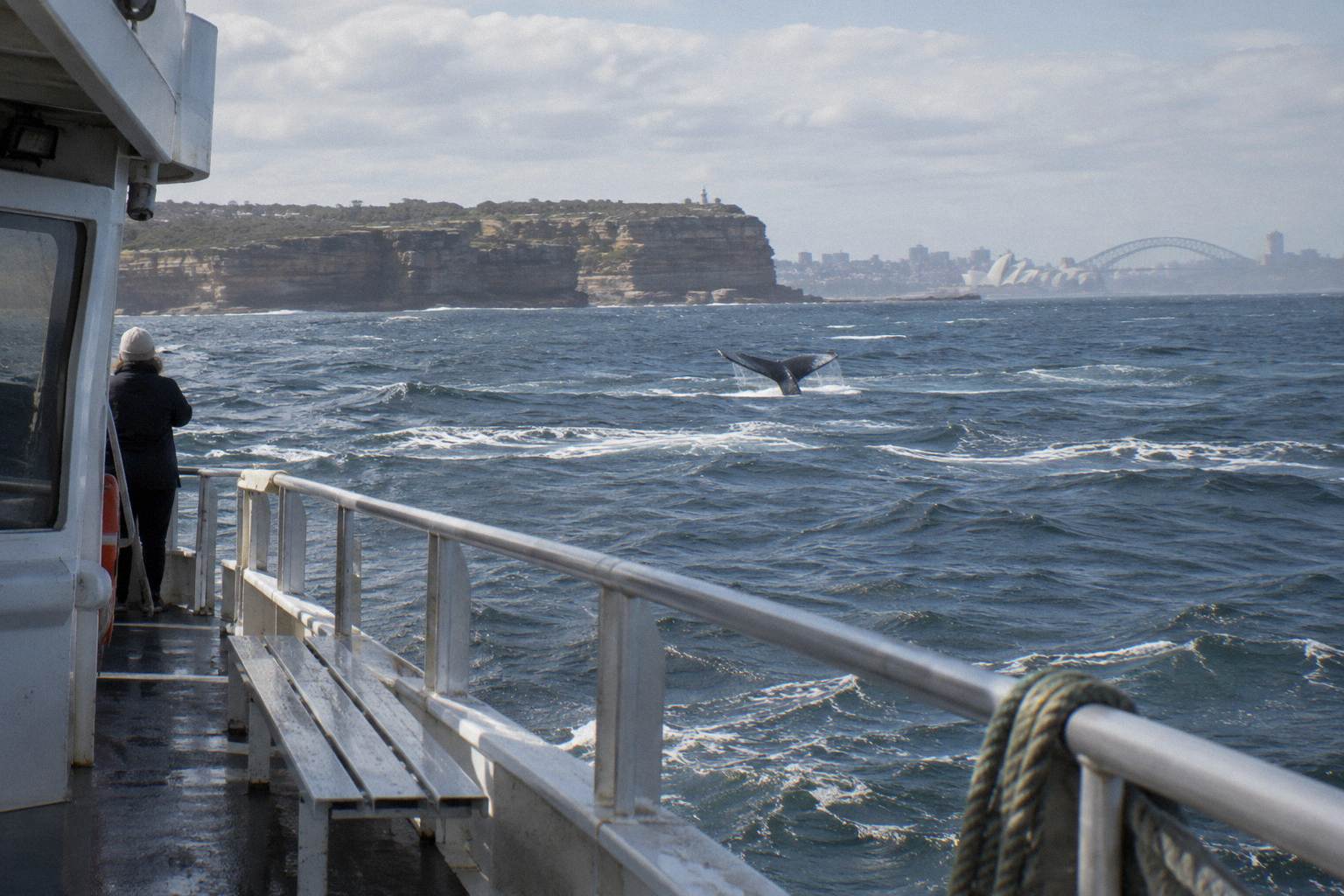
The Captain Cook 2.5 Hour Whale Watching Cruise, run by Captain Cook Cruises, departs from Circular Quay Wharf 6 and returns there. Two and a half hours is long enough to leave the harbour, reach the migrating whales, and come back, but short enough that you are not committing a full day to open water. The booking page includes expert commentary throughout, an indoor all-weather lounge, and outdoor viewing areas, with a chance to spot whales, dolphins, seals, albatross and other marine life. Food and drinks are not included, and neither is hotel pickup, so you make your own way to the wharf.
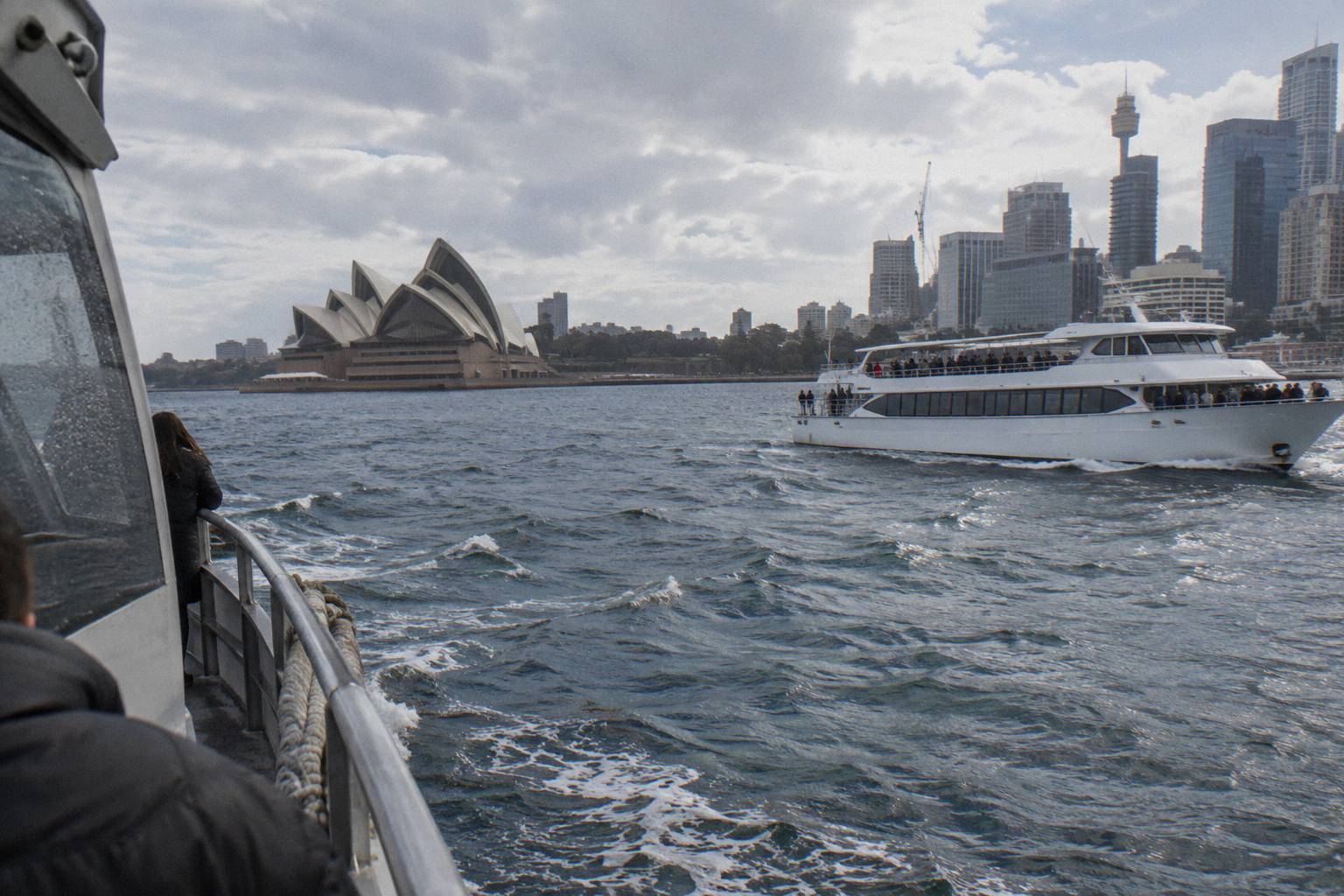
The wording tells you the shape of the day. "Open-water cruise" means the boat goes beyond the shelter of the heads, where the Pacific swell runs. "Sea motion may affect some guests" is a plain admission that some people feel unwell on that swell. "Operates subject to weather" means the operator can cancel or amend when conditions are not workable, which is a safety control, not a comfort guarantee. And "sightings are nature-dependent" means the whales are wild animals on their own schedule.
The lounge is worth more than it might sound. An indoor all-weather space does two jobs on a whale boat: it shields you from wind and spray, and it gives you a place to be when the outdoor rails get crowded or the weather turns. Whether it helps with motion specifically is not something any listing can promise, since enclosed spaces help some people and bother others. If a covered, seated, indoor option matters to you, its presence on the inclusions list is a real point in this cruise's favour.
Other practical details from the listing: infants aged 0 to 3 are not recommended, child fares exist for ages 4 to 15, and guests who are concerned about the day's conditions should raise it with the operator directly. The full picture, including availability on your date and the price, is shown when you pick a departure.
Speed Boat Or Harbour Cruiser: Does The Boat Change The Motion?
It changes the experience, and for a nervous stomach the format is probably the single biggest decision. A conventional harbour cruiser and a separate speed-boat product, Ocean Extreme Speed Boat Whale Watching, which is exactly what the name suggests: a fast, small, open format. The listing facts published here do not compare their motion, so treat format choice as a matter of preference and ask each operator directly.
Ocean Extreme Speed Boat Whale Watching is a speed-boat format on a separate booking page, and that is deliberately all that is said about it here, because the published facts do not state its duration, capacity or ride character. What the format itself tells you is still useful. A speed boat is open, small and fast, which many riders find thrilling and which is a very different proposition from sitting in an enclosed lounge with commentary. If reading the words "speed boat" makes your stomach clench, that is your answer. If it makes you grin, the same words are your answer in the other direction.
The contrast with the 2.5-hour cruiser is the point worth holding onto. A larger vessel with an indoor lounge, commentary and outdoor viewing decks spreads the experience across options: you can stand at the rail when the whales are near and retreat inside when they are not. A speed boat compresses everything into one continuous open-air ride. Neither is objectively better. One holds a published 4.3 rating from 364 reviews on its listing; the other's listing facts here carry no rating or review count, so nothing can be said about how guests rate it.
If you are weighing boat size generally, the small boat or large boat whale watching in Sydney guide works through that trade-off in more depth, and it pairs well with what to wear on a Sydney whale watching cruise, since wind and spray hit differently depending on how open the boat is.
What About Remedies, Tablets, Best Seats And Sea Conditions?
Not published; ask the operator. No listing or official page states anything about seasickness remedies, medication, the best deck or seat, or the sea conditions on a given day. Rather than repeat the caveat, the space below covers what is published and the decision logic that follows from it.
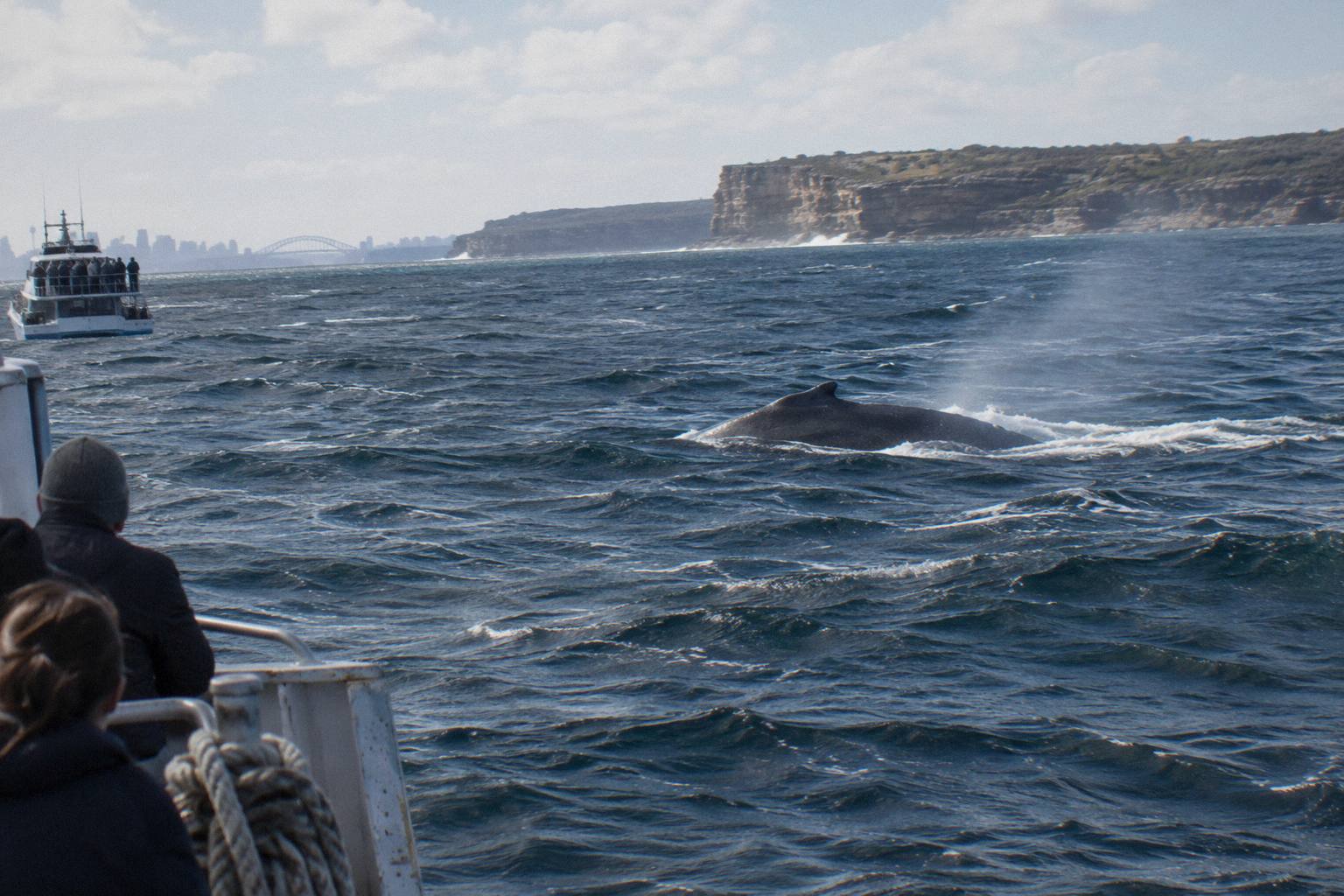
What is published still narrows your choices usefully. The cruiser has an indoor lounge, which is a seating option. The cruise runs subject to weather, which means genuinely rough days do not sail as scheduled. The speed boat is an open format, which is a known quantity even without published details. And the season, May to November, is documented, which affects when you can go at all.
If motion worries you, the questions to put to the booking desk are simple and answerable: does the boat have indoor seating, what happens if conditions are rough on my date, what is the cancellation and rebooking policy, and how do you handle guests who feel unwell on the day. Free cancellation up to 24 hours before is stated on the Captain Cook listing, which gives you a real exit window if the forecast turns. Operators answer practical questions like these every day in season, and their answers are far more current than any static page can be.
The one thing not to do is let an unnamed internet certainty make the decision for you. Blanket claims about which tablet works, which side of the boat is calmer, or which month has the flattest sea are not in any listing or official source, and repeating them would just be invention wearing a confident voice.
How Close Do Boats Get, And Does The Law Affect Your Ride?
Licensed operators work to NSW approach rules: vessels keep at least 100 m from a whale, and 300 m when a calf is present; dolphins and dugongs get 50 m, and 150 m with calves; within 300 m of a whale, boats travel at a constant slow speed with minimal wash; jet skis keep 300 m from any whale, dolphin or dugong. These are rules the operators follow, not a promise of how close any particular cruise gets.
The practical read for a passenger is comforting in an unexpected way. Once a boat is within 300 m of a whale, it must slow to a constant speed with minimal wash. Slow boats roll differently from fast ones, and the slow-approach phase of a whale encounter is typically the calmest part of the ride. The whale decides the rest: animals surface, dive and move on their own terms, which is why every listing says sightings are nature-dependent.
These distances come from official NSW government pages on marine mammal watching, and they are worth knowing as a passenger because they explain the rhythm of a cruise. The boat travels out, slows near the animals, holds a respectful distance, and then picks up speed again for the run home. If you have ever wondered why whale boats seem to idle rather than chase, the rules are the reason. More detail on the season and where whales pass is covered in the Sydney whale watching season guide.
One more framing point: rules describe limits, not averages. A cruise that holds at 150 m from a passing humpback is operating lawfully and well; so is one that lingers at the minimum distance while the whale approaches the boat of its own accord, which happens and is one of the genuine thrills of the activity. No operator can promise a distance any more than it can promise a whale.
When Do Whales Actually Pass Sydney?
Whales migrate past Sydney every year from May to November, per the NSW National Parks and Wildlife Service. Humpback and southern right whales head north for warmer waters throughout June and into July, and return south from around September to November. The migration has a mid-year peak. Cruises run only inside that May to November window, so date options are bounded by the season itself.
The season shapes the whole decision more than many first-time bookers realise. You cannot book a Sydney whale cruise in February, because the whales are not here. Inside the window, conditions and whale traffic both vary, and no official page ranks one month over another. Pick a date inside the season, book a format you trust, and let the ocean do the rest.
For a full breakdown of the months, the migration story and how the window works, see the guide to Sydney whale watching season timing. For the broader cruise landscape, the Sydney whale watching cruises overview compares the formats available.
Land Lookouts: Whale Watching With Both Feet On The Ground
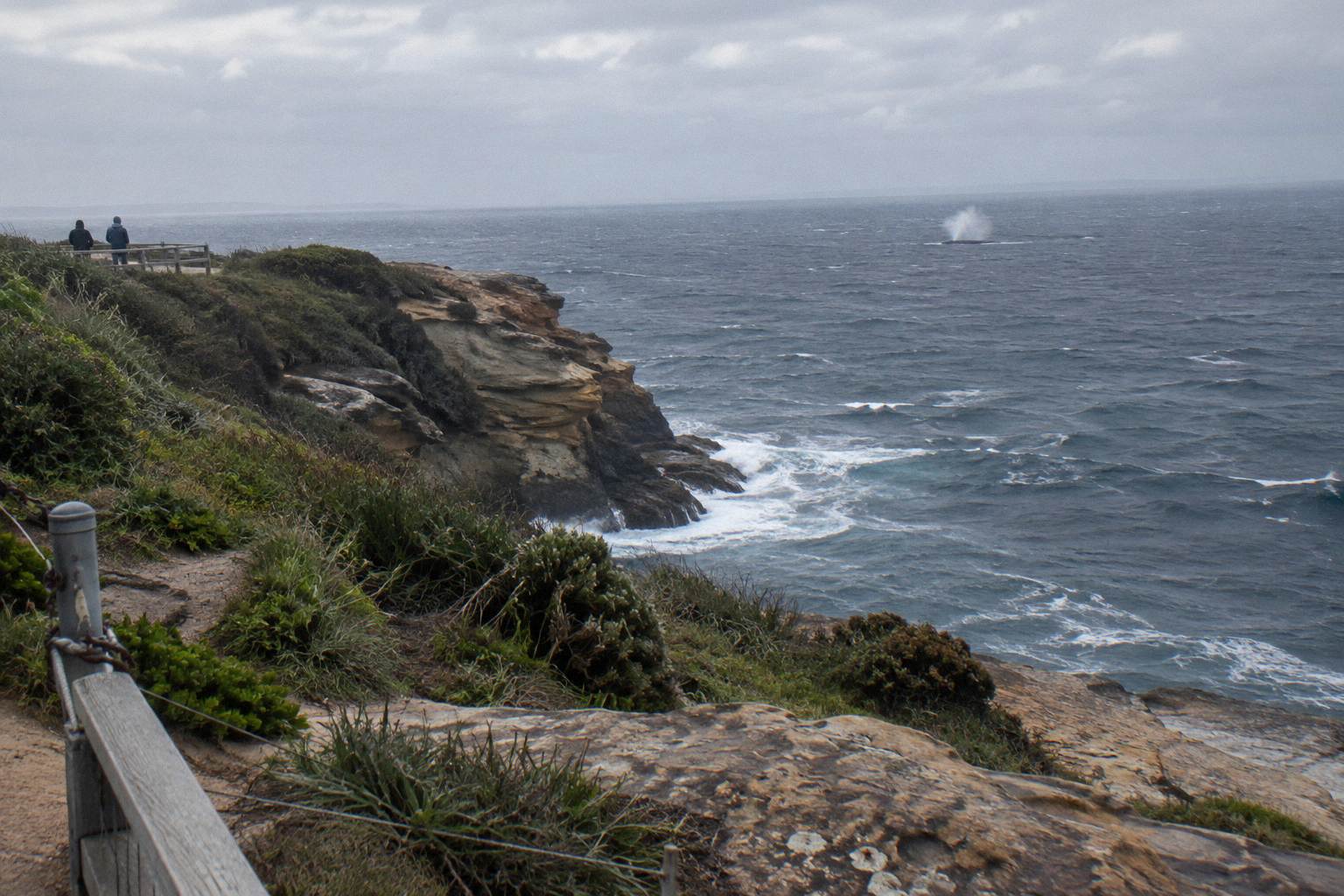
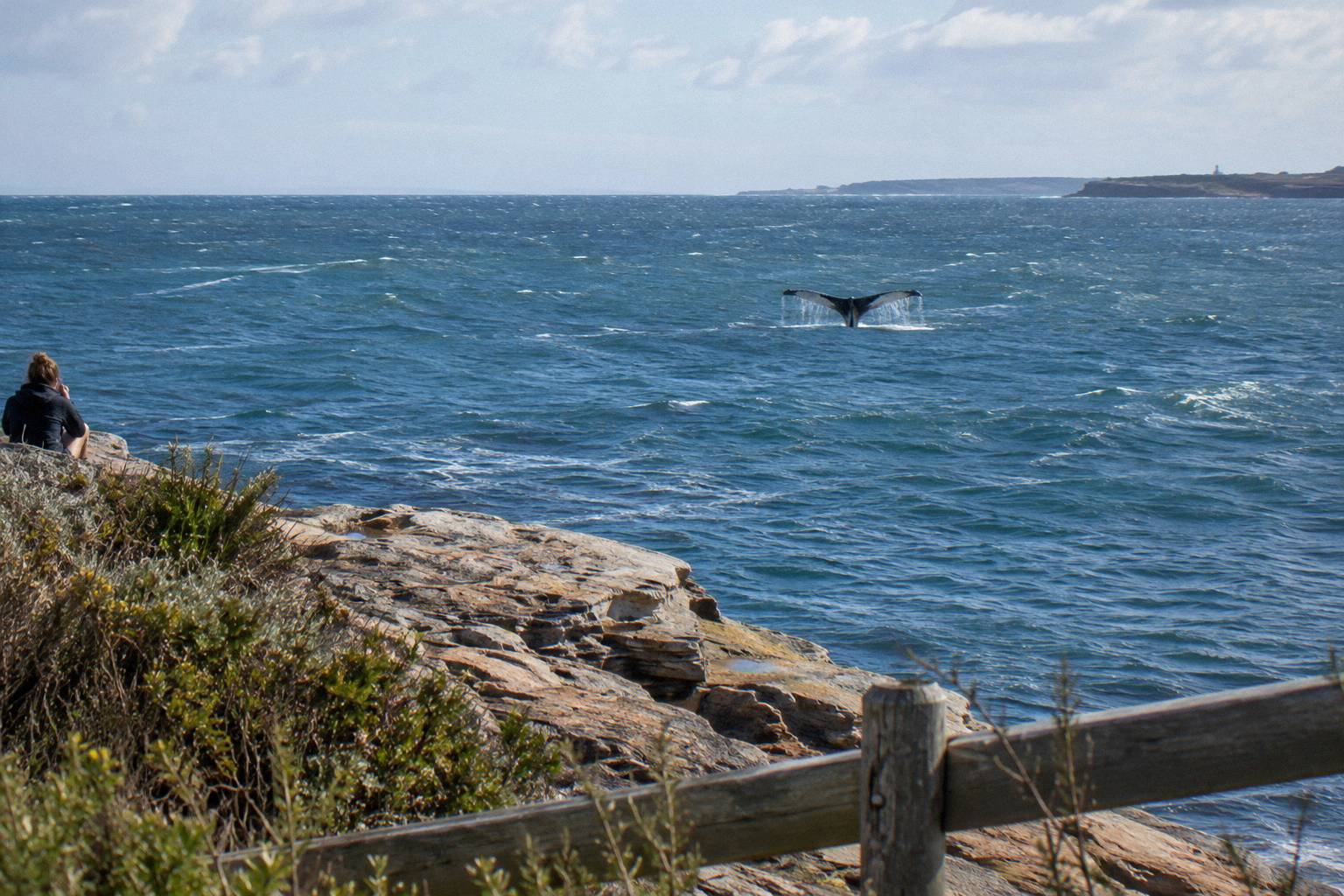
You can watch whales around Sydney without ever leaving dry land: the NSW National Parks and Wildlife Service names shore lookouts including Cape Solander in Kamay Botany Bay National Park, Fairfax Walk, North Head, South Head, Hornby Lighthouse and Arabanoo lookout at Dobroyd Head in Sydney Harbour National Park, the Coast track, Governor Game lookout and Curra Moors loop in Royal National Park, and Barrenjoey Lighthouse in Ku-ring-gai Chase National Park.
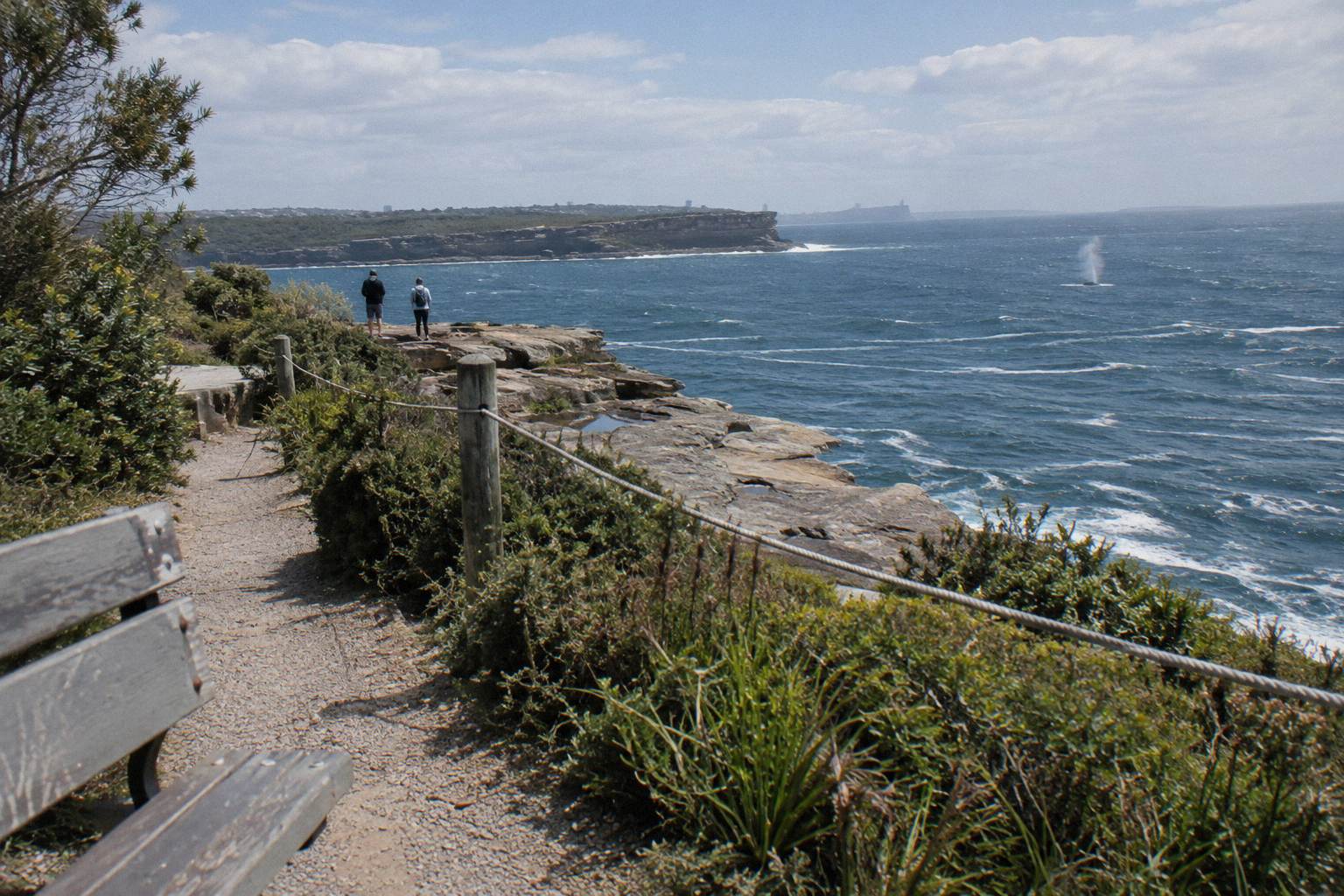
This is the option that removes the question entirely. Land-based watching costs you proximity and commentary, but it costs you zero sea motion, and during a mid-year peak the whales pass close enough to the headlands that blows and flukes are visible with patience and decent binoculars. The official NPWS top whale watching spots page lists these lookouts and is worth reading before you drive out.
It is also a decent hedge for mixed groups. If one half of your party is keen on a cruise and the other is dreading it, a lookout day costs nothing to combine: the cruisers sail from Circular Quay, and several of the named lookouts sit inside Sydney Harbour National Park within easy reach of the city. The NPWS whale migration facts story adds useful background on what the animals are doing as they pass.
A Decision Guide By Traveller Type
Match the format to the traveller, not the other way round. Confident sailors suit the speed boat; cautious first-timers suit the cruiser's indoor lounge; families with mixed tolerance can split the day between a short cruise and a land lookout; and anyone who already knows they get unwell on boats should plan around the shore. The published facts support each of these paths without inventing a single comfort claim.
The table below works only from what the listings and official pages state. Where nothing is published, it says so.
| You are... | Best fit | Why, based on published facts |
|---|---|---|
| A confident sailor who wants speed | Ocean Extreme Speed Boat Whale Watching | Open, fast format; duration and capacity not published, ask the operator |
| A cautious first-timer | Captain Cook 2.5 Hour Whale Watching Cruise | Indoor all-weather lounge, outdoor decks, 2.5 hour length, expert commentary |
| Travelling with children | Captain Cook cruise, ages 4 to 15 fares | Infants 0 to 3 not recommended on the listing |
| Someone who gets seasick on ferries | NPWS land lookouts | Zero sea motion; official list of Sydney headland spots |
| A mixed group | Cruiser for some, lookout for others | Circular Quay departure and harbour lookouts sit close together |
| Keen on dolphins as well as whales | Port Stephens day trip | 90-minute Dolphin Discovery cruise plus koala sanctuary and sandboarding |
The Port Stephens Dolphins, Koalas And Sandboarding Day Trip deserves its own paragraph, because it is the option people forget when framing this as a whale-only question. It runs about 12 hours, includes a 90-minute Dolphin Discovery eco cruise with commentary from Nelson Bay, a Port Stephens Koala Sanctuary visit, and Stockton Beach 4WD with sandboarding instruction, with lunch not included and coach pickup from CBD hotels and Central Station. Dolphins, not whales, are the marine draw, and the sanctuary cares for koalas that cannot return to the wild. Boom netting is optional and weather-permitting, so bring swimwear and a towel if that appeals.
What To Ask The Booking Desk Before You Pay
Ask six questions: is there indoor seating, what happens if weather cancels my cruise, what is the cancellation window, how long is the crossing to open water, what is the vessel size, and can I move my date. Every one is answerable by the operator, none requires them to promise conditions, and the answers do more for a nervous stomach than any generic advice column. The listings here already answer some of these: the Captain Cook cruise has the indoor lounge, states it runs subject to weather, and offers free cancellation up to 24 hours before. The speed-boat page and the Port Stephens trip fill in their own answers when you ask.
| Question | Why it matters | What the published facts say |
|---|---|---|
| Is there indoor or covered seating? | Enclosed space matters to many guests | Captain Cook cruise lists an indoor all-weather lounge |
| What if weather cancels the day? | Rough days can be rescheduled, not endured | Captain Cook cruise operates subject to weather |
| What is the cancellation window? | Lets you back out if the forecast turns | Free cancellation up to 24 hours before on stated listings |
| How long is the boat ride? | Longer crossings mean more exposure | Captain Cook cruise is 2.5 hours total |
| What size is the vessel? | Size changes the ride character | Speed-boat format vs cruiser; details on the listings |
| Can I change my date? | Flexibility beats forfeiting | Ask the operator; policies vary |
Price never appears here for a reason: no prices are printed. The cost of each option is shown on the operator's listing when you pick a date, and what drives it is the same everywhere: duration, inclusions such as lunch or park entries, group size, and pickup. A 2.5-hour cruise with commentary sits at one end of that scale; a 12-hour day trip with a cruise, a sanctuary visit and sandboarding sits at the other.
Common Questions About Whale Watching Seasickness
Does Whale Watching In Sydney Make You Seasick?
It can. The Captain Cook 2.5 Hour Whale Watching Cruise booking page states that it is an open-water cruise and that sea motion may affect some guests. Whether it affects you depends on your own tolerance, the boat format and the conditions on the day.
Does The Captain Cook Cruise Have Indoor Seating?
Yes. The booking page lists an indoor all-weather lounge alongside outdoor viewing areas, plus expert commentary throughout the 2.5-hour cruise.
Is The Speed Boat Worse For Seasickness Than A Large Cruiser?
The published facts do not compare them. The speed boat is an open, fast format while the cruiser has an indoor lounge, so the format difference is real, but no listing states which suits an uneasy stomach better. Ask each operator directly.
Can I Watch Whales From Land Near Sydney Instead?
Yes. NPWS names lookouts including Cape Solander, North Head, South Head, Hornby Lighthouse, Arabanoo lookout at Dobroyd Head, the Royal National Park coast track spots and Barrenjoey Lighthouse, all reachable from Sydney.
When Is Sydney Whale Watching Season?
Whales migrate past Sydney from May to November each year, per NPWS. Humpback and southern right whales head north through June and into July, and return south from around September to November, with a mid-year peak.
What Remedies Or Best Seats Are Recommended?
Not published; ask the operator. No listing or official page covers remedies, medication, or seat and deck advice, so no claims about them appear here.
The plain summary from Sydney Wildlife Tours: sea motion on a Sydney whale cruise is real, stated openly on the listings, and manageable by choosing your format, asking the operator a few direct questions, and keeping the land lookouts in your back pocket. The whales come every year, May to November, and one way or another, they are worth planning around.