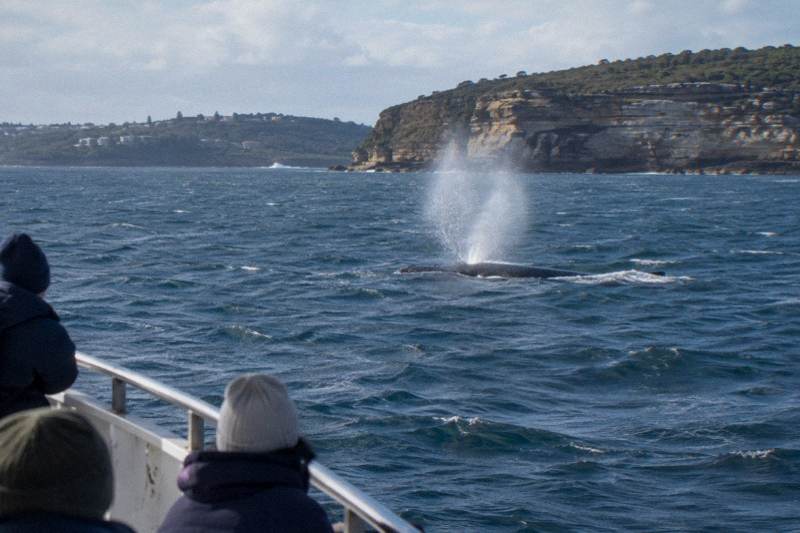
Sydney Whale Watching Season: When The Humpbacks Pass
Whales pass Sydney every year from May to November. Here is how the migration actually works, which months suit which traveller, and what the season means for booking a cruise.
Short answer
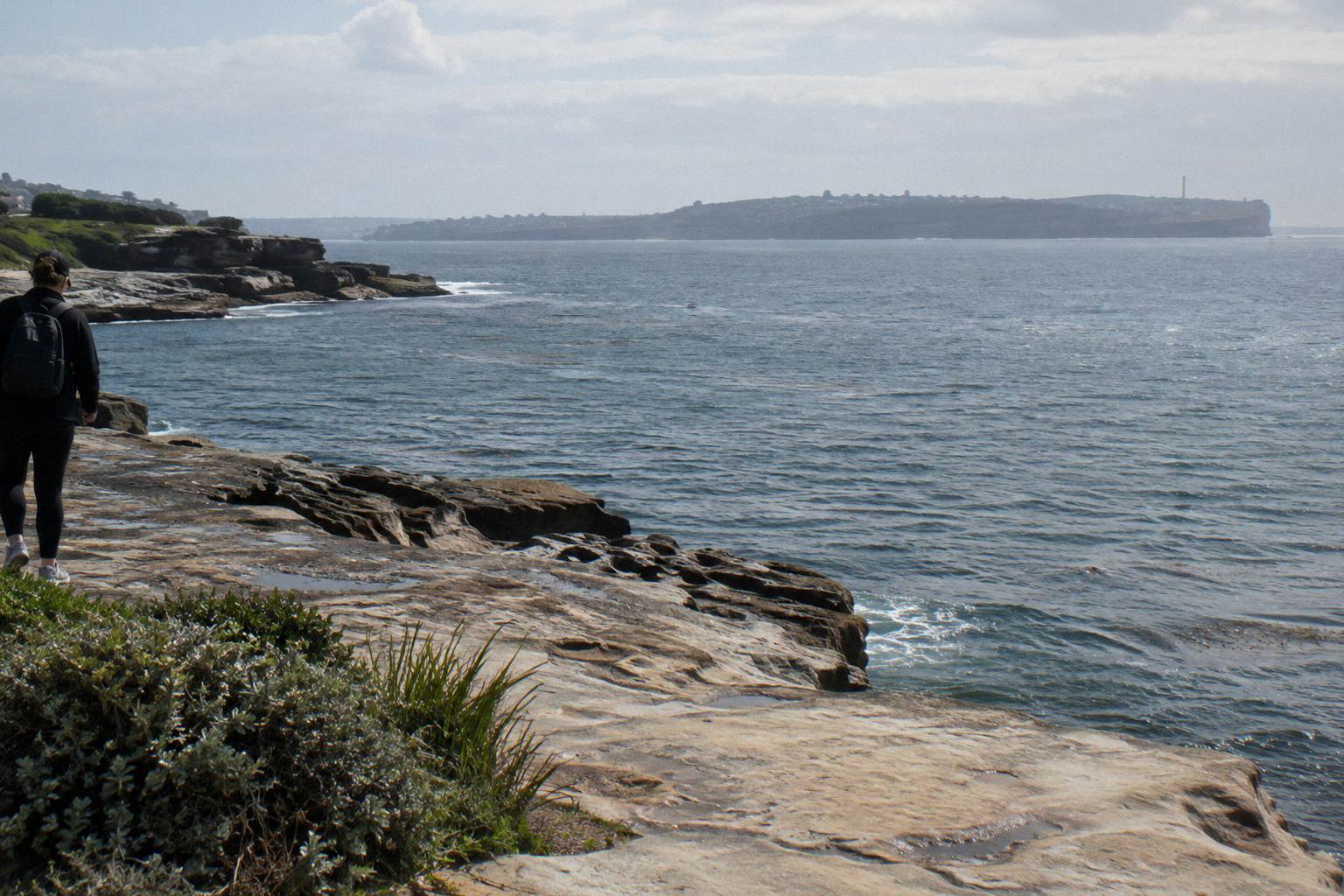
The Sydney whale watching season runs from May to November each year, when humpback and southern right whales migrate along the NSW coast. They head north throughout June and into July, and return south from around September to November, with a mid-year peak. Cruises from Sydney Harbour run inside that window only.
Whales do not visit Sydney on a whim. Every year, humpback whales and southern right whales travel between feeding and breeding grounds along Australia's east coast, and the NSW National Parks and Wildlife Service (NPWS) puts the visible window plainly: you can see whales during their annual migration from May to November. That seven month span is the whole Sydney whale watching season, and the month by month rhythm, the free headland lookouts, the boat rules and the booking logic all hang off it. The season is covered the way a planner needs it: what the migration does, when, and what that means for a cruise ticket.
When Is Whale Watching Season In Sydney?
The Sydney whale watching season runs from May to November every year. Humpback and southern right whales pass the NSW coast inside that window, heading north throughout June and into July, then returning south from around September to November. Whale watching cruises from Sydney Harbour operate only inside this season, and outside it there is no migration to watch.
That is the summary, and it comes straight from NPWS's own Wild About Whales material rather than from any tour operator's marketing. The migration is an annual certainty in the broad sense: whales do move past Sydney every year between May and November. What no page can promise is any individual whale on any individual day. Sightings are nature-dependent, and every legitimate cruise operator says so on its own listing.
The two species you are most likely to hear about are the humpback whale, which makes up the bulk of the east coast migration, and the southern right whale, which travels the same waters in smaller numbers and carries extra protections under NSW rules. Both head north for warmer waters throughout June and into July, and both come back south from around September to November. If your dates fall outside May to November, a whale watching cruise from Sydney simply is not the right product, and the wildlife alternatives are on land or involve dolphins, which live in these waters year round.
A quick note on what this is not. It is not a sighting forecast. Nobody outside the whales knows how many pass on a given day, and no whale counts, "record season" claims or per-trip sighting percentages appear here, because the official sources do not make them. What the official sources do give is the shape of the season, and that shape is enough to plan around. If you are weighing the harbour cruise against other on-water formats, the fuller rundown sits in the guide to whale watching cruises in Sydney, and if Sydney is your launch point more broadly, the best wildlife day trips from Sydney puts the whole category side by side.
How The Humpback Migration Shapes The Season
The migration has two broad legs: a northbound leg throughout June and into July, when whales move toward warmer breeding waters, and a southbound leg from around September to November, when they return with the season's flow. Between them sits a mid-year peak, the busiest stretch of whale traffic on the calendar.
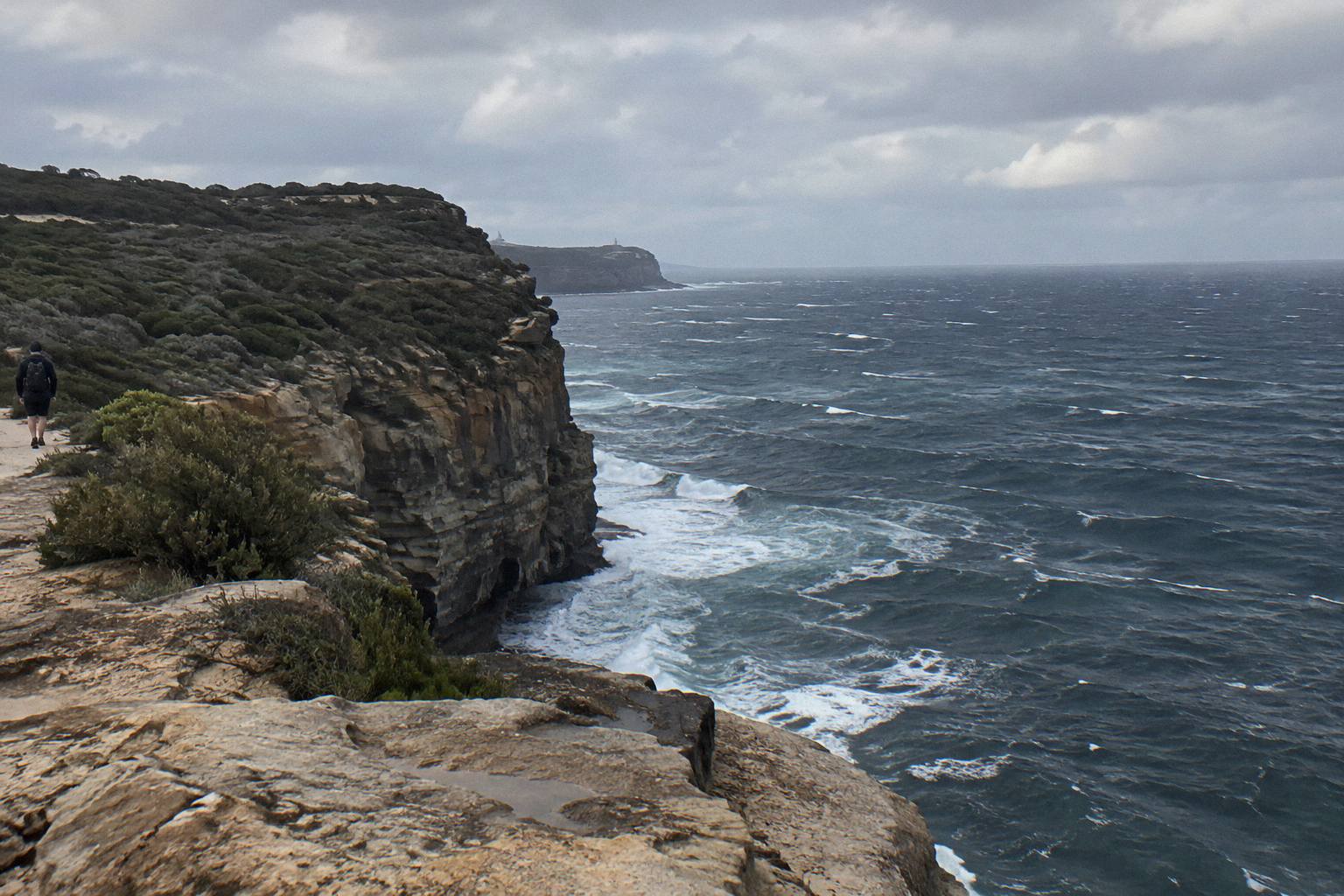
Think of the season as a slow exhale and a slow inhale. In the first half, June and into July, the whales are travelling north. They are generally moving with purpose, and the traffic is one directional. In the second half, from around September to November, the flow reverses and the animals come back south, often with the season's new calves somewhere in the pod structure, though no cruise or page can promise you a calf sighting. The two legs bracket a mid-year peak, the busiest stretch of the migration, though the timing stays loose rather than pinned to a fixed week.
Why does the shape matter to a planner? Because the two legs feel different even inside the same season. Early season trips, in May and early June, catch the vanguard of the northbound run: fewer animals around, but a genuine sense that the season has started. The mid-year peak is the window people book first, and it is the window where dates sell furthest ahead. The spring leg, September through November, tends to be more relaxed on the water, with warmer weather ashore and the southbound traffic streaming past. None of these is "best" in any objective sense; they are trade-offs between crowds, weather and confidence in traffic volume.
There is also a practical symmetry worth knowing. Because the whales pass the same coastline twice, once in each direction, a traveller who misses the northbound window has not missed the season. The southbound window from around September to November is a full second chance, spread across three months. That is unusual among wildlife events, which often compress into a few weeks, and it is the single biggest reason Sydney works as a whale watching base.
If a cruise is already on your shortlist, these three formats cover the season from different angles:
The first is the classic harbour cruise: a 2.5 hour trip from Circular Quay Wharf 6 run by Captain Cook Cruises, rated 4.3 from 364 reviews, with expert commentary, an indoor all-weather lounge and outdoor viewing areas. The second is a speed-boat format on a separate booking page, a different ride entirely for the same season. The third takes the season's marine theme and widens it into a full day: dolphins, a koala sanctuary and sandboarding at Port Stephens, about 12 hours door to door.
Month By Month: What Each Part Of The Season Offers
Every month from May to November has migrating whales somewhere on the NSW coast, per NPWS: the season opens in May, builds through the June to July northbound run and its mid-year peak, holds through August as the flow turns, and closes with the September to November southbound return. No month inside the window is whale free, and no month outside it is part of the season.
The table below sticks deliberately to what the official NPWS statements support. There are no whale counts, because none are published; no "best week", because NPWS does not name one; and no sighting rates, because those are marketing numbers, not migration science.
| Month | Where the migration stands (NPWS) | What it means for a cruise booking |
|---|---|---|
| May | Season opens; early northbound whales begin passing | Quietest bookings, first sightings, cooler weather on open water |
| June | Northbound run builds; whales head north for warmer waters | Rising traffic and rising demand; book ahead |
| July | Northbound run continues into the month; mid-year peak traffic | Busiest stretch on the water and on the booking calendar |
| August | The turn: northbound flow eases ahead of the return leg | A shoulder month, thinner crowds, traffic in transition |
| September | Southbound return begins, running to November | Second full window opens; warmer days ashore |
| October | Southbound flow continues | Long shoulder season, mild weather, steady traffic |
| November | Final month of the southbound return | Last chance of the season; cruises stop after it |
May is the connoisseur's month. The whales that pass early are the runners at the front of the northbound field, and the boats are emptier, but you are accepting a lower density of animals in exchange. June is when the season visibly switches on: NPWS describes humpback and southern right whales sailing north for warmer waters throughout June and into July, and bookings tighten with the traffic.
July sits at the heart of the mid-year peak. This is the stretch where the greatest volume of whales is passing the NSW coast, and it is the month where the trade-off is sharpest: maximum confidence in traffic, minimum flexibility on dates and the coldest open-water conditions of the season. If you are booking July from overseas, book the cruise before you book the flight. Winter on the Tasman is real, and the right clothing matters more than most first-timers expect; the guide on what to wear on a whale watching cruise in Sydney covers it properly.
August is the month nobody markets and planners should understand. The northbound run has largely gone through, the southbound return has not fully arrived, and the coast sits between two flows. Whales still pass, the season is still open, but the framing is "transition", not "peak". September, October and November then deliver the second act: the southbound return, from around September to November, three months of returning traffic with spring warmth on land. November is the closing month, after which the cruises stop until the following May.
One planning rule ties the whole table together: pick your month first, then your format. The traveller who wants the best odds of a sighting leans toward the mid-year peak; the traveller who wants a comfortable boat on a mild day leans toward the spring leg; the traveller on a budget-sensitive or crowd-averse itinerary looks at May, August and late November. The cruise itself, the departure point, the inclusions, none of that changes with the month. Only the water and the traffic do.
The Free Alternative: Land Lookouts NPWS Names
A cruise is one way to watch the season. A headland is the other, and for budget or motion-sensitive travellers it is the better one. The official list, from NPWS's own top whale watching spots page, clusters nicely for visitors: Sydney Harbour National Park alone holds Fairfax Walk, North Head, South Head, Hornby Lighthouse and Arabanoo lookout at Dobroyd Head, several of them a short ferry or bus ride from the city centre. Cape Solander, in Kamay Botany Bay National Park, is the flagship: a purpose-built viewing platform with the deepest ocean horizon of the lot. The full index of guides sits on Sydney Wildlife Tours.
| Lookout | Park | Best suited to |
|---|---|---|
| Cape Solander | Kamay Botany Bay National Park | The dedicated whale watching platform, with the longest ocean view |
| Fairfax Walk, North Head | Sydney Harbour NP | Easy access from Manly, graded path, harbour and ocean views |
| South Head | Sydney Harbour NP | Close to the city, dramatic cliffs above the shipping lanes |
| Hornby Lighthouse | Sydney Harbour NP | A short iconic walk from Camp Cove |
| Arabanoo lookout, Dobroyd Head | Sydney Harbour NP | Quieter Middle Harbour vantage point |
| The Coast track, Governor Game lookout, Curra Moors loop | Royal National Park | A walking day combined with whale spotting, south of the city |
| Barrenjoey Lighthouse | Ku-ring-gai Chase NP | A northern beaches walk with a wide ocean panorama |
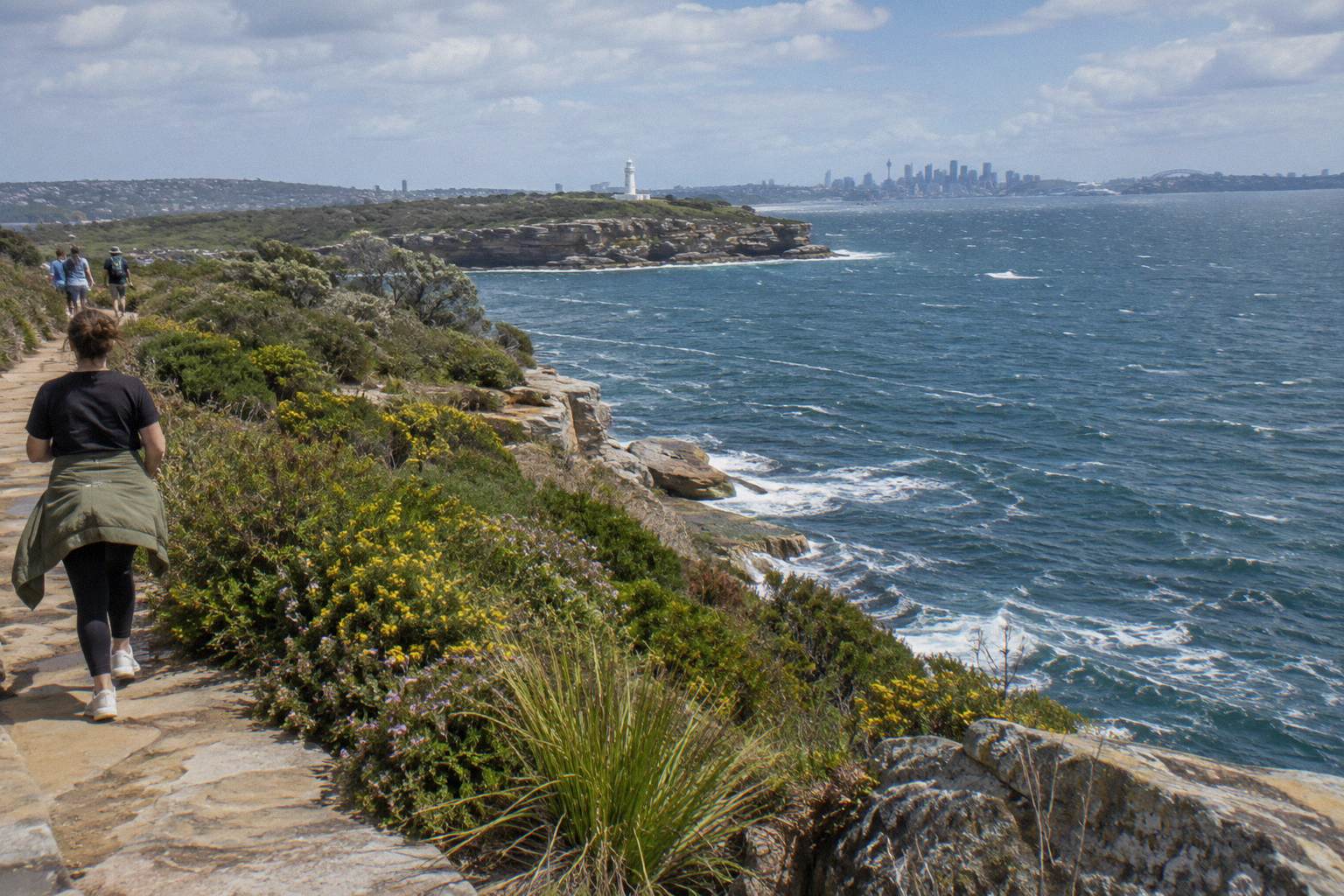
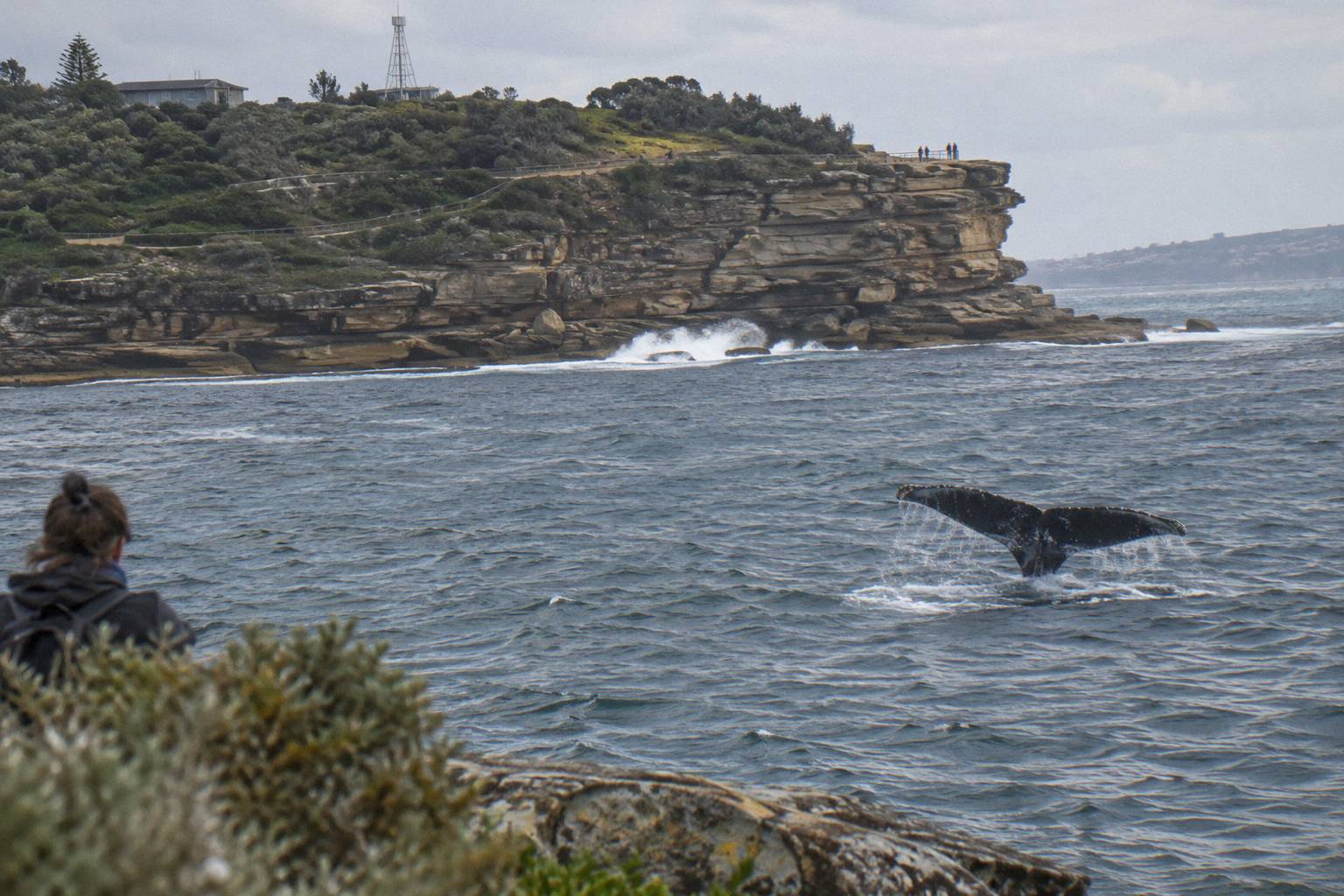
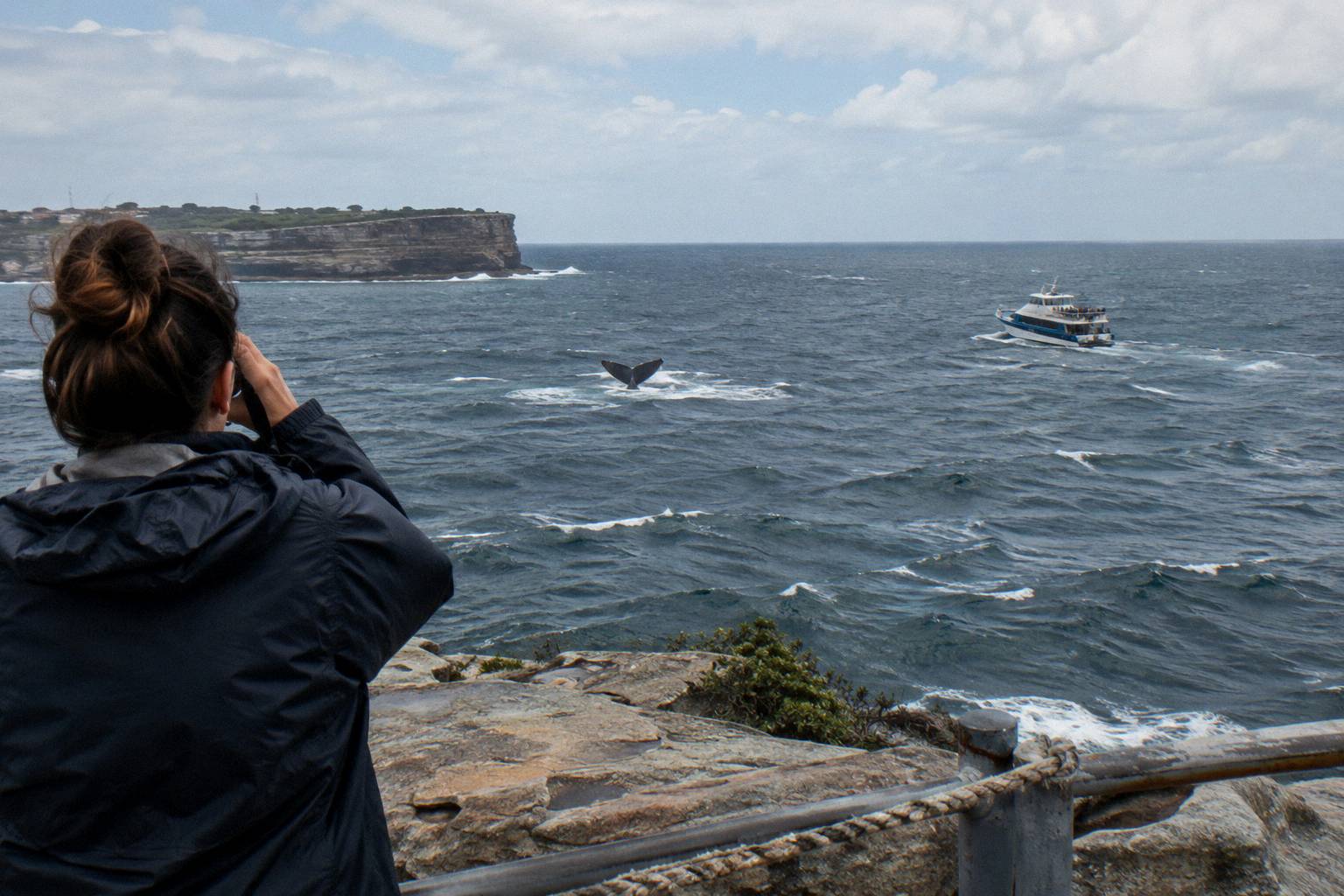
The trade-off: from a headland you are hundreds of metres above and away from the animals, watching blows, flukes and breaches at distance, and you need patience, binoculars and luck with the weather. From a licensed boat you are on the water, at the regulated approach distances, with a crew whose job is to find the whales. Neither is guaranteed; both are inside the same season. Plenty of locals do both in one year, the headland in the shoulder months and a cruise at the peak, and some visitors time a free lookout morning against a paid cruise afternoon, a question the blog post on whether morning or afternoon is better for whale watching in Sydney digs into.
The land option also answers the seasonal budget question. Since no prices are printed here, the useful framing is structural: a headland costs you a ferry ticket and a walk, while a cruise's price is shown on the booking page when you pick a date, and it moves with duration, inclusions, group size and pickup. If your whale watching month is fixed and your budget is not, stand on a headland in the mid-year peak, when traffic volume does the most work for you, and save the cruise ticket for a year when it suits.
How Close Do The Boats Actually Get? The NSW Rules
Under the official NSW marine mammal rules, vessels keep at least 100 m from a whale, and 300 m when a calf is present; dolphins and dugongs get 50 m, and 150 m with calves; within 300 m of a whale, boats travel at a constant slow speed with minimal wash; and jet skis keep 300 m from any whale, dolphin or dugong. Licensed cruise operators work to these distances, and no operator can promise you a closer approach.
This is the part of the season most travel content skips, and it is genuinely useful, because it sets expectations before you ever step on a gangway. The numbers are published by the NSW environment and boating authorities, and they apply to every vessel on the water, from a cruise catamaran to a kayak. You can read the approach distances in full on the official NSW approach distances page, with the boating-side detail on the NSW marine mammal watching page.
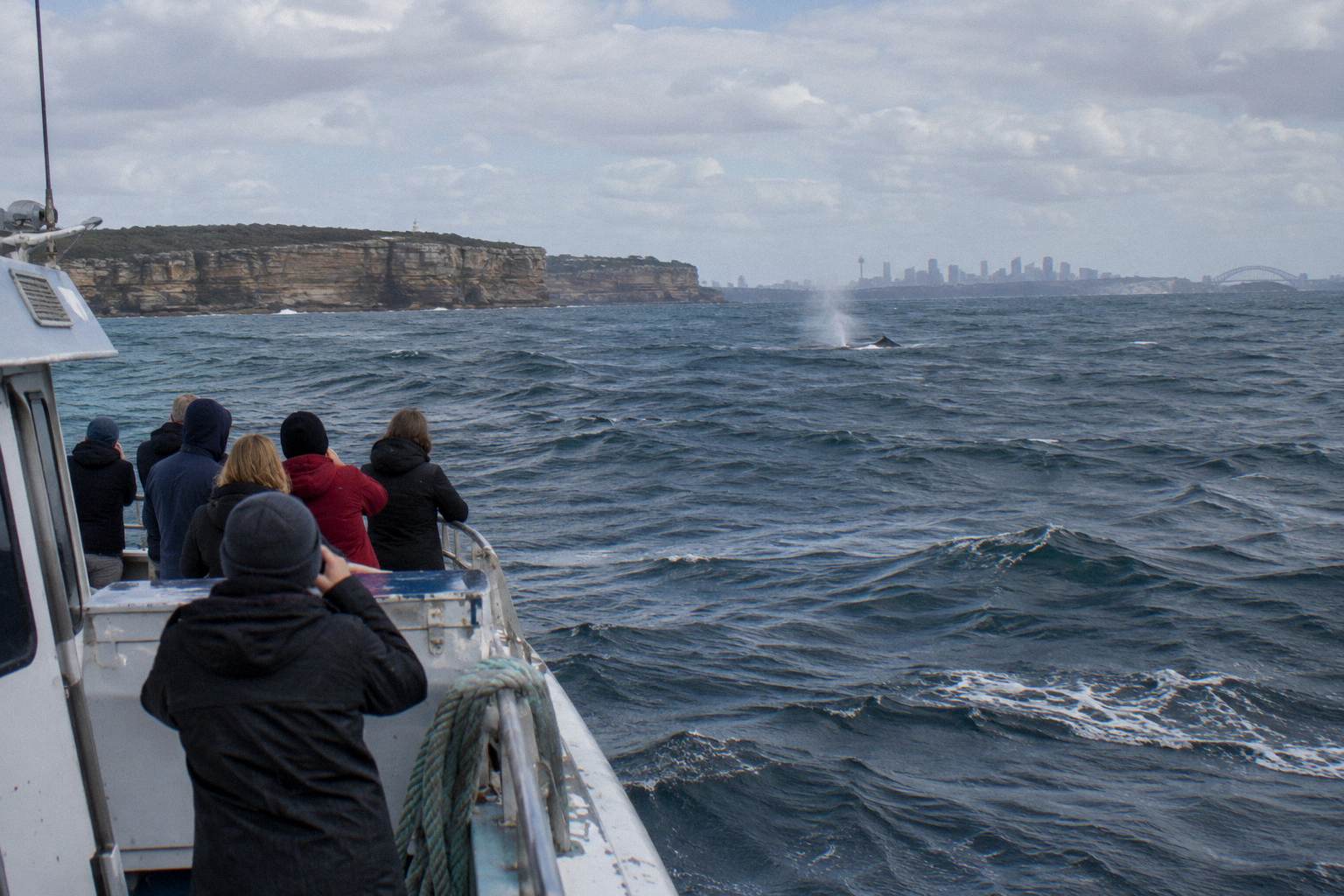
Two details in the rules explain things you will notice on a cruise. First, the calf clause: when a calf is present, the whale buffer triples to 300 m, so a boat that was holding a respectful distance from a single adult will visibly open up a wider arc if a mother and calf pair is in the area. In the spring leg, when the southbound return is running, this clause comes into play more often. Second, the speed clause: within 300 m of a whale, vessels go at a constant slow speed with minimal wash, which is why a cruise that spots whales stops racing anywhere and settles into a patient drift. It looks like the boat slowing down for you to see; it is actually the law.
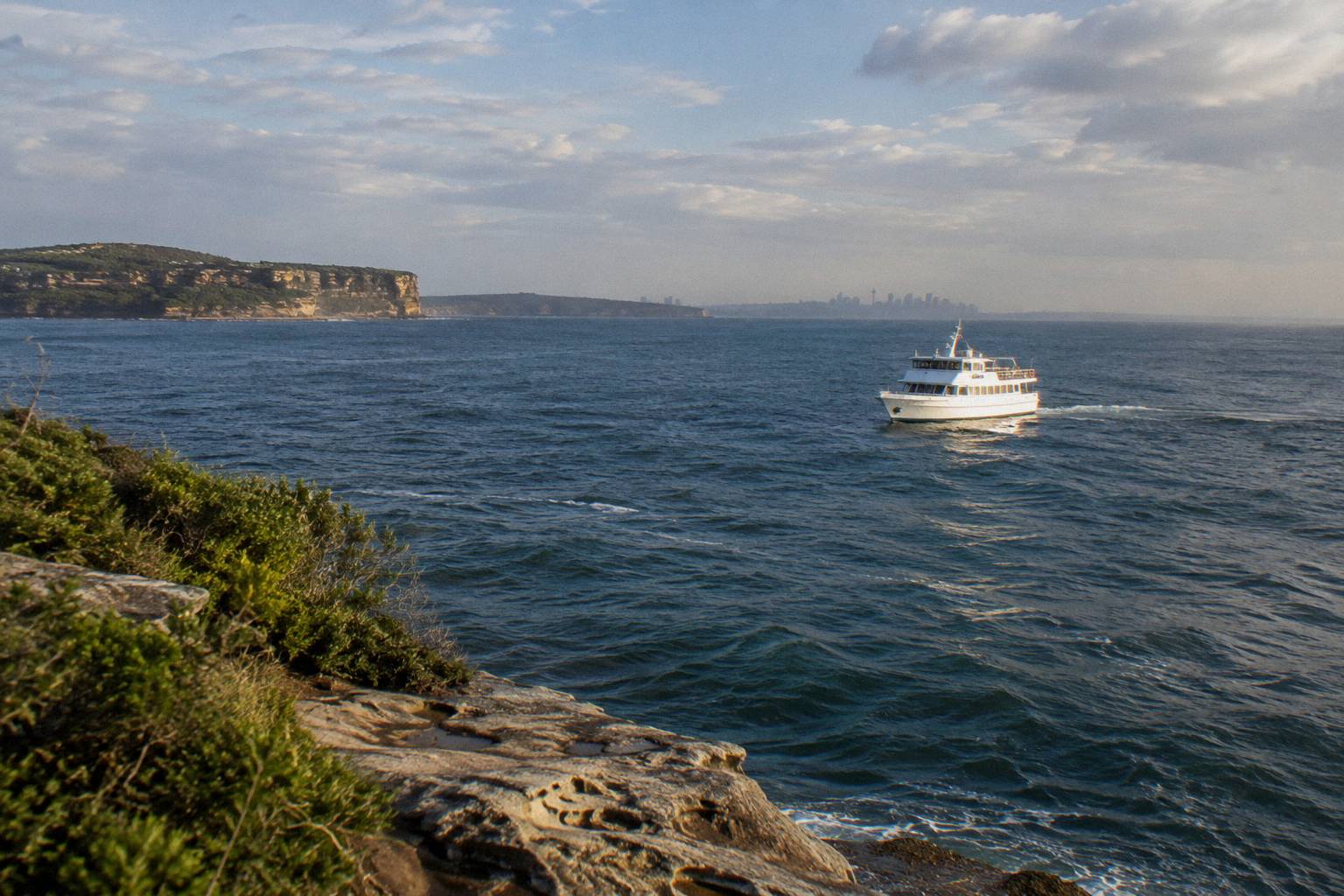
The format you choose changes how these rules feel. On a large stable vessel, like the 2.5 hour Captain Cook Cruises trip, the 100 m distance is comfortable: you are high enough and the deck is wide enough that a whale at legal range fills the view nicely, and the indoor all-weather lounge gives you a retreat if the open water gets bouncy. On a speed-boat format, the same 100 m rule applies but the ride to it and away from it is the draw, fast, low and exposed. If you are weighing the two, the comparison of small boat versus large boat whale watching in Sydney lays out the motion, exposure and crowd trade-offs, and the seasickness question has its own answer in the post on whether whale watching makes you seasick.
For the speed-boat format itself, the details sit on the booking page:
One rule not printed here: how many vessels may cluster near one animal. The two official NSW pages disagree on that number, so it is left out entirely, and you should treat any tour copy that leans on vessel-count language with caution. The distances above are the settled, published rules, and they are the ones a licensed operator will actually steer by.
What The Season Means For Booking A Cruise
Because cruises run only inside the May to November window, your booking decisions collapse to three: which month, which format, and how far ahead. Peak months book out earliest, shoulder months hold availability longer, and the free-cancellation window on most Sydney cruises is 24 hours, so dates can be locked early and still moved.
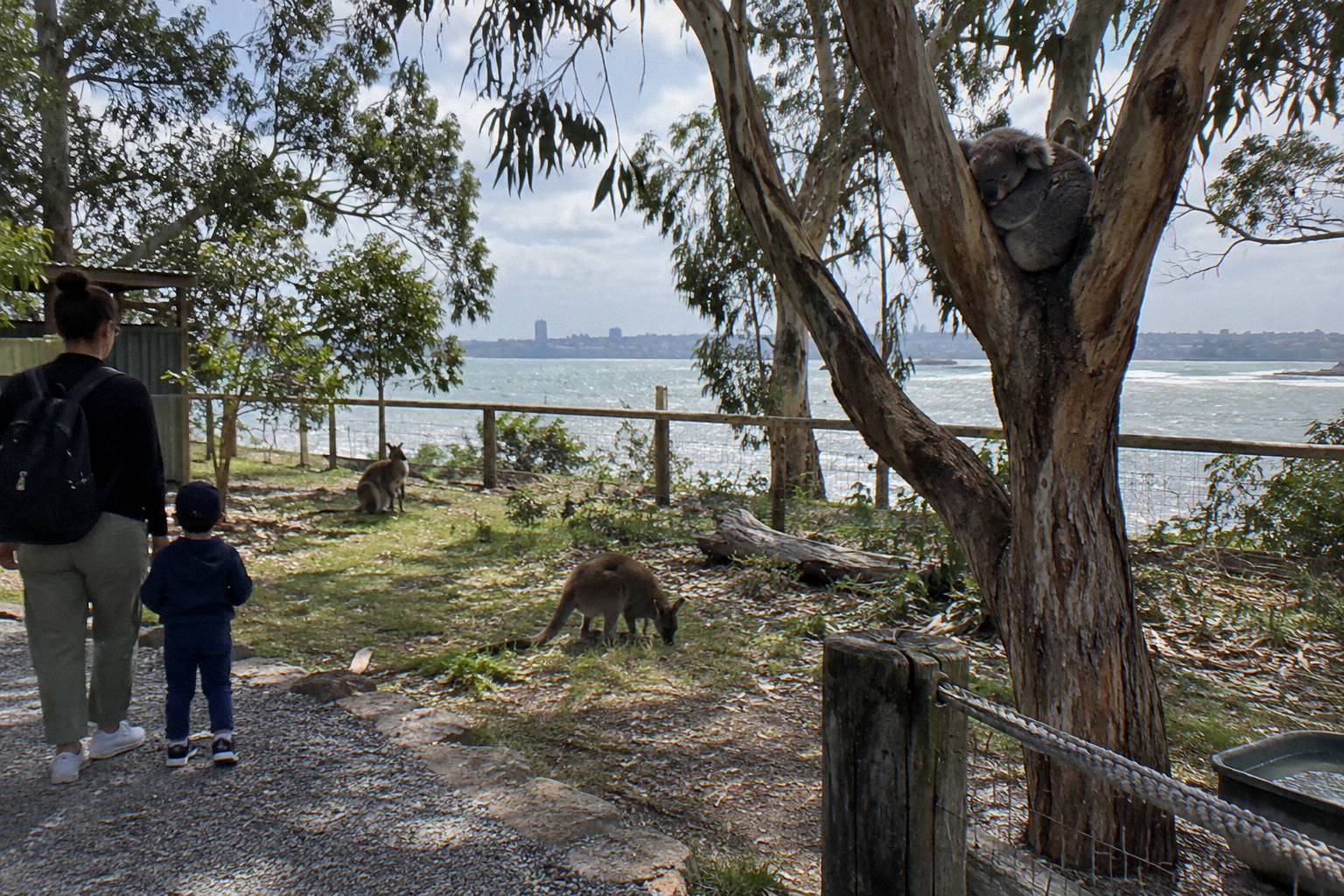
Start with the flagship option, because it is the product most season-planners land on. The 2.5 hour whale watching cruise from Sydney Harbour, run by Captain Cook Cruises and rated 4.3 from 364 reviews, leaves from Circular Quay Wharf 6 and returns there, with expert commentary throughout, an indoor all-weather lounge and outdoor viewing areas. The booking page is explicit that sightings are nature-dependent and vary from cruise to cruise, that the trip operates subject to weather, that it is an open-water cruise where sea motion may affect some guests, and that infants aged 0 to 3 are not recommended. Child fares exist for ages 4 to 15, with the fare shown on the listing when you pick a date. Hotel pickup is not included, and neither are food and drinks, which matters on a 2.5 hour open-water morning. Cancellation is free up to 24 hours before, which pairs beautifully with a season built on weather and wildlife: book the month you want, then judge the forecast the day before.
The Port Stephens day above is the other way the season gets used: not a whale cruise at all, but a 12 hour coach day whose centrepiece is a 90 minute Dolphin Discovery eco cruise with commentary from Nelson Bay, wrapped with a Port Stephens Koala Sanctuary visit, Stockton Beach 4WD and sandboarding instruction, and optional boom net swimming when weather permits. Lunch is not included; snacks and water are. Pickup runs from CBD hotels and Central Station. Its relevance is simple: dolphins do not migrate away, so while the whale fleet parks from December to April, a dolphin and beach day keeps working, and within the season it stacks a marine morning with a full day of coast. The koala sanctuary on that itinerary cares for koalas that cannot return to the wild, which is worth knowing before you go; the guide to Port Stephens dolphin cruises from Sydney covers the marine half in detail.
Booking distance is the quiet variable. The mid-year peak is when Sydney's whale fleet runs closest to capacity, and last minute Saturday seats get scarce. May, August and late November are the opposite: walk up availability is realistic and the water is yours. A traveller with fixed dates should book the peak months the moment the dates are fixed, and let the 24 hour cancellation window be the safety net, rather than gambling on a same week booking in July. A traveller with flexible dates can invert the logic entirely: pick the quiet week, watch the weather, and go.
One expectation to set straight before you book anything. No cruise listed here, and no cruise in Sydney, guarantees a whale. The listing for the harbour cruise itself says sightings vary from cruise to cruise, and the operator's own marketing phrase about sighting guarantees is theirs alone. What you are actually buying is a licensed vessel, a crew that reads the water, commentary that explains what you are seeing, and a seat inside the seven month window in which the whales are genuinely passing. The season does the rest, most of the time.
Jervis Bay And The Wider Season
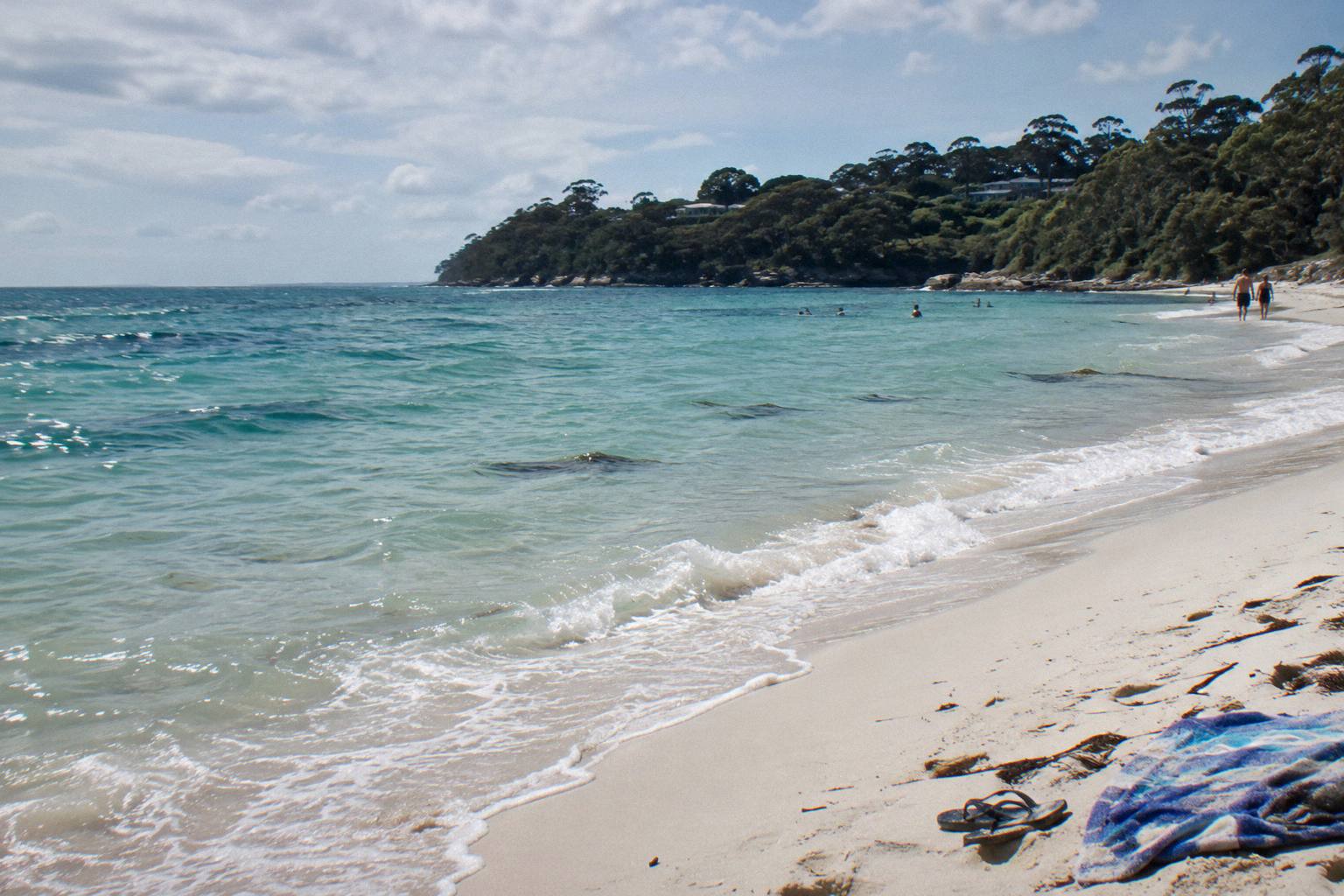
The same May to November window that governs Sydney whale cruises also frames the wider marine coast, including Jervis Bay, where dolphin watching runs as a day trip from Sydney year round and whale watching piggybacks on the migration season. The bay's famous clear water and white sand make it a different flavour of the same marine day out.
Jervis Bay sits about three hours south of Sydney by coach, and the day trips that run there bundle a dolphin cruise with beach time, lookouts and, on one itinerary, a wildlife park. The Jervis Bay Dolphins, Kangaroos And Beach Day is a 12 hour small group day, up to 20 guests, built around a 1.5 hour dolphin-watching cruise through Jervis Bay Marine Park, entry to Booderee National Park for wild kangaroo encounters, a guided White Sands Trail walk, time at Hyams Beach and Huskisson, and a bilingual guide in English or Portuguese. Lunch is not included. The booking page is careful: it promises no dolphin count and no sighting, because dolphins are wild animals in an open bay, however commonly seen.
The seasonal logic differs from the whale fleet's. Dolphins are resident rather than migratory, so a Jervis Bay dolphin day does not switch off in December the way a Sydney whale cruise does. That makes it the flexible entry in the marine category: if your travel dates straddle the shoulder of the whale season, or fall outside it entirely, the dolphin day still delivers the on-water wildlife experience. Inside the season, it simply adds a second marine option to a calendar that already has the harbour cruise and the speed-boat format on it. The distinctions between the Jervis Bay itineraries, there are several and they are genuinely different products, are untangled in the guide to Jervis Bay dolphin and whale cruises.
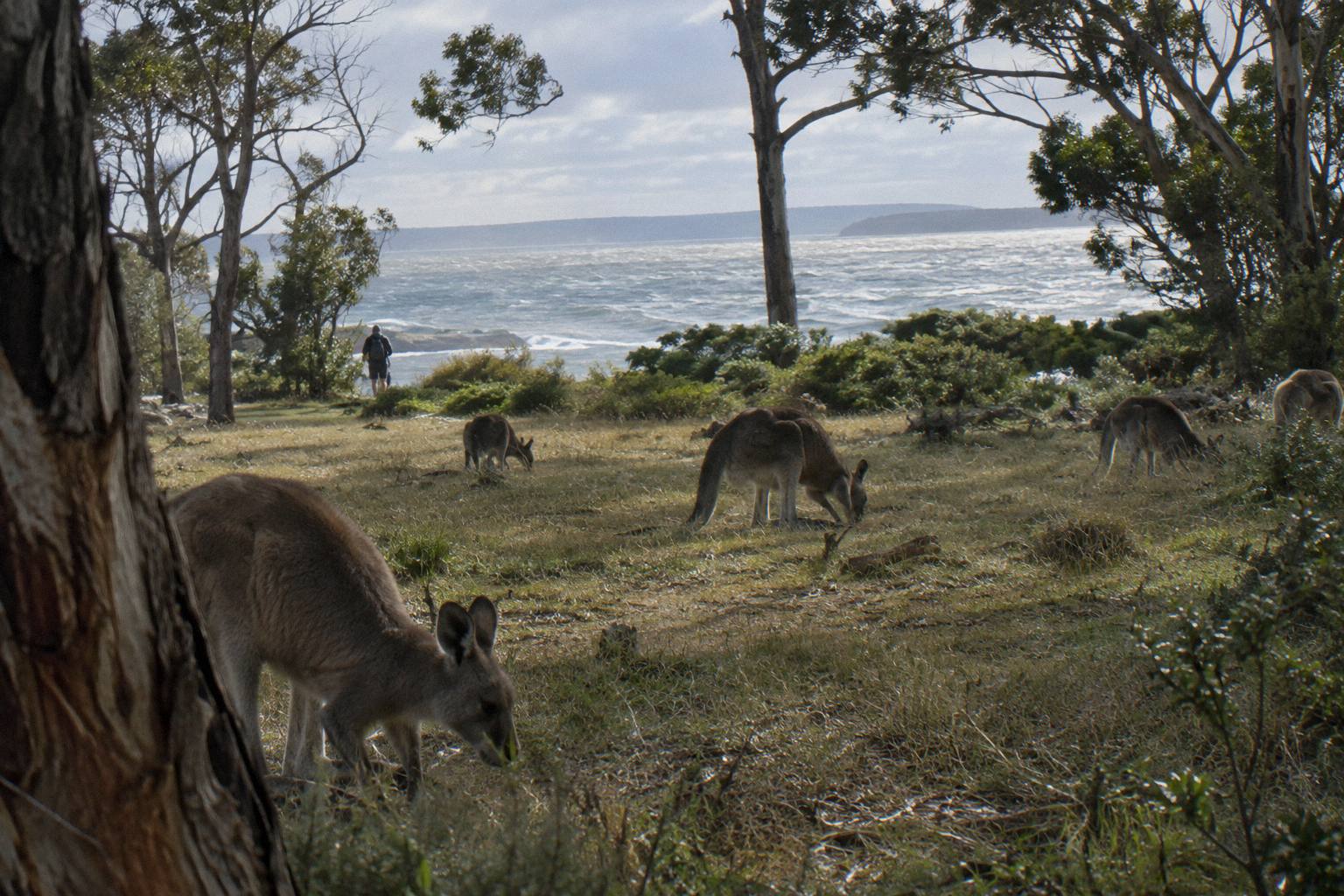
A second Jervis Bay itinerary splits the difference between the marine day and the wildlife park day. Jervis Bay With Beaches, Koalas And Kangaroos, run by Colourful Collective and rated 4.6 from 78 reviews, is an 11 hour day for ages 6 and up that includes Symbio Wildlife Park entry, a private koala encounter accompanied by a park ranger, hand-feeding kangaroos at the park, the Kiama Blowhole, free time in Huskisson and about 1.5 hours at Hyams Beach. Food and drinks are not included. The booking page itself states the rule that matters here: you cannot hold koalas in New South Wales, and encounters are run by a trained professional, which is exactly the framing a season guide should pass on.
| Marine option from Sydney | Season it runs in | Core inclusions |
|---|---|---|
| Captain Cook 2.5 Hour Whale Watching Cruise | May to November only | Commentary, indoor all-weather lounge, outdoor viewing areas |
| Ocean Extreme Speed Boat Whale Watching | May to November only | Speed-boat format; details on the tour page |
| Port Stephens Dolphins, Koalas And Sandboarding Day Trip | Year-round dolphin focus, about 12 hours | Dolphin Discovery cruise, koala sanctuary visit, 4WD and sandboarding |
| Jervis Bay Dolphins, Kangaroos And Beach Day | Year-round dolphin focus, about 12 hours | 1.5 hour dolphin cruise, Booderee entry, White Sands Trail walk |
| Jervis Bay With Beaches, Koalas And Kangaroos | Year-round, about 11 hours | Symbio entry, koala encounter, kangaroo feeding, Hyams Beach |
A season planner's plain summary of the whole marine menu: whale cruises are the strict seasonal product, May to November, full stop; dolphin days run without that constraint; and the wildlife park days are season proof. If whales are the point of your trip, the harbour cruise or the speed-boat format is the booking, and the month is the decision that matters most. If marine wildlife is the point and whales are a bonus, the dolphin days buy you the same water, the same commentary culture and a much longer leash on your calendar. And if you have ever wondered whether the whales come into the harbour itself rather than past the heads, that specific question has a specific answer in the post on whether you can see whales in Sydney Harbour.
Common Questions About The Sydney Whale Watching Season
When Is Whale Watching Season In Sydney?
The season runs from May to November every year. Humpback and southern right whales pass the NSW coast inside that window, heading north throughout June and into July and returning south from around September to November.
What Is The Best Month To See Whales In Sydney?
There is no official "best month". NPWS describes whales sailing north throughout June and into July, making the mid-year peak the busiest stretch. September to November is a full second window as the whales return south. Every month from May to November has migrating whales somewhere on the coast.
Can You See Whales In Sydney Outside May To November?
Not as part of the migration. The whale watching season, and the whale cruises that run inside it, operate May to November. Outside that window, the marine wildlife options from Sydney are dolphin days and wildlife parks, not whale trips.
Are Whale Sightings Guaranteed On A Sydney Cruise?
No. Sightings are nature-dependent and vary from cruise to cruise, as the cruise listings themselves state. No reputable operator or website can promise a whale, and any sighting guarantee language belongs to the operator's own marketing, not to a statement of fact.
How Close Do Whale Watching Boats Get To The Whales?
NSW rules require vessels to keep at least 100 m from a whale, and 300 m when a calf is present, travelling at a constant slow speed with minimal wash within 300 m. Licensed operators work to these distances; none can promise a closer approach.
Can You Watch The Whales For Free In Sydney?
Yes. NPWS names free headland lookouts including Cape Solander, Fairfax Walk, North Head, South Head, Hornby Lighthouse and Arabanoo lookout in Sydney's national parks, plus sites in the Royal and Ku-ring-gai Chase parks. You watch at distance from land, but the migration is the same one the boats follow.