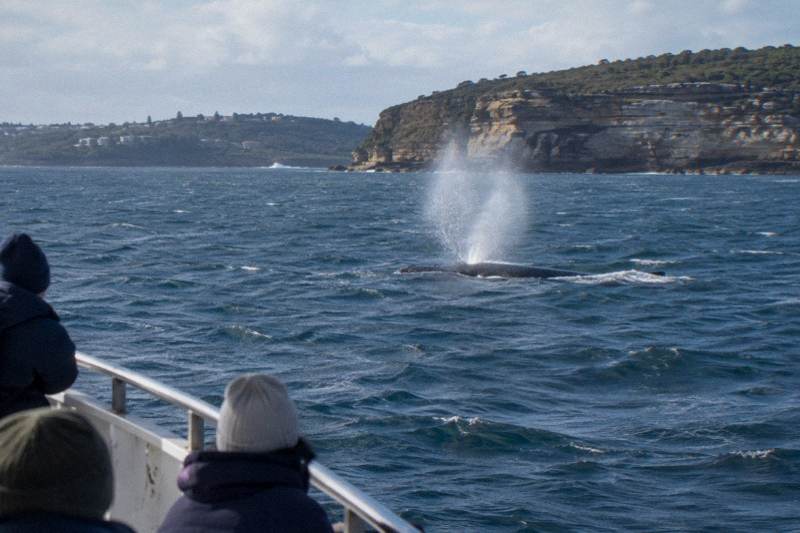
Can You See Whales In Sydney Harbour On A Whale Watching Cruise?
Whales migrate past Sydney from May to November, and whale watching cruises leave Circular Quay to meet them. Here is what the official season, the rules and the cruise listings actually say.
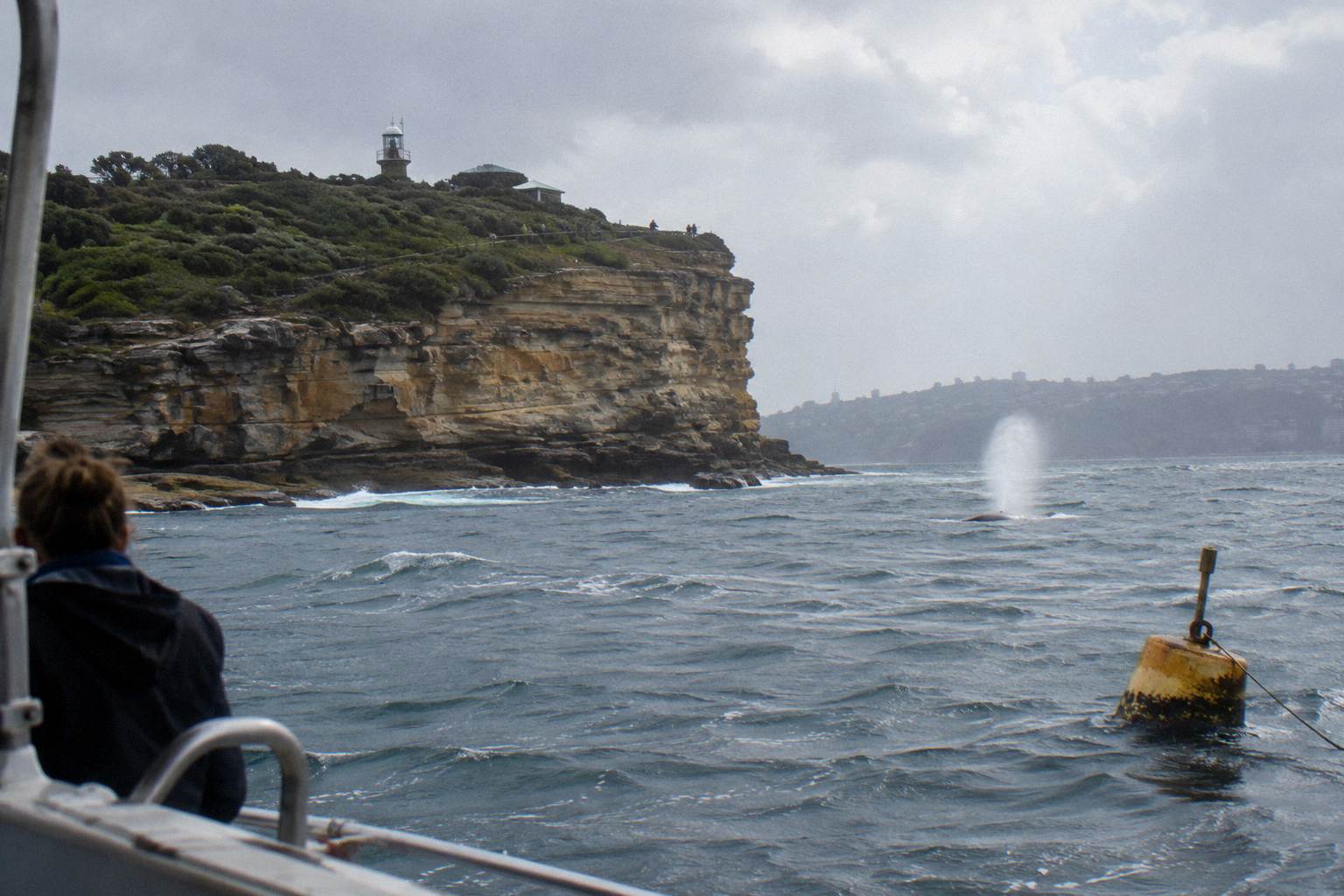
Yes, in season. The National Parks and Wildlife Service says whales pass the NSW coast on their annual migration from May to November every year, and Sydney whale watching cruises operate in that window, leaving from Circular Quay to look for them. Whether a whale swims into the harbour itself on any given day is not stated by any official source: sightings are nature-dependent, and no cruise promises one.
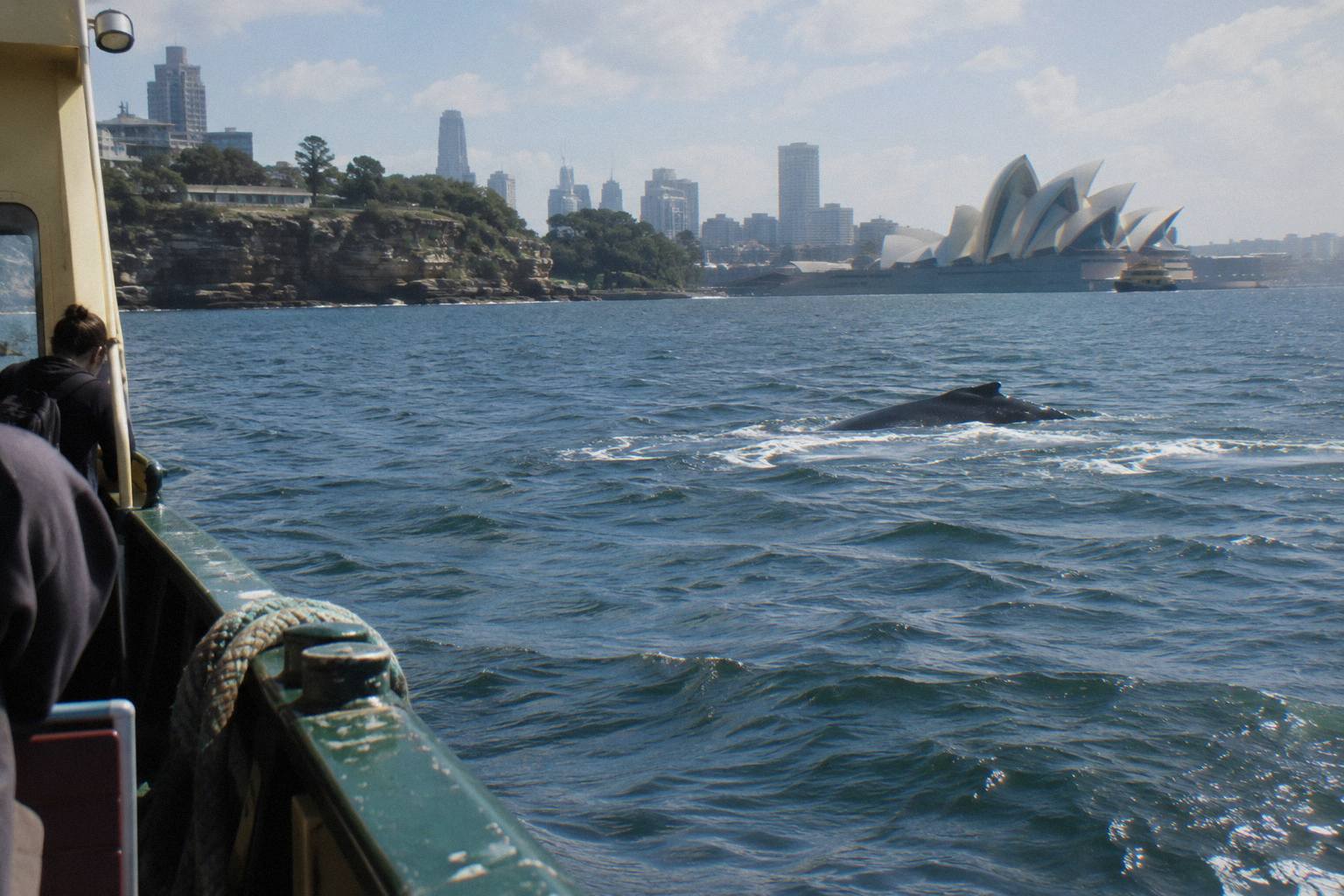
That is the plain one-paragraph answer, and it is worth unpacking because the question hides two different things. The first is whether whales migrate past Sydney at all, which they do, in numbers that swell to a mid-year peak as humpbacks head north. The second is whether they come inside the harbour heads, past North Head and South Head, into the water between the Opera House and the Harbour Bridge. On that second point the official sources are silent: NPWS names harbour-side lookouts as whale watching spots, and cruise itineraries describe open-water cruising, but no page states how often whales enter the harbour basin. Treat any confident claim either way, on a forum or in a brochure, with suspicion.
What the cruises actually sell is a boat trip out to where the whales are, which is the coastal water beyond the heads. The Captain Cook 2.5 Hour Whale Watching Cruise, operated by Captain Cook Cruises, is rated 4.3 from 364 reviews and runs about 2.5 hours from Circular Quay Wharf 6 and back. Its listing describes a harbour boat cruise with marine life viewing and whale watching, expert commentary throughout, an indoor all-weather lounge and outdoor viewing areas, and a chance to spot whales, dolphins, seals, albatross and other marine life. Note the word "chance". The listing is explicit that whale and wildlife sightings are nature-dependent and vary from cruise to cruise, which is the same language every operator uses.
If your dates are inside the May to November season and you would rather compare the main formats side by side, the full guide to whale watching cruises from Sydney breaks down what each one includes.
When Do Whales Actually Pass Sydney?
From May to November, per the National Parks and Wildlife Service, which states that whales can be seen during their annual migration from May to November every year. Humpback and southern right whales head north for warmer waters throughout June and into July, then return south from around September to November, with a mid-year peak in between. Outside that window there is no season to speak of.
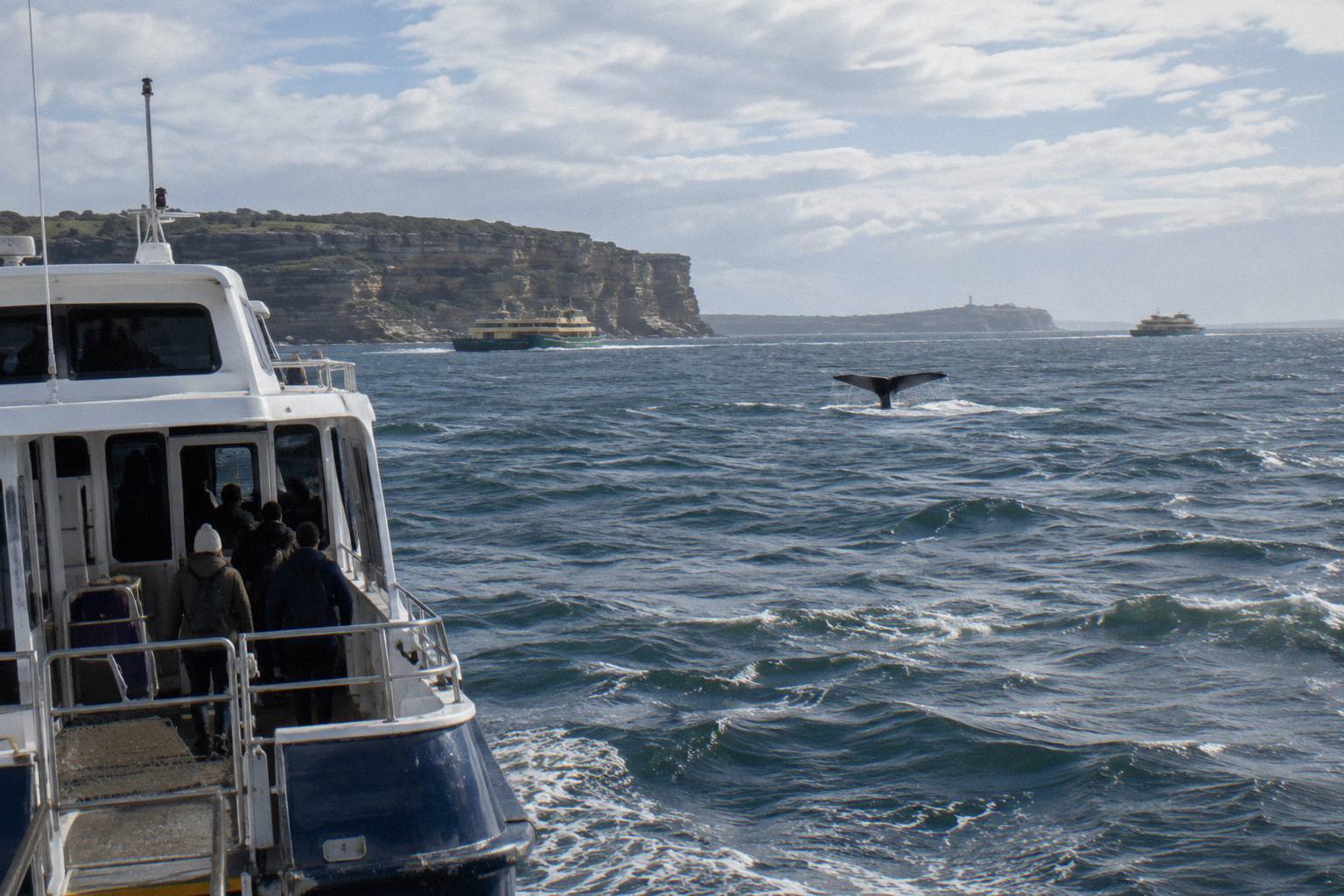
The migration is the engine behind everything here. NPWS's Wild About Whales program tracks it along the whole NSW coast, and Sydney sits directly on the route. The northbound leg, June into July, is when the animals are moving toward warmer waters to breed; the southbound leg, roughly September to November, is the return journey. In between sits the mid-year peak, when the volume of passing whales is at its highest. What no official page will give you is a count: no source states how many whales pass on a given day, and any "record season" claim or whales-per-trip figure you see online is not something a cruise listing or a park service stands behind.
For planning, this means your date does most of the work. A cruise in late June sits inside the peak window; a cruise in April sits outside the season entirely, and no whale cruise is listed as running then. If you are flexible, the shoulder weeks of the season can be quieter on the water while still holding real chances, but the framing is probability, not promise: every listing says sightings are nature-dependent.
There is also a second question travellers ask less often but should: does the time of day matter? The evidence here is thin, and rather than guess, it is looked at separately in whether morning or afternoon is better for whale watching in Sydney. The short version: no official source claims a time-of-day pattern, so book the slot that suits your day.
The season and what drives it is laid out in more detail in the Sydney whale watching season guide, which is the page to read if you are choosing between a June trip and an October one.
Where Do Sydney Whale Cruises Actually Go?
Out through the heads and into open coastal water. The Captain Cook cruise starts and ends at Circular Quay Wharf 6, and its listing describes an open-water cruise with outdoor viewing areas, sea motion that may affect some guests, and operation subject to weather. The listing does not state a fixed route or how far offshore the boat travels; that depends on where the whales are that day.
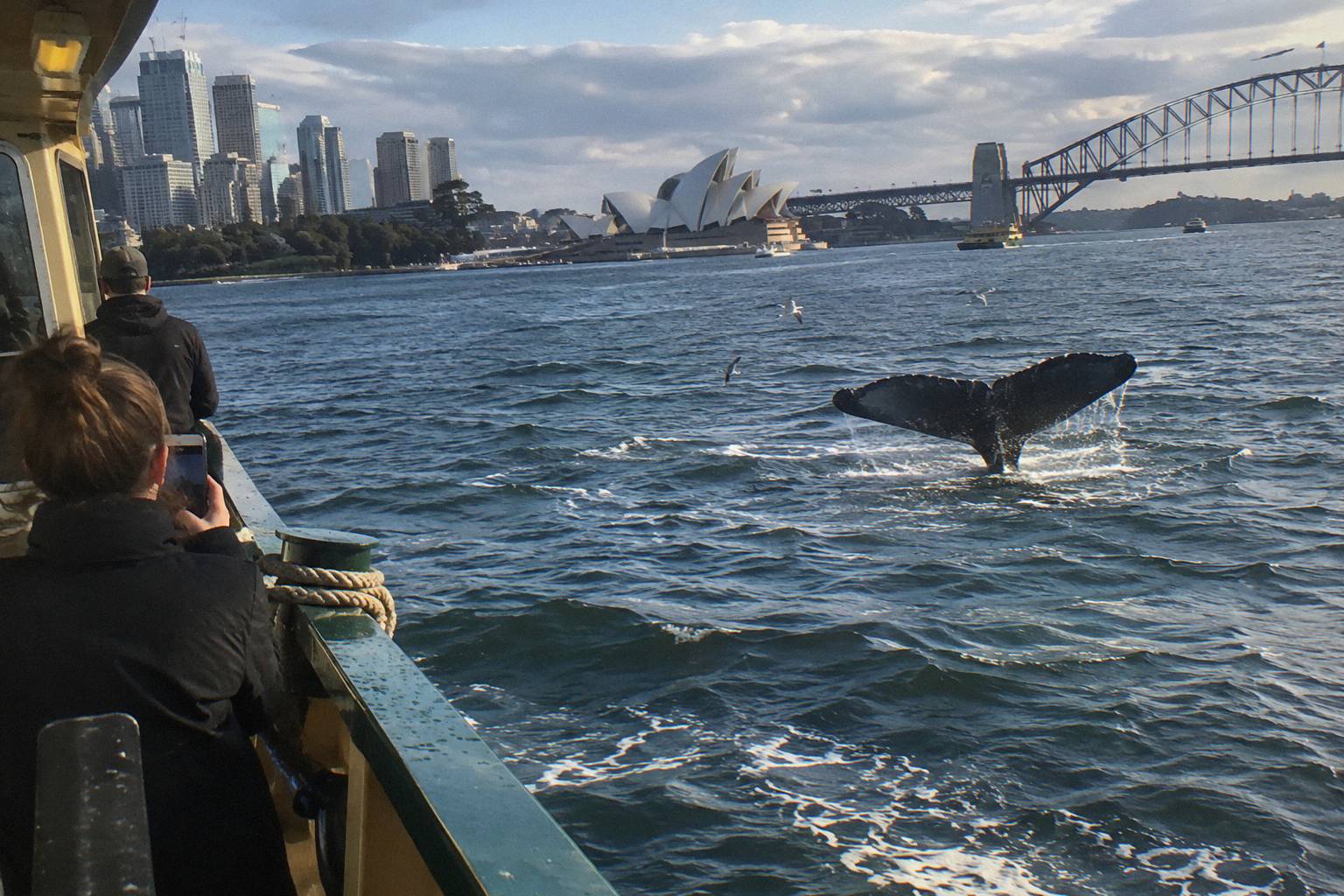
This matters for the harbour question. A cruise departing Circular Quay necessarily spends part of its 2.5 hours inside the harbour, transiting past the Opera House and Fort Denison toward the heads, and that stretch is sightseeing in its own right. The whale watching itself happens where the whales are, which is generally beyond the entrance. Skippers adjust on the day; there is no published waypoint list, and the listing promises none. The official whale watching lookouts NPWS names around the harbour entrance, North Head, South Head, Hornby Lighthouse and Arabanoo lookout at Dobroyd Head, all face outward to sea, which tells you where the animals generally are.
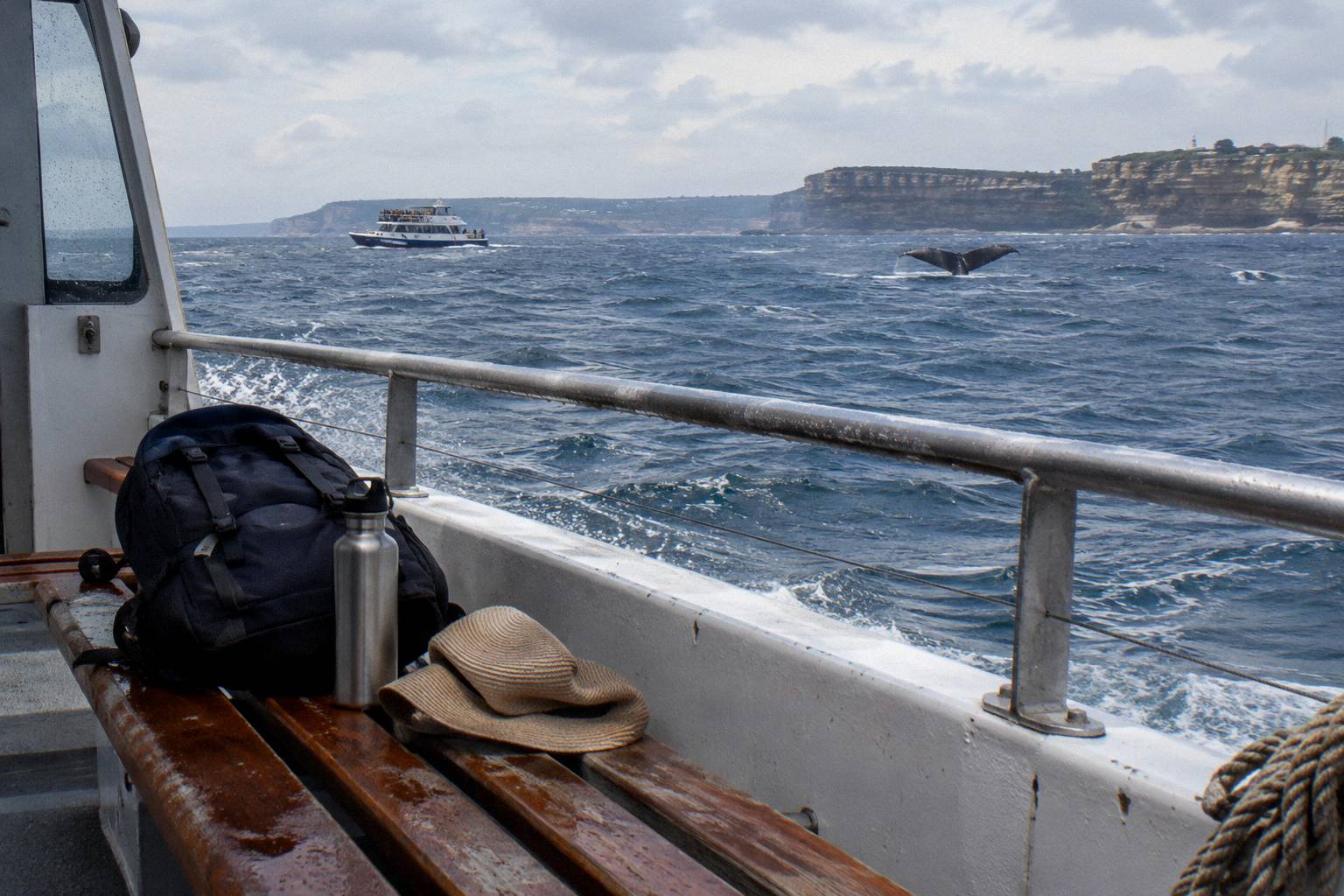
Practical points from the listing: hotel pickup is not included, so you make your own way to Wharf 6. Food and drinks are not included either. Infants aged 0 to 3 are not recommended on board, and child fares exist for ages 4 to 15, with the fare itself shown on the booking page when you pick a date. If open water raises the seasickness question for you, the listing's own wording is that sea motion may affect some guests; beyond that, remedies and deck advice are not stated, ask the operator.
One caution on marketing language. The Captain Cook product title contains an operator sighting-guarantee phrase with a percentage attached. It is not repeated here, because a guarantee of wild animals is not something any listing can make, and the same listing's own body text says sightings are nature-dependent. Trust the body text.
What Are The Rules For Boats Near Whales In NSW?
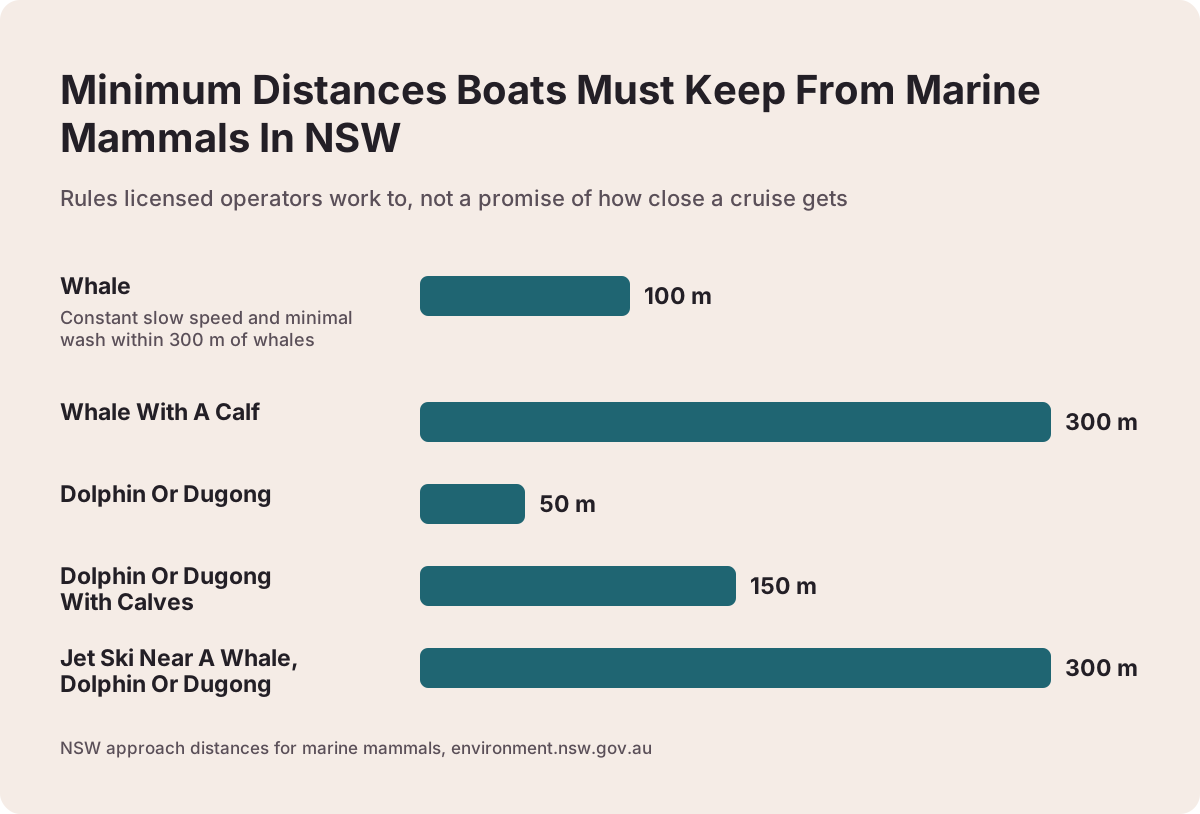
Licensed vessels keep at least 100 m from a whale, and 300 m when a calf is present. Within 300 m of a whale, boats travel at a constant slow speed with minimal wash. For dolphins and dugongs the distances are 50 m, and 150 m with calves. Jet skis keep 300 m from a whale, dolphin or dugong. These are the rules licensed operators work to, not a promise of how close any cruise gets.
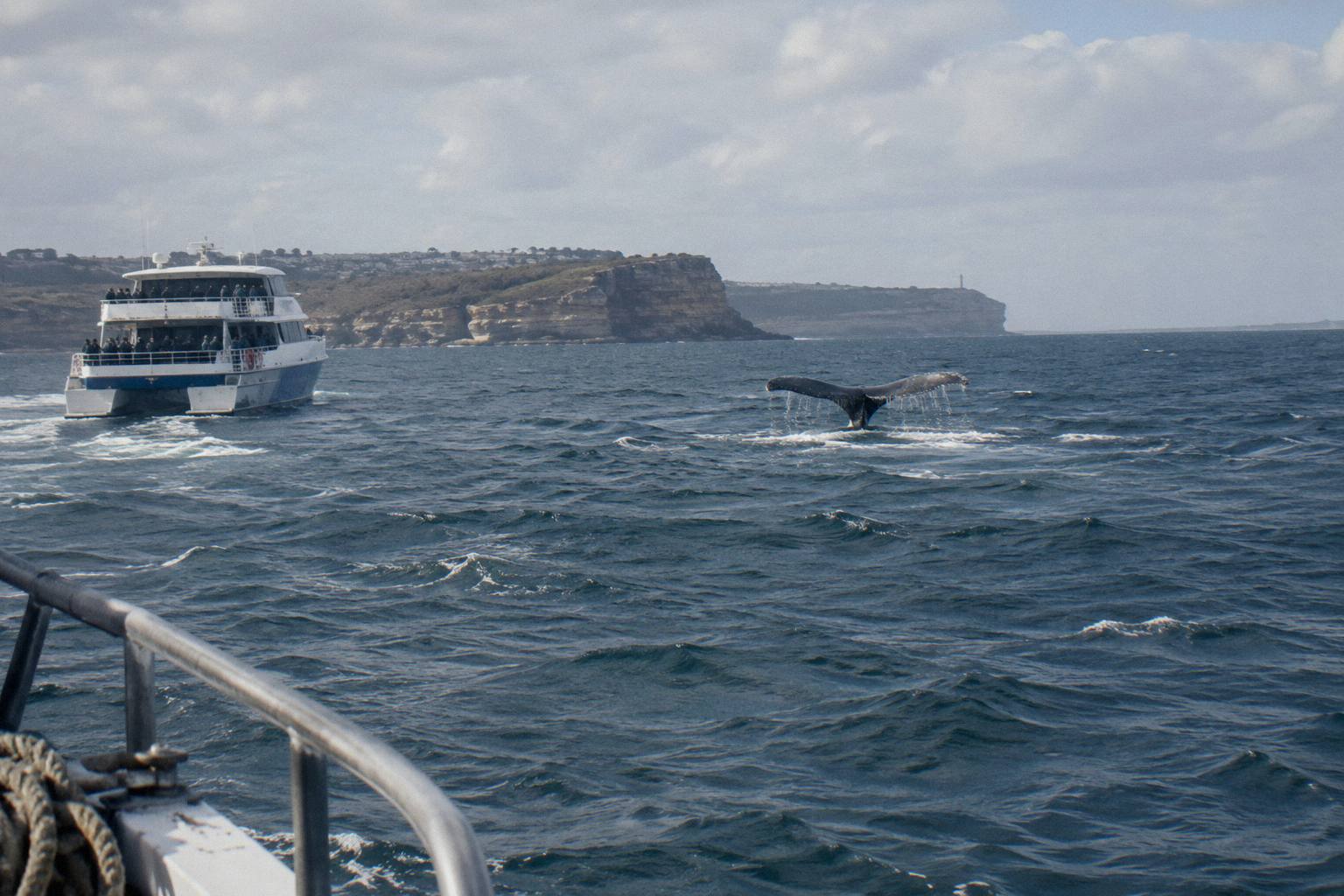
Those figures come from the NSW government's own marine mammal watching pages, and they are worth knowing as a passenger because they recalibrate expectations. A whale watching cruise is not a pursuit: the boat holds its distance, and the whales, being far larger and faster than they look, decide how close the encounter feels. A humpback that chooses to pass near a stationary vessel can produce a spectacular few minutes entirely within the rules; a vessel closing in on a whale would be breaking them. When a tour listing shows close-range photography, remember the animal set that distance, not the skipper.
| Situation | Minimum distance for vessels |
|---|---|
| Whale | 100 m |
| Whale with a calf | 300 m |
| Dolphin or dugong | 50 m |
| Dolphin or dugong with calves | 150 m |
| Jet ski near a whale, dolphin or dugong | 300 m |
The rules also shape behaviour, not just distance: constant slow speed and minimal wash within 300 m of whales, per the official guidance on NSW approach distances for marine mammals. Extra protections apply to southern right whales, and a predominantly white whale carries a much larger exclusion zone, which is why the famous white individuals off the Australian coast are watched from further away than everyone else. None of this is fine print for tourists to memorise; it is the frame in which every licensed cruise operates.
If you would rather watch from land and skip the rules entirely, NPWS maintains a list of top whale watching spots, published at Wild About Whales, and several of them are in Sydney Harbour National Park.
Can You Watch Whales From Land Around Sydney Harbour?
Yes. NPWS names North Head, South Head, Fairfax Walk, Hornby Lighthouse and Arabanoo lookout at Dobroyd Head, all within Sydney Harbour National Park, among NSW's top whale watching spots. Further afield it lists Cape Solander in Kamay Botany Bay National Park, Royal National Park's Coast track and Governor Game lookout, and Barrenjoey Lighthouse in Ku-ring-gai Chase National Park.
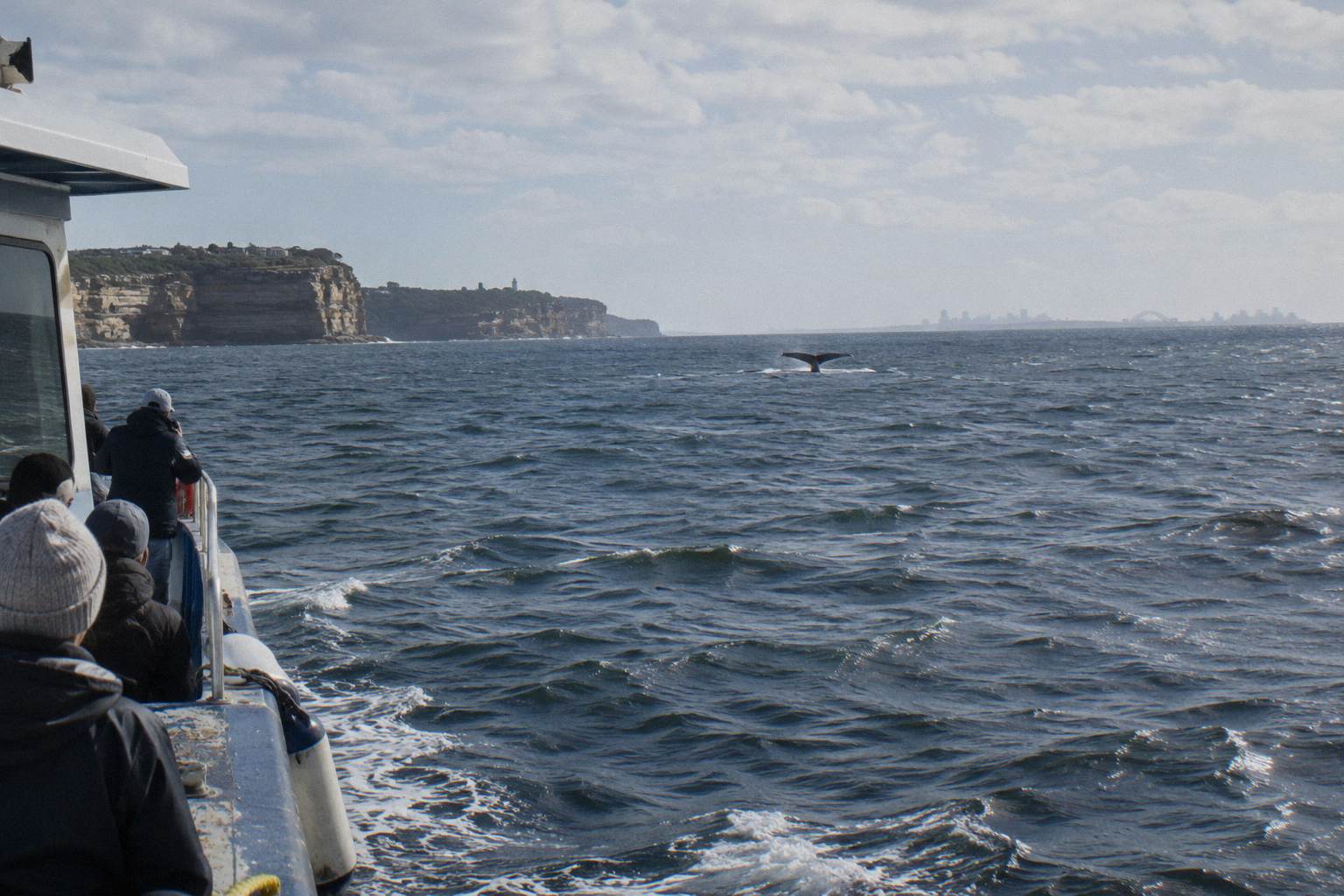
The harbour-head lookouts are the direct answer viewed from land instead of water. North Head and South Head stand on either side of the harbour entrance, and a whale travelling the coast passes right across that view, which is precisely why NPWS lists them. Land watching costs nothing, needs no booking, and carries no seasickness risk; its trade-offs are distance and patience. The animal you see from a headland may be a kilometre out, where on a boat the same animal might fill a camera frame from 100 m. The full index of guides sits on Sydney Wildlife Tours.
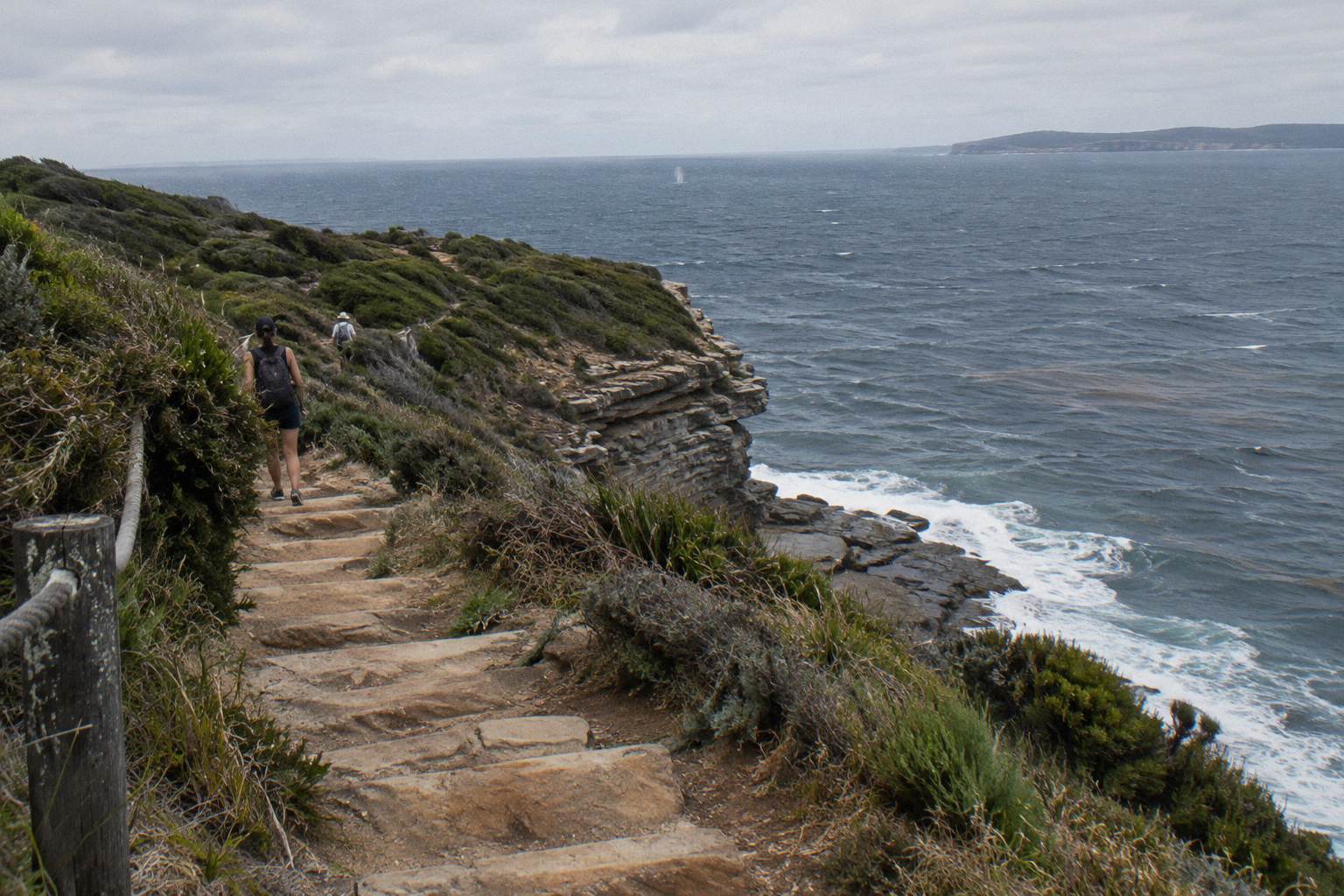
| Lookout | Park | Where it watches |
|---|---|---|
| North Head, South Head, Hornby Lighthouse, Fairfax Walk, Arabanoo lookout | Sydney Harbour National Park | The harbour entrance and open coast |
| Cape Solander | Kamay Botany Bay National Park | Open ocean south of the harbour |
| The Coast track, Governor Game lookout, Curra Moors loop | Royal National Park | Open coast south of the city |
| Barrenjoey Lighthouse | Ku-ring-gai Chase National Park | The northern beaches coastline |
The practical pattern many visitors land on is both: a headland walk on one day, a cruise on another. The lookout teaches you what to look for, the blow, the breach, the tail fluke, and the cruise puts you at water level with commentary to explain it. Binoculars transform the land experience; the harbour lookouts involve sandstone paths and some uneven ground, so ordinary walking shoes are enough but thongs are not.
Speed Boat Or Harbour Cruise: Which Format Suits You?
The Captain Cook cruise, covered above, is the comfortable option: an indoor all-weather lounge for the transit out, outdoor viewing areas for the watching, expert commentary throughout, and a 4.3 rating from 364 reviews. Ocean Extreme Speed Boat Whale Watching is the other animal entirely: an open speed-boat run, listed on its own booking page, with no operator-stated duration and no capacity figure, so nothing beyond the format itself can be said here. Whale season applies to it as to everything else, May to November.
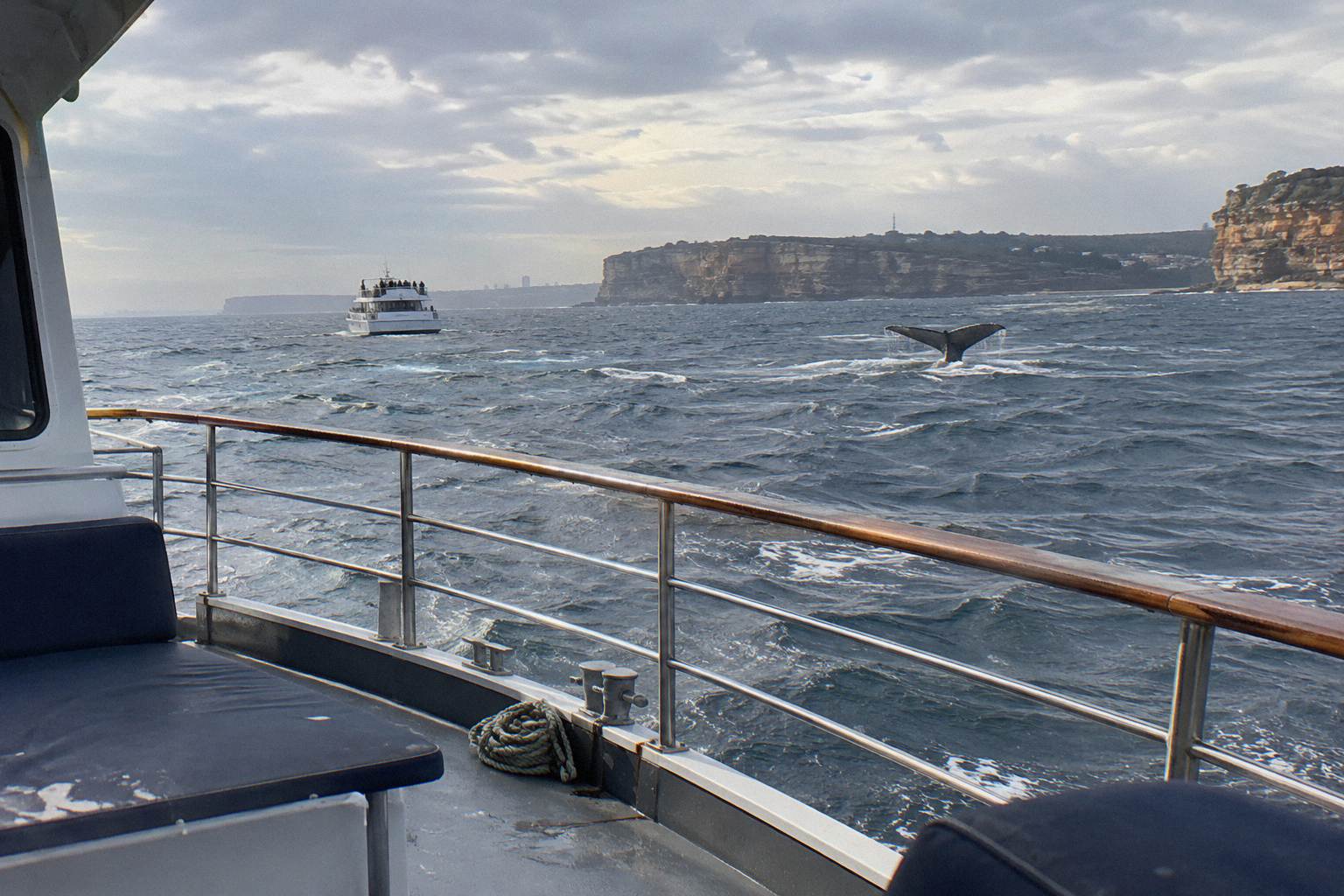
The comparison is temperament, not numbers. If you want shelter, a seat, commentary and a bathroom-adjacent level of comfort, the cruise is the format. If you want the ride to be part of the experience and open air the whole way, the speed boat is the format. Smaller vessels can also feel every swell more directly, and no sea-condition claim exists for either product; on the cruise listing the wording is that sea motion may affect some guests, and beyond that, deck and remedy advice is not stated, ask the operator. There is a longer treatment of the trade-offs in small boat or large boat whale watching around Sydney.
What If Your Dates Fall Outside Whale Season?
This is the answer that saves people the most disappointment. A December or February visitor who books a "whale watching" ticket expecting humpbacks is booking for the wrong hemisphere's timetable; the whales are in Antarctic water by then. Dolphins, by contrast, are commonly seen off Port Stephens through the year, and the Port Stephens Dolphins, Koalas And Sandboarding Day Trip is built around them: the booking page lists a 90-minute Dolphin Discovery eco cruise with commentary from Nelson Bay, a Port Stephens Koala Sanctuary visit, Stockton Beach 4WD and sandboarding instruction, snacks and water, and a coach with pickups from CBD hotels and Central Station. Boom netting is optional and weather permitting, so pack swimwear and a towel if that appeals. Lunch is not included, and free cancellation runs to 24 hours before.
One note on the sanctuary stop: it houses koalas that cannot return to the wild, cared for alongside a hospital for sick, injured and orphaned animals. They are sanctuary animals, not wild ones, and are not described otherwise. The wild animals on that trip are the dolphins you cruise out to, and even they carry no guarantee; the listing's own framing is a cruise with commentary and the chance to watch.
For planning around the whole year, including land options and the whale season's edges, wildlife day trips from Sydney compared sets the options side by side.
What Should You Know Before Booking A Sydney Whale Cruise?
Check three things: that your date sits inside the May to November season, that the departure point suits you, since the Captain Cook cruise leaves Circular Quay Wharf 6 with no hotel pickup, and what is included, which on that cruise is commentary, lounge and viewing areas but not food or drinks. Prices are shown on the booking page when you pick a date, driven by duration, inclusions and format.
The booking details set expectations. On the Captain Cook listing: children 4 to 15 have their own fare, infants 0 to 3 are not recommended, the boat runs subject to weather, and sightings are nature-dependent on every sailing. None of that is small print; it is the core of the product. Free cancellation up to 24 hours before is listed, which matters in a season where weather calls get made close to departure. What to actually wear and pack is covered in detail in what to wear on a whale watching cruise from Sydney, and the full-day-versus-short-cruise question is treated in how long a wildlife tour from Sydney really runs.
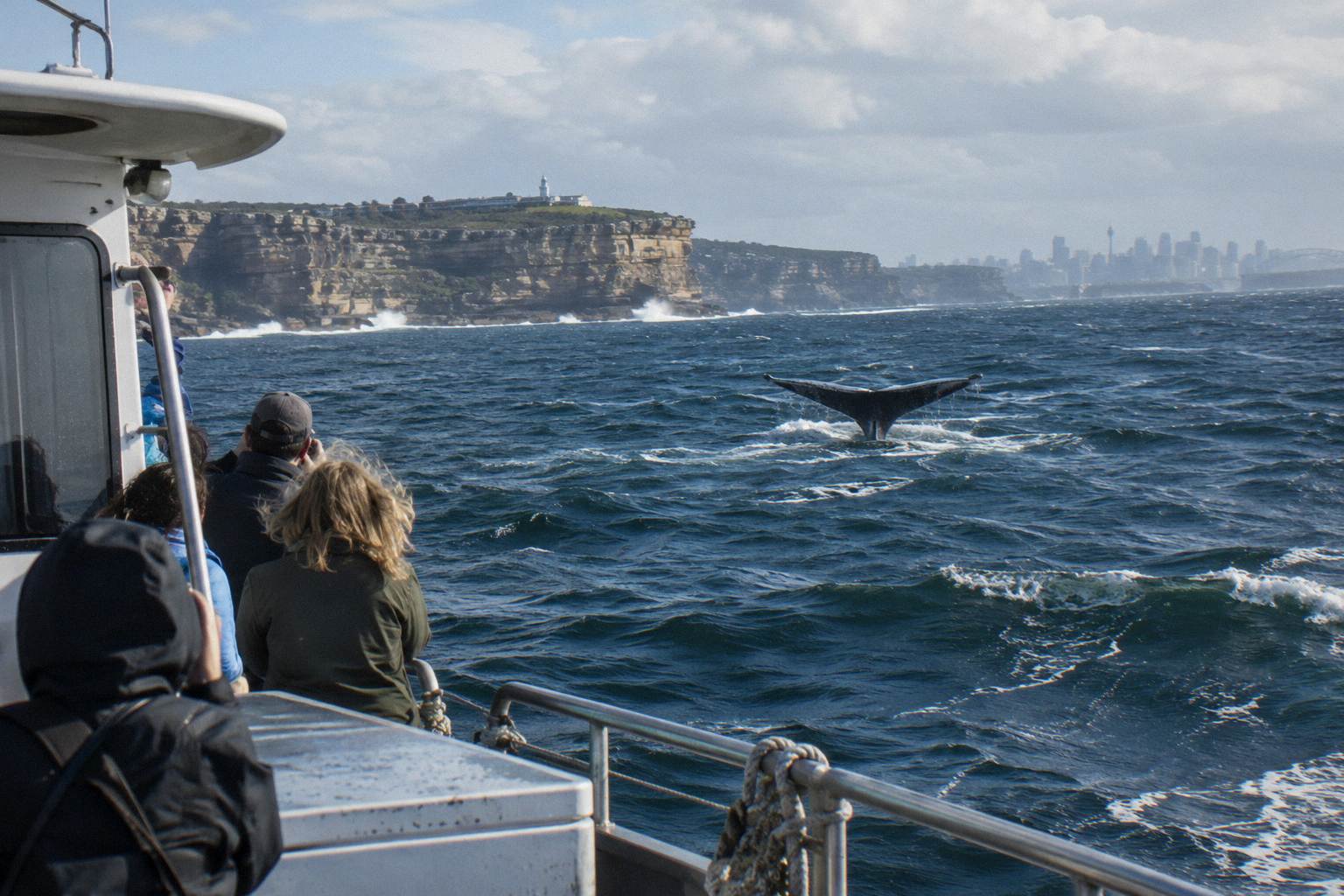
This question gets answered badly in most places: a confident yes or no about whales in the harbour, a percentage guarantee borrowed from an operator's marketing, or a season stretched to sound year-round. The official record is more modest and more useful. The whales come every year, May to November, in the millions-of-years-old rhythm NPWS documents at its marine mammal watching guidance. The boats leave on schedule to meet them, keeping distances that protect the animals. Everything else on the day is up to the ocean.
Common Questions About Whales In Sydney Harbour
Can You See Whales In Sydney Harbour On A Whale Watching Cruise?
Yes, in season. Whales migrate past the NSW coast from May to November every year, and cruises leave Circular Quay to cruise out and look for them. Whether a whale enters the harbour basin on any given day is not stated by any official source; sightings on every cruise are nature-dependent.
When Is Whale Season In Sydney?
From May to November, per the National Parks and Wildlife Service. Humpback and southern right whales head north through June and into July, and return south from around September to November, with a mid-year peak in between.
How Close Do Whale Watching Boats Get To The Whales?
NSW rules keep vessels at least 100 m from a whale, and 300 m when a calf is present, with a constant slow speed and minimal wash within 300 m. These are the rules licensed operators work to, not a promise of how close any cruise gets.
Where Can I Watch Whales From Land In Sydney?
NPWS names North Head, South Head, Fairfax Walk, Hornby Lighthouse and Arabanoo lookout at Dobroyd Head in Sydney Harbour National Park, plus Cape Solander, several Royal National Park spots and Barrenjoey Lighthouse, among its top whale watching lookouts.
Are Whale Sightings Guaranteed On A Sydney Cruise?
No. Every cruise listing states that whale and wildlife sightings are nature-dependent and vary from trip to trip. Any guarantee claim in marketing language is the operator's own and is not repeated.
Can You See Whales In Sydney Outside May To November?
Not on the whale cruises; no whale watching cruise is described as running outside the May to November season. Outside that window, dolphin cruises at Port Stephens are the realistic marine wildlife day trip.